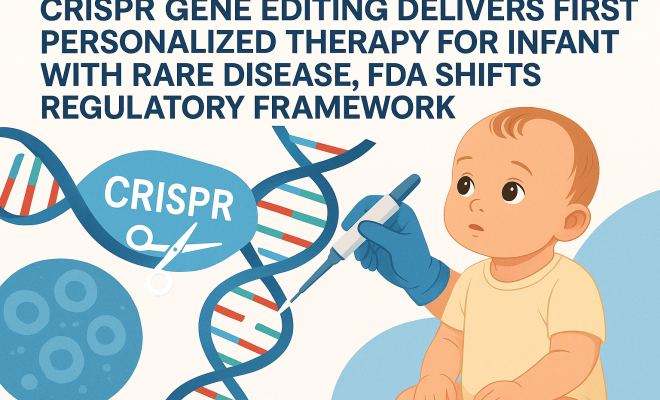
Understanding the Cost of Gene Therapy: What Patients Need to Know
“`json
{
“title”: “This One Breakthrough Could Obliterate Disease — But What’s the Catch for Patients?”,
“content”: “
Imagine a medical treatment that doesn’t just manage symptoms, but actually corrects the very blueprint of your body, offering a one-time fix for a lifelong illness. Sounds like science fiction, doesn’t it? Yet, this is the promise of gene therapy, a revolutionary approach that’s rapidly moving from the lab bench to the clinic. It’s poised to fundamentally transform how we tackle a host of inherited disorders, certain cancers, chronic conditions, and even ophthalmic diseases, by going straight to the genetic root cause.
\n\n
But with such groundbreaking potential comes a hefty price tag, and understanding the gene therapy cost for patients is becoming an increasingly critical conversation. While the hope these therapies offer is immense, the financial implications can be daunting. Recent insights from the Frost & Sullivan 2026 Global Gene Therapy Industry Development Blue Book, developed in collaboration with key industry players, underscore this duality. They highlight the incredible progress in gene therapy while also signaling the crucial need for scalable manufacturing and robust quality control to make these treatments commercially viable and, importantly, accessible. For those facing serious illness, or for caregivers trying to navigate complex medical decisions, deciphering the financial landscape of gene therapy is no small feat.
\n\n
This isn’t just about a new drug; it’s about a paradigm shift in medicine. Instead of continuous medication or repeated procedures, gene therapy aims for a durable, often one-time, therapeutic benefit. This long-term value proposition is what makes it so compelling, particularly for conditions that currently impose a massive, ongoing burden on patients and healthcare systems alike. But how do we bridge the gap between this astonishing scientific advancement and the practical realities of affording such cutting-edge care? That’s the question we need to unpack.
\n\n
The Dawn of a New Medical Era: What is Gene Therapy, Anyway?
\n\n
To truly grasp the financial discussion, let’s first clarify what gene therapy actually entails. At its core, gene therapy is a technique that modifies a person’s genes to treat or cure disease. It can involve several different strategies: replacing a faulty gene with a healthy one, inactivating a gene that’s causing problems, or introducing a new gene into the body to help fight disease. Think of it like editing the instruction manual for your cells.
\n\n
For decades, this was the stuff of theoretical biology, confined to academic journals and speculative fiction. But now, it’s a tangible reality, with several gene therapies already approved and many more in advanced clinical trials. We’re talking about treatments for conditions like spinal muscular atrophy (SMA), certain forms of inherited blindness, and specific lymphomas. The beauty of it is that it targets the fundamental cause of the disease, rather than just alleviating symptoms. This approach represents a profound departure from traditional pharmacology, where medications often manage chronic conditions indefinitely without ever truly resolving the underlying issue.
\n\n
The Frost & Sullivan report emphasizes that this isn’t just a niche area anymore. It’s maturing, with significant investments pouring into research and development, manufacturing capabilities, and quality control processes. This maturation is essential because, without scalable and reliable production, these therapies will remain out of reach for many. The promise is that as these processes become more efficient and standardized, the therapies themselves will become more widely available and, hopefully, more affordable over time. But ‘over time’ can feel like an eternity when you’re facing a life-threatening illness today.
\n\n
The Astonishing Price Tag: Why Gene Therapy Costs So Much
\n\n
Let’s not mince words: gene therapies are expensive. Very expensive. We’re talking about treatments that can cost hundreds of thousands, and in some cases, millions of dollars for a single dose. Why such a stratospheric price? It boils down to a confluence of factors, each contributing significantly to the overall gene therapy cost for patients.
\n\n
First, there’s the extraordinary research and development (R&D) investment. Bringing a gene therapy from concept to clinic is an arduous, multi-decade journey, often costing billions of dollars. Only a tiny fraction of experimental therapies ever make it to market. The successful ones need to recoup the costs of all the failed attempts, the extensive preclinical studies, and the rigorous, multi-phase clinical trials required by regulatory bodies like the FDA. These trials are complex, often involving small patient populations with rare diseases, making recruitment and data collection particularly challenging and expensive. (See: NIH study on gene therapy effectiveness.)
\n\n
Second, manufacturing these therapies is incredibly intricate and specialized. Unlike synthesizing a small-molecule drug in a chemical plant, gene therapies often involve biological processes, frequently using modified viruses (called viral vectors) to deliver the new genetic material into cells. Producing these vectors at scale, ensuring their purity, potency, and safety, requires highly specialized facilities, skilled personnel, and stringent quality control measures. This isn’t mass production on an assembly line; it’s more akin to bespoke, biological engineering, tailored for each specific therapy. The Frost & Sullivan report specifically calls out scalable manufacturing and quality control as critical hurdles for commercialization, and these challenges directly translate into higher costs. For more context, see New Study Reveals Alarming Gut Changes in Long COVID Patients.
\n\n
Finally, there’s the value proposition. Companies argue that these are not just treatments, but potential cures or long-lasting remedies for diseases that previously had no effective options, or that required lifelong, costly management. When you consider the lifetime healthcare costs, lost productivity, and diminished quality of life associated with chronic conditions, a one-time treatment, even a very expensive one, can sometimes present a compelling economic argument over the long run. This ‘value-based pricing’ model is central to how pharmaceutical companies justify these high prices, but it’s a concept that healthcare systems and insurers are still grappling with.
\n\n
Navigating the Insurance Labyrinth: Coverage for Gene Therapy
\n\n
For most patients, the idea of paying hundreds of thousands or millions of dollars out-of-pocket for any medical treatment is simply unthinkable. This is where insurance coverage becomes absolutely paramount, but navigating this landscape for gene therapy is a complex endeavor. It’s not as straightforward as filling a prescription for a common medication.
\n\n
Many private insurance plans, as well as government programs like Medicare and Medicaid, are increasingly recognizing and covering approved gene therapies. However, coverage is rarely automatic or unconditional. Insurers often require extensive documentation, prior authorization, and may have specific criteria that patients must meet. This could include demonstrating that traditional treatments have failed, or that the patient fits a very specific diagnostic profile outlined in the therapy’s approval.
\n\n
The challenge for insurers lies in assessing the long-term efficacy and cost-effectiveness of these novel treatments. While the promise is a one-time fix, long-term data on durability are still accumulating for many therapies. This uncertainty makes insurers cautious. Some plans are experimenting with innovative payment models, such as installment payments tied to patient outcomes over several years, or ‘money-back guarantees’ if the therapy doesn’t work as expected. These models aim to mitigate the financial risk for payers while also incentivizing manufacturers to deliver truly effective and durable treatments.
\n\n
It’s crucial for patients and their families to engage early and often with their insurance providers. Don’t assume anything. Get everything in writing. Work with the hospital’s financial counseling department and the gene therapy manufacturer’s patient support programs, as these entities often have dedicated teams to help patients navigate the complex world of insurance approvals and financial assistance. These resources can be invaluable in understanding what’s covered, what’s not, and what steps need to be taken to maximize the chances of approval.
\n\n
Financial Assistance and Patient Support Programs
\n\n
Even with insurance, the out-of-pocket gene therapy cost for patients can still be substantial, encompassing deductibles, co-pays, and co-insurance. Recognizing this burden, many pharmaceutical companies that develop gene therapies have established comprehensive patient support programs. These programs are designed to assist patients not only with financial hurdles but also with the logistical complexities of treatment.
\n\n
These support programs often include:
- Co-pay assistance: Helping cover the patient’s portion of the treatment cost.
- Patient advocacy services: Guiding patients through insurance appeals and paperwork.
- Travel and lodging assistance: Since gene therapy is often administered at specialized centers, patients may need to travel far from home.
- Bridge programs: Providing temporary access to therapy while insurance approval is pending.
- Information and education: Offering resources to help patients and families understand the treatment process.
(See: CDC overview of genetic testing.)
\n\n
Beyond manufacturer programs, various non-profit organizations and foundations also offer financial aid and support for specific diseases or for patients undergoing high-cost treatments. Organizations like the Patient Access Network (PAN) Foundation or the HealthWell Foundation, for example, provide assistance for out-of-pocket costs for eligible patients. It’s absolutely vital for patients and their families to research and apply for every available program. No one should face these costs alone, and there are often more resources available than people realize at first glance.
\n\n
The Broader Economic Impact: Long-Term Value vs. Upfront Costs
\n\n
The discussion around the gene therapy cost for patients extends far beyond individual financial burdens; it encompasses a broader economic debate about value in healthcare. Critics often point to the astronomical upfront prices, raising concerns about sustainability for healthcare systems. However, proponents argue for a ‘value-based’ perspective, looking at the long-term benefits and cost savings that a curative or long-lasting treatment can provide. For more context, see Your Mouth's Bacteria Could Be Fueling Long COVID.
\n\n
Consider a child with spinal muscular atrophy (SMA) type 1, a devastating genetic disorder. Without treatment, these children often don’t live past two years of age, requiring extensive, lifelong supportive care that can cost millions over a short span. A gene therapy like Zolgensma, while priced at over $2 million for a single infusion, offers the potential for a normal life and eliminates those continuous care costs. From a purely economic standpoint, if the therapy delivers on its promise of long-term efficacy, it can represent significant savings for the healthcare system in the long run, not to mention the immeasurable human value of a life saved and improved.
\n\n
The Frost & Sullivan report hints at this, noting that gene therapy treats underlying genetic causes rather than just symptoms, promising one-time or long-lasting benefits. This shift from chronic management to potential cure fundamentally alters the economic equation. It requires a different way of thinking about healthcare spending – moving from an annual budget cycle to a long-term investment model. This is a tough sell for many payers, but it’s a necessary one as these transformative therapies become more prevalent.
\n\n
The Challenge of Assessing Long-Term Efficacy
\n\n
One of the persistent challenges in this value assessment is the relatively short follow-up data for many gene therapies. While clinical trials show impressive short to medium-term results, the true durability of these treatments over decades is still being established. This uncertainty makes it difficult for payers to confidently predict future cost savings and justifies the high upfront investment. As more long-term data become available, the economic arguments for gene therapy will undoubtedly strengthen, potentially influencing pricing models and coverage policies. But for now, it’s a frontier where both science and economics are still evolving.
\n\n
Ethical Considerations and Equity in Access
\n\n
Beyond the purely financial aspects, the high gene therapy cost for patients also raises profound ethical questions about equity and access. If these therapies can cure devastating diseases, who gets them? Will they only be available to those with the best insurance or the deepest pockets? This isn’t a hypothetical concern; it’s a real dilemma facing healthcare policymakers and society at large.
\n\n
The principle of distributive justice suggests that life-saving treatments should be accessible to all who need them, regardless of socioeconomic status. However, the current pricing structures for gene therapies challenge this ideal significantly. If a therapy is priced out of reach for public healthcare systems or for individuals in less affluent countries, it creates a two-tiered system where health outcomes are dictated by wealth.
\n\n
This isn’t just about fairness; it’s about public health. If gene therapies are truly transformative, their restricted access could exacerbate existing health disparities. There’s a growing call for international cooperation, tiered pricing models based on a country’s economic capacity, and global access initiatives to ensure that these scientific miracles don’t become exclusive luxuries. The conversation around gene therapy isn’t just about medicine; it’s about what kind of society we want to live in, and how we value human life and health. (See: New York Times on gene therapy costs.)
\n\n
The Future Outlook: Driving Down Gene Therapy Cost for Patients?
\n\n
So, what does the future hold for the gene therapy cost for patients? Will these treatments forever remain in the realm of the ultra-expensive, or can we expect prices to become more manageable over time? The Frost & Sullivan report offers some clues, emphasizing the importance of scalable manufacturing and quality control for commercialization. This is a critical point.
\n\n
As the gene therapy industry matures, several factors could contribute to more accessible pricing:
\n\n
- Improved Manufacturing Efficiency: As production processes become more standardized, automated, and efficient, the cost per dose should theoretically decrease. Think about the early days of personal computers or even cell phones – initially prohibitively expensive, but prices plummeted with mass production and technological advancements.
- Increased Competition: As more gene therapies for similar conditions enter the market, competition among manufacturers could drive down prices. This is a fundamental principle of market economics.
- Technological Advancements: New, less expensive delivery methods or gene editing techniques (like CRISPR) could emerge, reducing the complexity and cost of therapy development and administration.
- Policy and Regulatory Pressure: Governments and international health organizations may exert pressure on pharmaceutical companies to adopt more equitable pricing strategies, especially for therapies addressing high-burden diseases.
- Value-Based Payment Models: As insurers and healthcare systems become more adept at negotiating and implementing outcome-based payment models, the financial risk might be spread differently, potentially making treatments more accessible.
\n\n
However, it’s important to be realistic. While these factors offer hope, gene therapies will likely remain premium treatments for the foreseeable future due to their inherent complexity and the immense R&D investment required. The goal isn’t necessarily to make them as cheap as a generic antibiotic, but to ensure they are financially attainable for those who desperately need them, without bankrupting individuals or healthcare systems.
\n\n
Preparing for Gene Therapy: Practical Advice for Patients and Families
\n\n
If you or a loved one is considering gene therapy, preparing for the financial and logistical challenges is just as important as understanding the medical aspects. Here’s some actionable advice:
\n\n
- Educate Yourself Thoroughly: Understand the specific therapy, its potential benefits, risks, and the long-term outlook. Knowledge is power, especially when making such significant decisions.
- Engage with Your Medical Team: Your doctors, nurses, and social workers at the treatment center are your primary resource. They can provide referrals to financial counselors, patient navigators, and support groups.
- Contact Your Insurance Company Early: As soon as gene therapy becomes a possibility, contact your insurer. Ask about coverage policies, pre-authorization requirements, out-of-pocket maximums, deductibles, and any specific criteria for gene therapy coverage. Document every conversation, including dates, names, and what was discussed.
- Explore All Financial Assistance Programs: Don’t leave any stone unturned. Research manufacturer patient assistance programs, disease-specific foundations, and general medical assistance charities. Many patients piece together funding from multiple sources.
- Understand the Logistics: Gene therapy often involves travel to specialized centers. Factor in costs for transportation, accommodation, and time off work for both the patient and caregivers. Some patient support programs can help with these non-medical expenses.
- Plan for the Long Term: Even if the therapy is a one-time treatment, there will be follow-up appointments, monitoring, and potentially ongoing supportive care. Understand these future costs as well.
- Seek Emotional Support: The journey through a life-altering illness and a cutting-edge treatment can be emotionally draining. Connect with support groups, therapists, or counselors who can help you and your family navigate the stress.
\n\n
The advent of gene therapy is nothing short of a medical miracle, offering a beacon of hope for conditions that once seemed insurmountable. It represents the pinnacle of biomedical innovation, transforming lives and promising a future where genetic diseases are no longer a life sentence. However, the immense gene therapy cost for patients remains a significant barrier, a stark reminder that even the most revolutionary science must contend with economic realities. While the industry, regulators, and insurers grapple with sustainable pricing and equitable access, patients and their families are left to navigate a complex and often overwhelming financial landscape. The path forward demands continued innovation not just in the lab, but also in how we fund and deliver these life-changing treatments, ensuring that the promise of gene therapy is a reality for all who need it, not just a privileged few. It’s a grand challenge, but one we absolutely must overcome.
”
}
“`
Trending Now
Frequently Asked Questions
What is the cost of gene therapy?
The cost of gene therapy can vary widely, often reaching hundreds of thousands of dollars per treatment. Factors influencing the price include the specific condition being treated, the complexity of the therapy, and the manufacturing processes involved. Understanding these costs is essential for patients and caregivers navigating treatment options.
Is gene therapy covered by insurance?
Insurance coverage for gene therapy is evolving but can be inconsistent. Some insurers may cover these treatments, while others may require prior authorization or have specific criteria. Patients should check with their insurance providers to understand coverage specifics and potential out-of-pocket costs.
How does gene therapy work?
Gene therapy works by correcting or replacing faulty genes responsible for disease development. It targets the genetic root cause, offering a potential one-time fix for certain inherited disorders, cancers, and chronic conditions, fundamentally changing the treatment landscape for these illnesses.
What are the benefits of gene therapy?
The primary benefit of gene therapy is its potential to provide a long-lasting solution by addressing the underlying genetic issues rather than just managing symptoms. This can lead to improved quality of life and reduced long-term healthcare costs for patients with chronic conditions.
What are the risks associated with gene therapy?
While gene therapy holds great promise, it also carries risks, including immune reactions, unintended genetic changes, and the potential for serious side effects. Ongoing research and clinical trials aim to better understand and mitigate these risks, ensuring safer treatment options for patients.
Have you experienced this yourself? We'd love to hear your story in the comments.