Who Owns the Moon’s Trillions? A Wild Race for Space Riches Is Unfolding Now
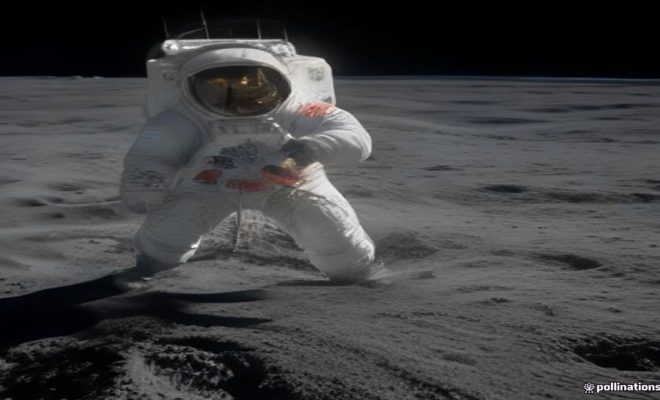
The Moon. It hangs there, a silent sentinel in our night sky, seemingly untouched and eternal. But beneath its pockmarked surface lies a treasure trove that has ignited a furious, often contentious, race among nations and private companies. We’re talking about resources — water ice for rocket fuel and life support, rare earth elements vital for modern tech, and perhaps most tantalizingly, helium-3, a potential clean energy source that could power Earth for millennia. This isn’t science fiction anymore; it’s a rapidly unfolding reality, and the question of who gets to claim these lunar riches is pushing the boundaries of international law and diplomacy.
The stakes couldn’t be higher. Imagine the geopolitical shifts, the economic booms, and the technological leaps that could arise from successfully extracting these extraterrestrial assets. Yet, the legal landscape is as cratered and ambiguous as the Moon itself. While the 1967 Outer Space Treaty famously declares that no country can ‘own’ the Moon, it’s largely silent on whether private entities, backed by national laws, can mine its resources. This glaring loophole has led to a fascinating, and sometimes fraught, competition. As investors eye the potential for astronomical returns, and nations jockey for position, understanding the current state of play in countries’ lunar resource extraction comparison is absolutely crucial. Let’s dig into the global players shaping this lunar land rush.
1. The United States: Pushing the Commercial Frontier
When it comes to lunar resource extraction, the United States has been a vocal and proactive proponent of commercial involvement. Its stance is clear: while no nation can claim sovereignty over celestial bodies, private companies, empowered by national law, absolutely can extract and utilize space resources. This philosophy is enshrined in the U.S. Commercial Space Launch Competitiveness Act of 2015, a landmark piece of legislation that grants U.S. citizens the right to own, transport, and sell space resources. This wasn’t a quiet move; it was a deliberate signal to the world that America intends to facilitate and participate in lunar mining.
Beyond domestic law, the U.S. has spearheaded the Artemis Accords, a series of bilateral agreements that outline principles for peaceful and sustainable space exploration. While not a treaty, the Accords provide a framework for cooperation, explicitly endorsing the idea of ‘utilization of space resources’ in a manner consistent with the Outer Space Treaty. This has drawn both praise for establishing norms and criticism for potentially creating a ‘mining club’ that could exclude or disadvantage nations not party to the agreements. Nevertheless, the U.S. approach aims to foster a robust commercial space industry, believing that private innovation will be the engine of future lunar development.
2. Luxembourg: The Little Country with Big Space Ambitions
You might not expect a small European nation known for its financial services to be a frontrunner in space mining, but Luxembourg has carved out a surprisingly significant role. In 2017, it passed its own law on the exploration and utilization of space resources, mirroring the U.S. legislation by granting private companies the right to appropriate resources extracted from space. This move was a strategic play to become a hub for the nascent space resources industry, leveraging its financial expertise and stable regulatory environment to attract innovative startups.
Luxembourg isn’t just offering legal frameworks; it’s actively investing. The government has poured millions into initiatives like the SpaceResources.lu program, providing seed funding, mentorship, and research opportunities for companies developing space mining technologies. They understand that legal certainty combined with financial backing is a powerful magnet. Their forward-thinking approach has made them a surprisingly influential player in the global discussion on countries’ lunar resource extraction comparison, demonstrating that size isn’t everything when it comes to shaping the future of space commerce.
3. Japan: Precision and Pragmatism in the Lunar Race
Japan’s approach to lunar resource extraction is characterized by its typical blend of technological prowess and pragmatic caution. While not as overtly aggressive in its legal declarations as the U.S. or Luxembourg, Japan has been a consistent leader in robotic exploration and asteroid sample return missions, which are direct precursors to lunar mining. Its Hayabusa and Hayabusa2 missions, which brought back samples from asteroids Ryugu and Itokawa, have demonstrated an unparalleled capability in precision extraterrestrial operations – skills directly transferable to lunar resource retrieval. (See: Resources on the Moon.)
Domestically, Japan passed the Act on Promoting the Business Activities of Commercial Space Resource Exploration and Development in 2021. This law grants Japanese companies the right to possess and sell resources extracted from the Moon or other celestial bodies. Japan also plays a significant role in international discussions, often advocating for a balanced approach that respects existing treaties while allowing for commercial development. Their strategy seems to be one of quiet, methodical advancement, building the foundational technologies and legal frameworks necessary to be a major player when lunar mining becomes commercially viable. For more context, see EV battery breakthroughs and their impact on technology.
4. United Arab Emirates: Diversifying into the Cosmos
The United Arab Emirates, known for its rapid modernization and visionary projects, has also thrown its hat into the lunar resource extraction ring. Recognizing the finite nature of terrestrial oil reserves, the UAE sees space as a critical area for future economic diversification and technological advancement. They’ve made significant investments in space infrastructure, including the Mohammed Bin Rashid Space Centre, and have ambitious plans for lunar exploration.
In 2023, the UAE enacted its own national space law, which includes provisions for the ownership and utilization of space resources by private Emirati companies. This aligns them with the U.S. and Luxembourg in establishing a domestic legal basis for commercial space mining. The UAE’s participation in the Artemis Accords further underscores its commitment to collaborating on international norms for space resource activities. Their rapid entry into this complex field highlights a broader trend: nations are recognizing the strategic importance of space resources not just for scientific exploration, but for long-term economic prosperity and national prestige.
5. Russia: A Legacy Power Navigating New Frontiers
Russia, with its deep and storied history in space exploration, presents a more complex picture in the context of countries’ lunar resource extraction comparison. While a signatory to the Outer Space Treaty and traditionally a proponent of strict non-appropriation, recent years have seen Russia express interest in lunar resource utilization, albeit with a different philosophical bent than the Western commercial-first approach. Russia’s Roscosmos has long-term plans for lunar bases, which inherently imply resource utilization for sustainability.
However, Russia has been critical of the U.S.-led Artemis Accords, viewing them as an attempt to establish unilateral norms rather than genuinely multilateral ones. They’ve opted to pursue their own lunar programs, often in cooperation with China, focusing on state-led initiatives rather than purely private commercial ventures. The legal framework within Russia for private space resource extraction isn’t as developed or explicit as in the U.S. or Luxembourg, reflecting a more state-centric view of strategic industries. This doesn’t mean they’re out of the game; it simply means their path to lunar resources will likely be through state-owned enterprises and international partnerships that align with their geopolitical vision.
6. China: The Strategic Long Game
China is rapidly emerging as a major force in space, and its lunar ambitions are undeniable. Its Chang’e program has achieved remarkable successes, including the first-ever soft landing on the far side of the Moon and bringing back lunar samples. While China has not enacted specific national legislation explicitly granting private companies the right to extract and own space resources in the same vein as the U.S. or Luxembourg, its state-led space program is clearly laying the groundwork for future lunar resource utilization.
China’s strategic approach involves long-term planning, significant state investment, and a focus on developing all aspects of the space value chain, from launch capabilities to lunar infrastructure. Its partnerships, particularly with Russia, signal a desire to establish alternative international frameworks for space governance that may challenge the U.S.-led Accords. For China, lunar resources are not just about commercial opportunity; they are a critical component of its broader geopolitical strategy and its aspiration to become a leading space power. This state-driven, comprehensive approach means China is absolutely a contender in any countries’ lunar resource extraction comparison, even without a direct commercial mining law yet.
7. India: A Rising Star with Pragmatic Goals
India’s space program, ISRO, has demonstrated incredible capabilities with its Chandrayaan missions, including the historic soft landing of Chandrayaan-3 near the Moon’s south pole in August 2023. This region is of particular interest due to the suspected presence of significant water ice deposits in permanently shadowed craters, a prime target for future lunar resource extraction. India’s successes have cemented its position as a serious player in lunar exploration. (See: NASA's Moon Missions.)
While India has yet to pass specific national laws on space resource extraction for private entities, its pragmatic approach to space development suggests that such considerations are on the horizon. India has consistently emphasized peaceful uses of outer space and adherence to international treaties. As a signatory to the Outer Space Treaty, any future legislation would likely aim to balance commercial opportunities with its international obligations. Their focus on cost-effective missions and indigenous technology development positions them well to participate in the lunar resource economy, potentially through international collaborations or a gradual evolution of their domestic legal framework. For more context, see industries facing catastrophic changes due to resource competition.
8. The European Space Agency (ESA) & Member States: A Collaborative Approach
The European Space Agency (ESA) operates as a collaborative body for its 22 member states, and its approach to lunar resource extraction reflects this collective spirit. While individual member states like Luxembourg have enacted their own laws, ESA itself is deeply involved in developing the technologies and legal discussions surrounding space resources. They’ve launched initiatives like ‘Space Resources Strategy,’ aiming to develop the scientific, technological, and legal foundations for sustainable resource utilization.
ESA often acts as a bridge-builder in international forums, advocating for a multilateral, consensus-based approach to space governance. They participate in discussions at the United Nations Committee on the Peaceful Uses of Outer Space (COPUOS), where much of the international space law is debated. Many ESA member states are also signatories to the Artemis Accords, indicating a willingness to engage with that framework. The European approach, therefore, is multifaceted, combining individual national initiatives with a strong emphasis on international collaboration and the development of shared standards and technologies.
9. The Deep Divide: Outer Space Treaty vs. Commercial Imperatives
At the heart of this global scramble for lunar resources lies a fundamental tension between the 1967 Outer Space Treaty and the burgeoning commercial imperatives of the 21st century. The Treaty, a foundational document of space law, explicitly states that ‘Outer space, including the Moon and other celestial bodies, is not subject to national appropriation by claim of sovereignty, by means of use or occupation, or by any other means.’ This is clear: no country owns the Moon.
However, the Treaty is famously ambiguous on commercial extraction. It doesn’t explicitly prohibit private entities from mining resources, nor does it explicitly permit it. This ‘grey area’ is precisely what nations like the U.S., Luxembourg, and the UAE have exploited with their national laws, asserting that while a country cannot claim the Moon, its citizens, operating under national jurisdiction, can claim the resources they extract. Critics argue this interpretation undermines the spirit of the Treaty and could lead to a ‘first-come, first-served’ free-for-all, potentially sparking conflict. Proponents argue it’s necessary to foster innovation and investment in an industry vital for humanity’s expansion into space. This legal and ethical debate is far from settled and will undoubtedly shape the future of countries’ lunar resource extraction comparison for decades to come, defining who truly benefits from the Moon’s vast, untapped potential.
10. The Lure of Lunar Resources: What’s Worth the Trip?
So, what exactly makes the Moon such a coveted prize? It’s not just about the shiny, rare stuff. The true value lies in resources that can support sustained human presence and exploration, alongside materials that could revolutionize Earth-based industries. Let’s break down the key contenders:
- Water Ice: This is arguably the most critical resource. Found primarily in permanently shadowed regions near the lunar poles, water ice can be processed into breathable oxygen and, crucially, hydrogen and oxygen rocket propellant. Imagine refueling missions directly from the Moon, drastically reducing the cost and complexity of deep-space travel. It transforms the Moon from a destination into a gas station and a staging post for Mars and beyond.
- Helium-3: This isotope is a potential game-changer for clean energy. On Earth, helium-3 is incredibly rare, but it’s relatively abundant on the Moon, deposited by solar winds over billions of years. Fusion reactions using helium-3 are theorized to produce minimal radioactive waste, offering a cleaner, safer alternative to current nuclear fission power. The energy potential is enormous, with estimates suggesting a few shuttle loads of lunar helium-3 could power the entire Earth for a year.
- Rare Earth Elements: While the Moon isn’t expected to be a primary source of all rare earths, some specific elements, vital for electronics, electric vehicles, and renewable energy technologies, might be present in commercially viable quantities. These resources are currently dominated by a few terrestrial suppliers, creating geopolitical vulnerabilities. Lunar rare earths could diversify supply chains and stabilize global markets.
- Construction Materials (Regolith): The lunar surface is covered in regolith, a loose dust and rock layer. While not traditionally seen as a resource to bring back to Earth, regolith can be sintered or 3D-printed into building materials, shielding for habitats, and even solar cells. This “in-situ resource utilization” (ISRU) is essential for building sustainable lunar bases, significantly reducing the payload needed from Earth.
- Platinum Group Metals: Some theories suggest that asteroid impacts could have deposited platinum group metals (like platinum, palladium, and rhodium) on the Moon’s surface. These metals are crucial for catalysts in automotive and industrial applications, and any significant lunar deposits would be incredibly valuable.
The economic models for lunar extraction are still evolving, but the potential to create a multi-trillion-dollar space economy is a powerful motivator for nations and private enterprises alike. The first country or consortium to reliably extract and process these resources will hold an immense strategic advantage.
11. Expert Perspectives: The Geopolitical Chessboard
The race for lunar resources isn’t just about technology and economics; it’s a complex geopolitical chess match. Space law experts and international relations scholars offer varied perspectives on the current trajectory:
- The “Tragedy of the Commons” Argument: Many scholars, particularly those advocating for stronger international governance, warn against a “tragedy of the commons” scenario. This concept suggests that without clear, enforceable rules for shared resources, individual actors will deplete or degrade them for short-term gain, ultimately harming everyone. They argue that national laws permitting private appropriation, without a robust international framework, could lead to chaotic competition, environmental damage on the Moon, and potential conflicts over prime resource locations.
- The “Pioneers and Pathfinders” Argument: On the other side, proponents of the U.S. and Luxembourg model argue that initial commercial ventures are necessary to prove the viability of lunar extraction. They believe that innovation thrives best in a less restrictive environment, and that a “first-mover advantage” will ultimately benefit humanity by accelerating technological development. They often point to the historical precedent of maritime law, where early exploration and resource claims eventually led to more comprehensive international agreements.
- The Role of Multilateral Institutions: Organizations like the United Nations Committee on the Peaceful Uses of Outer Space (COPUOS) are trying to bridge this divide. However, consensus-based decision-making in such large bodies is notoriously slow. Some experts believe COPUOS is the only legitimate forum for developing truly universal space resource laws, while others contend its pace is too slow to keep up with rapid technological advancements and commercial pressures.
- The Security Dimension: Beyond economics, there’s a growing security concern. Control over lunar resources, especially water ice for propellant, could grant a nation or bloc significant strategic leverage in space. This raises questions about military applications, dual-use technologies, and the potential for a new arms race in cis-lunar space.
These diverse perspectives highlight the intricate balance policymakers must strike between fostering innovation, ensuring equitable access, and preventing conflict in humanity’s newest frontier.
12. The Path Ahead: Technology, Investment, and Collaboration
While the legal and geopolitical debates rage, the practical work of making lunar resource extraction a reality is accelerating. This involves massive investments in several key technological areas:
- Robotics and AI: Autonomous robots will be crucial for initial prospecting, mining, and processing operations on the Moon, especially in hazardous environments like permanently shadowed craters. AI will enable these robots to make complex decisions without constant Earth-based supervision.
- In-Situ Resource Utilization (ISRU): Developing robust ISRU technologies is paramount. This includes methods for extracting water from regolith, separating hydrogen and oxygen, and using lunar soil to create construction materials. Companies are experimenting with everything from microwave heating to solar concentrators for water extraction.
- Power Generation: Sustainable power sources on the Moon are essential. This means advanced solar arrays capable of withstanding lunar dust, and potentially small modular nuclear reactors for continuous power during the long lunar night.
- Transportation and Logistics: Efficient and cost-effective lunar landers, surface rovers, and eventually, lunar ascent vehicles will be needed to transport resources and personnel. The development of lunar orbital infrastructure, such as relay satellites and fuel depots, will also be critical.
Collaboration is also a recurring theme. Even nations with robust independent programs like China and Russia are seeking partnerships. The sheer scale and cost of lunar development make international cooperation almost a necessity, despite the underlying geopolitical competition. Whether through bilateral agreements like the Artemis Accords or more multilateral frameworks, shared investments and expertise will undoubtedly pave the way for humanity’s sustained presence on the Moon.
Frequently Asked Questions About Lunar Resource Extraction
- Q1: Is lunar resource extraction legal under current international law?
- A1: This is the core of the debate! The 1967 Outer Space Treaty prohibits national appropriation of celestial bodies. However, it doesn’t explicitly address the extraction and ownership of resources by private entities. Countries like the U.S. and Luxembourg interpret this ambiguity as permitting their citizens to extract and own resources under national law, arguing this doesn’t constitute national appropriation. Other nations and legal scholars contend that such actions violate the spirit of the Treaty or require a new, universally agreed-upon framework.
- Q2: What are the most valuable resources on the Moon?
- A2: Water ice is considered the most valuable in the near term because it can be converted into rocket propellant and life support (oxygen and water) for lunar bases and deep-space missions. This dramatically reduces the cost of space operations. Helium-3 is a long-term prospect, highly valuable for its potential as a clean fusion energy source on Earth. Rare earth elements and platinum group metals are also of interest due to their high demand and limited terrestrial supply.
- Q3: How would lunar resources be brought back to Earth?
- A3: For resources like water ice, the primary goal is “in-situ resource utilization” (ISRU) – using them on the Moon itself for fuel and life support, rather than bringing them back. However, high-value resources like Helium-3 or specific rare earths would need to be transported. This would involve specialized lunar ascent vehicles, followed by transfer to Earth-bound spacecraft. The economics of such transportation are incredibly challenging and would only be viable for extremely valuable, lightweight materials.
- Q4: Who are the main players in the lunar resource race?
- A4: The United States (with its commercial focus and Artemis Accords), China (with its state-led long-term program), Russia (a legacy space power, often partnering with China), Japan (known for robotic precision), India (a rising star with cost-effective missions), and European nations (through ESA and individual initiatives like Luxembourg’s space mining law) are the primary national actors. Many private companies, backed by these nations, are also actively developing technologies.
- Q5: What are the environmental concerns of lunar mining?
- A5: While the Moon lacks a biosphere, concerns include lunar dust contamination (which can damage equipment and pose health risks to astronauts), altering the lunar surface (e.g., excavating craters for water ice), and potential light pollution from extensive operations. There are also concerns about radio frequency interference with scientific instruments. Establishing environmental regulations for celestial bodies is an area of active discussion in international forums.
- Q6: What is the Artemis Accords, and why is it controversial?
- A6: The Artemis Accords are a set of bilateral agreements led by the U.S., outlining principles for peaceful and sustainable space exploration, including the utilization of space resources. It’s controversial because critics argue it’s an attempt to establish international norms outside of existing multilateral bodies like the UN, potentially creating a “mining club” that could exclude or disadvantage nations not party to the agreements. Proponents view it as a necessary framework to enable commercial activity in space.
- Q7: How much would it cost to set up a lunar mining operation?
- A7: Estimates vary wildly, but it would be incredibly expensive. Initial infrastructure, including prospecting missions, landers, surface robots, processing plants, and power systems, could easily run into tens or hundreds of billions of dollars. The high upfront investment is why governments are currently driving much of the development, often with the goal of enabling private industry once the initial risks are mitigated.
Trending Now
Frequently Asked Questions
Who owns the resources on the Moon?
According to the 1967 Outer Space Treaty, no country can claim ownership of the Moon. However, the legal status of private entities mining its resources remains ambiguous, leading to a competitive landscape where nations and companies aim to extract lunar riches.
What resources are available on the Moon?
The Moon is believed to contain valuable resources such as water ice, rare earth elements, and helium-3. Water ice can be used for rocket fuel and life support, while helium-3 is considered a potential clean energy source for Earth.
How is the United States involved in lunar resource extraction?
The United States actively supports commercial involvement in lunar resource extraction. The U.S. Commercial Space Launch Competitiveness Act of 2015 allows private companies to extract and utilize space resources, positioning the U.S. as a leader in the lunar land rush.
What are the legal challenges of mining the Moon?
The primary legal challenge stems from the 1967 Outer Space Treaty, which prohibits national ownership of celestial bodies. This creates uncertainty regarding the rights of private companies to mine resources, leading to potential conflicts and a need for clearer regulations.
What is the significance of helium-3 on the Moon?
Helium-3 is a rare isotope that has the potential to be used as a clean energy source through nuclear fusion. Its abundance on the Moon could provide a sustainable energy solution for Earth, making it a highly sought-after resource in the race for lunar riches.
Agree or disagree? Drop a comment and tell us what you think.