Stunning: The US Senate Crypto Bill Just Crumbled – Here’s Why It Matters to Your Money
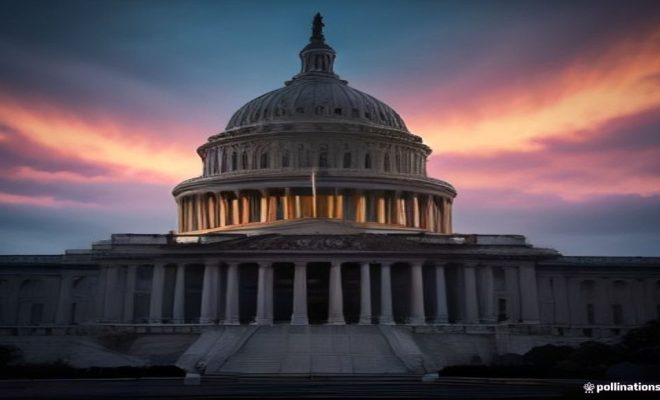
Well, here we are again. Another ambitious attempt to bring clarity to the wild west of cryptocurrency has seemingly gone up in smoke on Capitol Hill. On September 15, 2026, the U.S. Senate delivered a significant setback to the burgeoning digital asset market when it failed to advance comprehensive cryptocurrency legislation. This bill, known as the Digital Asset Market Clarity Act, didn’t just stumble; it collapsed in a nail-biting 49-50 vote. For an industry that’s now worth a staggering $2.3 trillion, this wasn’t just a bump in the road; it was a major blow, leaving many wondering what comes next for regulation in the United States. And let’s be honest, for anyone with a stake in crypto, big or small, this decision has real implications.
You see, the digital asset space has been crying out for a clear regulatory framework for years. We’ve seen a patchwork of state laws, federal agencies vying for jurisdiction, and a general sense of uncertainty that has, frankly, stifled innovation and made it difficult for legitimate businesses to thrive. This particular US Senate crypto bill was supposed to change all that. It was championed by Republicans, and notably, it had the backing of President Donald Trump. Its goal was ambitious: to create a new, coherent federal regulatory framework. But as with so many things in Washington, politics, personal interests, and deeply entrenched partisan divides ultimately proved to be insurmountable obstacles.
The Digital Asset Market Clarity Act: A Glimpse at What Could Have Been
Let’s rewind a bit and understand what this US Senate crypto bill actually proposed. The Digital Asset Market Clarity Act wasn’t some minor tweak; it was designed to be a sweeping piece of legislation. Its core objective was to establish a clear federal regulatory framework for cryptocurrencies and other digital assets. Think about it: right now, we have the Securities and Exchange Commission (SEC) often labeling many cryptocurrencies as securities, while the Commodity Futures Trading Commission (CFTC) sees others as commodities. Then there are banks, fintech firms, and various state regulators all trying to figure out where they fit in. It’s a mess, plain and simple.
This bill aimed to cut through that complexity. It sought to define what constitutes a digital asset, how it should be traded, and which federal agency would have primary oversight. The idea was to create a predictable environment where innovators could build, investors could participate with greater confidence, and consumers would be better protected from scams and market manipulation. Proponents argued it would have cemented America’s leadership in the digital economy, attracting talent and capital that might otherwise flow to more crypto-friendly jurisdictions overseas. It wasn’t just about making rules; it was about laying down the tracks for future growth and ensuring the U.S. remained at the forefront of this technological revolution.
The Political Fault Lines: Republicans, Democrats, and a President’s Portfolio
So, if the potential benefits were so clear, why did it fail? The answer, as it often is in Washington, is complex and deeply political. The US Senate crypto bill had strong Republican backing, with Senator Cynthia Lummis of Wyoming being a prominent lead sponsor. She’s been a vocal advocate for digital assets, often emphasizing the need for regulatory clarity and the potential for crypto to empower individuals financially. The fact that President Trump himself endorsed the bill also gave it significant weight, signaling a desire from the executive branch for a more defined approach to digital assets.
However, Senate Democrats ultimately blocked the legislation. Their opposition wasn’t necessarily to the idea of crypto regulation itself, but rather to specific concerns they raised, particularly regarding safeguards – or the perceived lack thereof – governing President Trump’s extensive crypto investments. This is where the story gets particularly thorny. Democrats argued that without sufficient guardrails, the bill could allow the sitting President to personally profit from the very legislation he was advocating for, creating a significant conflict of interest. This wasn’t just a policy disagreement; it was a direct challenge to the ethics and integrity of the legislative process itself, especially given the President’s public support for the bill and his acknowledged holdings in the crypto space.
The Elephant in the Room: President Trump’s Crypto Holdings
Let’s talk about those investments, because they were undeniably a central point of contention in the debate over the US Senate crypto bill. President Trump has publicly disclosed his ownership of various digital assets, and this fact became a lightning rod for criticism from Senate Democrats. The concern wasn’t just that he owned crypto; it was the potential for perceived or actual self-enrichment through the passage of legislation that could directly impact the value of his holdings. In a sector as volatile and susceptible to market sentiment as cryptocurrency, any regulatory clarity, or even the perception of it, can have significant price implications.
Critics argued that if the Digital Asset Market Clarity Act were to pass, and it was structured in a way that significantly boosted the crypto market or specific assets, the President could see a direct financial benefit. This isn’t a new concern in politics; the ethics of elected officials holding investments in industries they regulate is a perennial debate. But in the context of a nascent, largely unregulated, and rapidly evolving market like digital assets, these concerns were amplified. Democrats pushed for stronger ethical oversight, or even divestment requirements, which they felt were not adequately addressed in the proposed bill, leading to their decisive opposition.
Senator Lummis’s Frustration: Moving Goalposts and Political Priorities
Senator Cynthia Lummis, a Republican from Wyoming and a key architect of the Digital Asset Market Clarity Act, did not mince words following the bill’s defeat. She expressed deep frustration, accusing Democrats of “moving the goalposts” and prioritizing political maneuvering over what she saw as critical issues: consumer protection and American leadership in digital assets. Her argument was that the objections raised by Democrats were not about the substance of the regulation itself, but rather about scoring political points or creating an impediment based on the President’s personal finances. (See: cryptocurrency regulation in the Senate.)
From Lummis’s perspective, the US Senate crypto bill was a good-faith effort to bring order to a chaotic market. She likely believed that the framework would have provided much-needed clarity for businesses, protected retail investors from scams, and ensured that the U.S. remained a hub for innovation in Web3 and blockchain technology. To see it fail over what she characterized as politically motivated concerns, rather than genuine policy shortcomings, was clearly disheartening for her and other proponents. It highlights the deep partisan chasm that often prevents even seemingly beneficial legislation from passing in Washington, especially when high-profile figures are involved.
The Wider Implications for the $2.3 Trillion Digital Asset Market
Let’s be clear: the failure of this US Senate crypto bill isn’t just a political footnote; it has tangible consequences for the immense $2.3 trillion digital asset market. Uncertainty is kryptonite for markets, and right now, the crypto industry in the U.S. is facing a renewed period of it. Without a clear federal framework, companies operating in this space will continue to grapple with regulatory ambiguity. This can lead to several problems:
- Innovation Flight: Startups and established companies may choose to domicile in jurisdictions with clearer, more favorable regulatory environments, taking jobs and economic growth with them.
- Investor Hesitation: Institutional investors, who often require regulatory certainty before committing significant capital, might remain on the sidelines, slowing the mainstream adoption of digital assets.
- Consumer Vulnerability: Without comprehensive federal oversight, retail investors may remain more exposed to scams, fraudulent projects, and market manipulation, as various state and federal agencies struggle to coordinate their enforcement efforts.
- Legal Battles: The lack of clarity means ongoing and potentially increasing litigation, as agencies like the SEC continue to pursue enforcement actions against crypto firms, often without a specific legislative mandate for digital assets.
Ultimately, this creates a less competitive environment for American businesses and potentially leaves U.S. investors at a disadvantage compared to those in countries that have embraced more forward-thinking regulatory approaches.
The Lingering Specter of Conflict of Interest: A Broader Problem?
The controversy surrounding President Trump’s crypto investments and their role in the defeat of the US Senate crypto bill raises a broader, more uncomfortable question: how do we handle potential conflicts of interest when elected officials hold significant stakes in industries they regulate? This isn’t unique to crypto or to President Trump. Lawmakers often have diverse investment portfolios, and drawing a clear line between personal finance and public duty can be incredibly challenging.
However, the unique characteristics of the crypto market — its relative newness, high volatility, and the direct impact of regulatory news on asset prices — arguably amplify these concerns. When a President, or any high-ranking official, actively champions legislation that could directly affect the value of their personal assets, it naturally invites scrutiny. This deadlock suggests that until a more robust framework for addressing such conflicts is established, or until political figures are willing to make difficult choices about their holdings, similar legislative efforts in emerging, high-growth sectors could face similar fates. It’s a fundamental tension between personal freedom and public trust that Washington constantly grapples with.
What Happens Next? The Path Forward for Crypto Regulation in the US
So, where do we go from here after the collapse of this significant US Senate crypto bill? Well, it’s unlikely that the drive for regulation will simply disappear. The digital asset market is too large and too impactful to be ignored indefinitely. We’ll likely see a few immediate consequences and potential paths forward:
- Continued Agency-Led Enforcement: Expect the SEC and CFTC to continue asserting their jurisdiction through enforcement actions and existing regulatory powers. This piecemeal approach, while providing some clarity on a case-by-case basis, is far from a comprehensive framework.
- Bipartisan Negotiations (Eventually): While partisan gridlock scuttled this bill, the underlying need for regulation remains. Future attempts will likely require more extensive bipartisan negotiation, perhaps focusing on narrower aspects of crypto rather than a single, sweeping bill. Finding common ground on consumer protection, anti-money laundering, and market integrity might be easier than agreeing on the entire scope of the industry.
- State-Level Initiatives: Some states have been proactive in creating their own digital asset frameworks. This trend might accelerate, leading to an even more fragmented regulatory landscape across the U.S., which could further complicate operations for national crypto businesses.
- Focus on Stablecoins: One area where there has been some bipartisan agreement is the need to regulate stablecoins. These digital assets, pegged to fiat currencies, are seen by many as posing systemic risks if not properly managed. It’s possible a more focused bill addressing stablecoins could gain traction sooner than a comprehensive crypto bill.
- Election Impact: The outcome of future elections, particularly presidential ones, could significantly alter the regulatory landscape. A new administration might have a different approach, either more hands-on or more laissez-faire, depending on their party’s platform and individual perspectives on digital assets.
It’s a long road, and patience, unfortunately, will be a virtue for those hoping for clarity.
Comparing the US Approach to Global Crypto Regulation
It’s worth putting the U.S. situation into a global context. While the US Senate crypto bill struggled, other major economies have made significant strides in establishing regulatory frameworks. The European Union, for instance, has been working on its Markets in Crypto-Assets (MiCA) regulation, which aims to create a harmonized framework across all member states. Countries like the UK, Japan, and Singapore have also been proactive in developing regulations that provide clarity for crypto businesses and investors.
This global divergence highlights a potential risk for the U.S. If America continues to lag in establishing a clear and comprehensive regulatory environment, it risks falling behind in the global race for digital asset innovation. Companies and talent might gravitate towards jurisdictions that offer more certainty and support. This isn’t just about financial markets; it’s about technological leadership, economic competitiveness, and ultimately, where the next generation of internet infrastructure and financial services will be built. The U.S. has often been a leader in financial innovation, but the current regulatory paralysis in crypto puts that position in jeopardy.
The Broader Implications for Tech and Finance
The failure of the US Senate crypto bill isn’t just a blow to the crypto industry; it has broader implications for the intersection of technology and finance. What we’re seeing is a fundamental struggle to adapt existing regulatory structures, designed for traditional assets, to a new paradigm of digital, decentralized, and often borderless technologies. This challenge isn’t unique to crypto; it applies to AI, fintech, and other emerging sectors that push the boundaries of established legal and financial norms. (See: importance of clear regulatory frameworks.)
This legislative setback underscores the difficulty governments face in keeping pace with rapid technological advancement. It also highlights the tension between fostering innovation and ensuring consumer protection, market stability, and national security. For better or worse, the U.S. often sets global standards. When it struggles to define its stance on a technology as transformative as blockchain and digital assets, it creates a ripple effect, slowing down broader adoption and clarity worldwide. The world is watching, and for now, America’s path forward in digital finance remains shrouded in uncertainty.
Expert Perspectives on the Regulatory Stalemate
The ongoing regulatory uncertainty in the U.S. has drawn varied reactions from experts across finance, law, and technology. Many legal scholars point to the inherent challenges of fitting novel digital assets into existing regulatory boxes. For instance, some argue that applying 1930s securities laws to cryptocurrencies designed with decentralization in mind is like trying to fit a square peg in a round hole. They suggest a complete legislative overhaul, rather than piecemeal enforcement, is the only sustainable solution.
Economists often highlight the potential for capital flight. They worry that a lack of clear rules makes the U.S. less attractive for crypto businesses and investors, potentially ceding economic leadership to more progressive jurisdictions. Take, for example, the recent moves by countries like the UAE and Switzerland, which have actively courted crypto firms with tailored regulatory frameworks. This creates a competitive disadvantage for the U.S. in what could be a trillion-dollar industry.
On the other hand, some consumer advocates and financial stability experts express caution. They argue that rushing into regulation without fully understanding the risks could be detrimental. They point to the numerous instances of fraud, hacks, and market manipulation that have plagued the crypto space, emphasizing the need for robust protections. The collapse of major crypto entities in previous years serves as a stark reminder of the potential for widespread investor harm if regulations aren’t thoughtfully crafted and effectively enforced.
Technology innovators, meanwhile, are often caught in the middle. They crave clarity to build and innovate without fear of retrospective enforcement, but they also understand the need for safeguards to ensure the long-term viability and legitimacy of the industry. The consensus among many is that a balanced approach is needed – one that fosters innovation while mitigating systemic risks and protecting consumers.
The Role of Lobbying and Industry Influence
It’s no secret that the cryptocurrency industry has significantly ramped up its lobbying efforts in Washington over the past few years. As the market capitalization grew, so did the financial resources dedicated to influencing policy makers. Major crypto exchanges, blockchain development firms, and investment funds have established strong presences on Capitol Hill, spending millions to educate lawmakers and advocate for favorable regulation.
These lobbying efforts aim to shape the narrative around crypto, emphasizing its potential for financial inclusion, technological advancement, and economic growth, while also addressing concerns about illicit finance and investor protection. Groups like the Blockchain Association and Coin Center play crucial roles in this advocacy. Their goal is often to push for clear definitions, appropriate agency oversight, and a regulatory environment that doesn’t stifle innovation with overly burdensome rules.
The failure of the US Senate crypto bill, despite significant industry support and lobbying, highlights the formidable political hurdles that remain. Even with well-funded advocacy, deep partisan divides and high-profile political controversies can overshadow substantive policy discussions. This suggests that while industry influence is growing, it’s still navigating a complex political landscape where factors beyond pure policy arguments often determine legislative outcomes.
Frequently Asked Questions About US Senate Crypto Bill and Regulation
Q1: What was the “Digital Asset Market Clarity Act”?
The Digital Asset Market Clarity Act was a proposed US Senate crypto bill aimed at creating a comprehensive federal regulatory framework for cryptocurrencies and other digital assets. It sought to define digital assets, clarify which federal agencies would have oversight (e.g., SEC vs. CFTC), and establish rules for trading and market conduct to foster innovation and protect consumers. (See: impact of cryptocurrency legislation.)
Q2: Why did the US Senate crypto bill fail?
The bill failed primarily due to partisan opposition, collapsing in a 49-50 Senate vote. Democrats raised significant concerns about potential conflicts of interest related to President Trump’s disclosed crypto investments, arguing the bill lacked sufficient safeguards to prevent personal enrichment by the President from legislation he actively supported. Republicans, like Senator Cynthia Lummis, countered that Democrats were “moving the goalposts” for political reasons.
Q3: What are the main points of contention in US crypto regulation?
Key points of contention include:
- Jurisdiction: Whether the SEC (securities) or CFTC (commodities) should have primary oversight for most digital assets.
- Definition: How to legally define various digital assets (e.g., utility tokens, stablecoins, NFTs).
- Consumer Protection: The extent of safeguards needed to protect retail investors from scams and market manipulation.
- Innovation vs. Regulation: Balancing the need to foster technological innovation with the imperative to prevent systemic risks and illicit finance.
- Centralization vs. Decentralization: How to regulate truly decentralized protocols versus centralized exchanges and entities.
Q4: How does the US approach compare to other countries?
The U.S. currently has a fragmented and often uncertain regulatory landscape for crypto, relying heavily on existing laws and agency enforcement. In contrast, jurisdictions like the European Union (with its MiCA regulation), the UK, Japan, and Singapore have made significant progress in establishing dedicated, comprehensive frameworks for digital assets. This divergence risks the U.S. falling behind in global crypto innovation and leadership.
Q5: What are the potential consequences of continued regulatory uncertainty?
Continued uncertainty can lead to:
- Innovation Flight: Crypto businesses and talent moving to more crypto-friendly jurisdictions.
- Investor Hesitation: Institutional investors remaining cautious, slowing mainstream adoption.
- Consumer Vulnerability: Increased exposure of retail investors to scams and market manipulation due to a lack of clear, coordinated oversight.
- Legal Battles: More enforcement actions and litigation from agencies like the SEC, creating an unpredictable environment.
- Economic Disadvantage: The U.S. potentially losing its competitive edge in the rapidly evolving digital economy.
Q6: What’s the likelihood of a new US Senate crypto bill passing soon?
A comprehensive US Senate crypto bill faces significant hurdles in the near term due to persistent partisan divides and the complexity of the issue. However, there’s a higher likelihood of more focused legislation, particularly around stablecoins, which have garnered some bipartisan support. Future elections and shifts in political priorities could also influence the timing and scope of new legislative efforts.
So, the Digital Asset Market Clarity Act is dead, at least for now, leaving the U.S. crypto industry once again in a state of regulatory limbo. The political deadlock, exacerbated by concerns over a sitting President’s financial interests, proved too potent for even a much-needed comprehensive US Senate crypto bill to overcome. It’s a disappointing outcome for those who hoped for clarity and certainty, but it’s a stark reminder that in Washington, even the most promising legislative efforts can unravel quickly when partisan lines harden and personal interests become central to the debate. The path to a coherent U.S. crypto framework remains long and arduous, and for now, we’re left to navigate the murky waters without a guiding light from Congress.
Trending Now
Frequently Asked Questions
What happened to the US Senate crypto bill?
The US Senate crypto bill, known as the Digital Asset Market Clarity Act, failed to advance on September 15, 2026, collapsing in a tight 49-50 vote. This setback has significant implications for the cryptocurrency market, which is valued at $2.3 trillion, as it leaves the industry without a clear regulatory framework.
Why is the Digital Asset Market Clarity Act important?
The Digital Asset Market Clarity Act aimed to establish a coherent federal regulatory framework for cryptocurrencies, addressing the current patchwork of state laws and regulatory uncertainty. Its failure represents a major blow to innovation and the legitimate growth of the digital asset industry in the United States.
What were the main goals of the crypto bill?
The primary goal of the Digital Asset Market Clarity Act was to create a clear regulatory framework for cryptocurrencies and digital assets at the federal level. This would help alleviate confusion between state laws and federal jurisdiction, ultimately fostering a healthier environment for the cryptocurrency market.
How does the failure of the crypto bill affect investors?
The failure of the crypto bill leaves investors in a state of uncertainty regarding regulatory oversight of cryptocurrencies. Without a clear framework, legitimate businesses may struggle to thrive, potentially impacting the value and stability of digital assets, which concerns both large and small investors.
Who supported the Digital Asset Market Clarity Act?
The Digital Asset Market Clarity Act was championed by Republican lawmakers and notably received backing from President Donald Trump. Despite this support, political divisions and personal interests ultimately led to its failure in the Senate.
What's your take on this? Share your thoughts in the comments below — we read every one.