Unpacking the Dallas Tragedy: New Waymo Accident Details Emerge
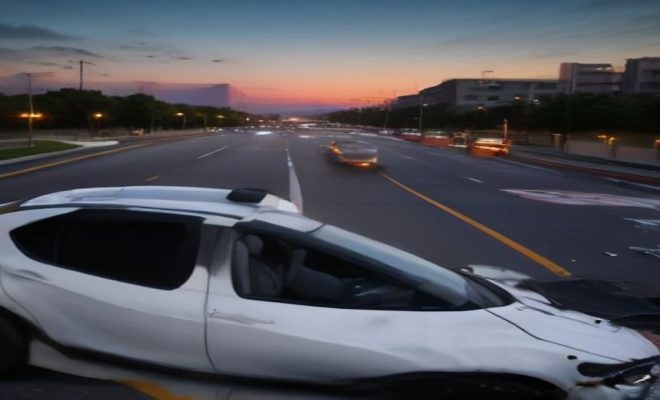
The Dallas Incident: A Closer Look at the Waymo Accident Details
The morning of August 10, 2026, brought with it a tragedy that has, understandably, ignited a firestorm of debate across the automotive and technology landscapes. In Dallas, a fatal incident involving a Waymo robotaxi and a pedestrian quickly went viral, not just for its inherent sorrow but for the complex questions it raises about the future of autonomous vehicles. Whenever a fatality occurs, especially one involving a cutting-edge technology like self-driving cars, the emotional impact is immense, and the search for answers becomes urgent. The initial reports and subsequent discussions have focused heavily on the Waymo accident details, trying to piece together precisely what happened and, crucially, who or what was ultimately responsible.
Here’s what we know: a pedestrian was tragically struck by an SUV, an initial impact that sent them careening into the path of an oncoming Waymo vehicle. The robotaxi, traveling at 24 mph, detected the individual a considerable 150 feet away. Despite this early detection, and the Waymo’s subsequent action to slow down, the pedestrian ultimately made contact with the autonomous vehicle at a reduced speed of approximately 5 mph. The outcome was devastating: a fatality. Yet, what makes this particular case so contentious are the preliminary findings from both police and Waymo’s own internal reports, which suggest the robotaxi was likely not at fault. More specifically, these reports indicate that the low-speed contact with the Waymo vehicle was not the primary cause of death. This distinction, while crucial for legal and ethical considerations, doesn’t diminish the human cost or the public’s understandable concern.
This incident isn’t just a local news story; it’s a global flashpoint. It taps into our collective anxieties about technology, control, and responsibility. For years, we’ve been told autonomous vehicles promise a safer future, free from human error. When such a promise confronts a stark reality like this Dallas tragedy, the narrative becomes complicated. It forces us to confront the intricate layers of causality in an increasingly automated world. What happens when a sequence of unfortunate events converges, and where does liability truly lie when multiple factors, human and machine, are involved? These are the questions that will continue to echo long after the headlines fade. Related reading: bill threatens driverless dreams.
The Chain of Events: Deconstructing the Dallas Fatality
To truly understand the Waymo accident details, we need to reconstruct the sequence of events as accurately as possible. Imagine the scene: a busy street in Dallas, a typical day suddenly interrupted by chaos. The initial impact, the one that set this tragic chain in motion, involved a human-driven SUV and a pedestrian. It was this primary collision that had the most severe and immediate consequences, propelling the pedestrian into the trajectory of the Waymo vehicle. This isn’t just a minor point; it’s the fulcrum upon which much of the liability discussion pivots. The pedestrian, already in a perilous situation, became an unavoidable obstacle for the oncoming robotaxi.
The Waymo vehicle, operating in fully autonomous mode, was traveling at 24 mph. Its sensor suite, a sophisticated array of cameras, lidar, and radar, performed as designed, detecting the pedestrian a remarkable 150 feet ahead. In the blink of an eye, the system processed this critical information, recognized the sudden and unexpected hazard, and initiated an emergency braking maneuver. This rapid response is precisely what autonomous vehicles are engineered for – to react faster and more consistently than a human driver might in a similar crisis. However, the laws of physics are unforgiving. Even with rapid braking, a vehicle moving at 24 mph cannot instantly stop. The deceleration brought the Waymo’s speed down significantly, resulting in a low-impact collision at approximately 5 mph.
This granular breakdown of speed, distance, and reaction time is essential. It highlights the distinction between the initial, high-energy impact from the SUV and the secondary, much lower-energy contact with the Waymo. While any contact leading to a fatality is horrific, the forensic analysis will inevitably focus on the kinetic energy involved in each impact and its specific contribution to the pedestrian’s injuries. This isn’t about absolving responsibility, but about accurately assigning it based on the physical realities of the incident. It underscores the complexity inherent in multi-vehicle, multi-party accidents, particularly when one of those parties is an autonomous system.
Autonomous Response: How Waymo’s System Reacted
One of the most scrutinizing aspects of any autonomous vehicle incident is the system’s reaction time and decision-making process. In this Dallas Waymo accident, the data suggests the Waymo’s autonomous driving system, often referred to as the ‘driver,’ performed precisely as it was programmed to do under extreme duress. The initial detection of the pedestrian at 150 feet is a testament to the advanced sensor capabilities of these vehicles. Human drivers, even highly attentive ones, might struggle to detect a rapidly appearing, unexpected obstacle at such a distance, especially if their focus is elsewhere for even a fraction of a second. This early detection provided the system with crucial milliseconds to initiate a response. (See: Waymo accident coverage by NY Times.)
Upon detection, the Waymo’s AI immediately recognized a high-priority hazard. Its programming would have triggered an emergency braking sequence, aiming to minimize impact energy and, ideally, avoid the collision altogether. The reduction from 24 mph to 5 mph demonstrates significant deceleration. While 5 mph might not sound fast, it’s still a speed that can cause injury, especially to someone who has just been subjected to a high-speed impact. However, the goal of an autonomous system in such a scenario is often to mitigate harm, not just avoid it entirely, which can be impossible given the circumstances. The system’s ‘decision’ to brake hard was a direct, programmed response to an emergency, designed to reduce the severity of any potential contact.
This incident provides a stark example of how autonomous systems are designed to handle the unexpected. They don’t panic, get distracted, or make emotional decisions. They process data and execute pre-programmed responses based on algorithms refined over millions of miles of simulated and real-world testing. While the outcome was tragic, the Waymo’s operational data will be critical in demonstrating that its system acted predictably and optimally given the impossible situation it was thrust into. This isn’t to say autonomous systems are infallible, but rather to highlight the distinct differences in their response mechanisms compared to human drivers, especially when evaluating Waymo accident details.
The Verdict of the Authorities: Not-at-Fault Findings
Perhaps the most significant and contentious aspect of the Dallas incident, particularly regarding the Waymo accident details, is the preliminary conclusion reached by both local police and Waymo’s internal investigations: the robotaxi was likely not at fault. This finding is monumental because it challenges the instinctive reaction many people have when they hear ‘autonomous vehicle’ and ‘fatality’ in the same sentence. There’s a natural inclination to assign blame to the newer, less understood technology, especially when human lives are lost. However, the evidence, as it stands, points to a different conclusion.
Police investigators, trained to reconstruct accidents and determine causality, would have meticulously examined the scene, collected witness statements, analyzed vehicle damage, and, crucially, reviewed the Waymo’s extensive black box data. This data includes everything from speed, braking force, sensor inputs, and system decisions in the moments leading up to and during the collision. Their conclusion, that the Waymo was not the primary cause of the fatality, suggests that the initial impact from the human-driven SUV was the overwhelming factor in the pedestrian’s death. The 5 mph contact with the Waymo, while tragic, was deemed secondary and likely not lethal on its own.
Waymo’s own investigation, while undoubtedly self-serving to some extent, would also rely on this same robust data. Companies like Waymo have a vested interest in proving the safety and reliability of their technology, and their internal reporting mechanisms are highly sophisticated. When their findings align with those of independent police investigators, it lends significant weight to the ‘not-at-fault’ determination. This doesn’t mean the incident isn’t a profound tragedy, but it reframes the discussion from one of autonomous vehicle failure to one of complex causality in a multi-stage accident. It forces us to consider the full context, not just the involvement of a robotaxi, when we analyze the Waymo accident details.
The Viral Effect: Why This Story Captivated the Public
It was inevitable that the Dallas Waymo accident would go viral. In our hyper-connected world, stories that combine cutting-edge technology, human tragedy, and a dash of controversy are guaranteed to spread like wildfire. This isn’t just about morbid curiosity; it taps into deeper societal anxieties and fascinations. First, there’s the ‘newness’ factor. Autonomous vehicles are still largely a novelty for most people, and their presence on public roads continues to generate a mix of excitement and apprehension. Any incident, particularly a fatal one, involving this technology instantly becomes a focal point for both proponents and critics.
Then there’s the inherent emotional weight of a fatality. A human life lost is always heartbreaking, and when it happens in a manner that seems to involve advanced technology, it triggers a strong emotional response. People naturally ask: could this have been prevented? Is this technology truly safe? These are valid questions that resonate deeply. The public conversation quickly shifts from technical specifications to ethical dilemmas and the value of human life in the face of technological progress. This raw emotional element ensures widespread sharing and discussion across social media platforms and traditional news outlets alike. Everyone, it seems, has an opinion, and the Waymo accident details become fodder for countless debates.
Finally, the ongoing debate about liability and responsibility in complex autonomous vehicle scenarios adds another layer of intrigue. Who is to blame when a robotaxi is involved in an accident? Is it the software developer, the vehicle manufacturer, the fleet operator, or the human ‘safety driver’ (if one is present)? And what happens when, as in this case, multiple vehicles and unforeseen circumstances converge? These are not easily answered questions, and their complexity fuels endless speculation and discussion. The Dallas incident became a potent case study, forcing the public, policymakers, and industry leaders to grapple with these thorny issues in real-time, cementing its status as a viral news story. (See: CDC resources on motor vehicle safety.)
Liability in the Age of Autonomy: A Legal Minefield
The Dallas Waymo accident details throw into sharp relief the legal quagmire that defines autonomous vehicle liability. When a human driver is clearly at fault, the legal framework is well-established: negligence, personal injury claims, insurance payouts. But what happens when a machine is involved, especially one that is deemed ‘not at fault’ in a fatal incident where it still made contact with the victim? This is where the legal landscape becomes incredibly complex and, frankly, underdeveloped.
If the police reports hold firm and the Waymo is officially exonerated as the primary cause of death, the immediate focus of any legal action would likely shift heavily towards the driver of the SUV that initiated the collision. Their actions, or inactions, would be scrutinized for negligence, reckless driving, or any other contributing factors. However, that doesn’t necessarily mean Waymo is entirely off the hook, at least not in the eyes of everyone. There will be arguments about whether the Waymo system, even if not primarily at fault, could have done more. Could it have detected the pedestrian even earlier? Could it have braked harder, or swerved in a way that, while potentially risky to its occupants, might have avoided contact altogether? These are ‘what-if’ questions that plaintiff attorneys will undoubtedly explore, pushing the boundaries of what constitutes reasonable action for an autonomous system.
The legal system is built upon precedents, and autonomous vehicle accidents are still relatively new territory. Each incident, especially one involving a fatality, sets a potential precedent. Insurers are already scrambling to adapt their policies, and lawmakers are struggling to draft legislation that can keep pace with technological advancements. The Dallas incident will undoubtedly contribute to this evolving legal framework, shaping how future claims are handled and how blame is apportioned in a world where machines increasingly share our roads. It’s a high-stakes game, with billions of dollars and the very future of autonomous mobility hanging in the balance, making every Waymo accident detail critical.
Insurance Implications: Adjusting to Driverless Realities
For the insurance industry, the Dallas Waymo accident is another stark reminder that the future of mobility is here, and it’s bringing with it a whole new set of risks and liabilities. Traditional auto insurance models are predicated on human drivers, their driving records, their risk profiles, and their potential for negligence. Autonomous vehicles fundamentally disrupt this model. If a robotaxi is deemed ‘not at fault,’ as in this case, who pays for what? The answers are far from simple, and the industry is still very much in a transitional phase.
In a scenario where a human-driven vehicle is clearly at fault for the initial, primary collision, their insurance would be expected to cover the bulk of the damages, including wrongful death claims. But what about the autonomous vehicle’s role, even if secondary? Waymo, as a commercial operator of self-driving vehicles, carries substantial insurance coverage. This coverage is designed to protect against incidents where their technology might be deemed responsible, or even partially responsible. The question becomes: at what point does a secondary, low-speed impact, even if not the primary cause of death, trigger some level of liability or claim against the AV operator’s policy? This is where the nuances of subrogation and comparative negligence come into play, potentially leading to protracted legal battles between insurance carriers.
Furthermore, this incident will undoubtedly accelerate the development of new insurance products specifically tailored for autonomous fleets and individual AV owners. We could see models where liability shifts from the ‘driver’ to the ‘manufacturer’ or ‘operator,’ leading to product liability claims rather than traditional auto claims. Data from incidents like the Dallas tragedy will be invaluable for actuaries trying to price these new risks. The goal for insurers is to understand the probabilities of different types of AV accidents and the unique causal factors involved. The more Waymo accident details emerge from such events, the better equipped the insurance industry will be to adapt, ensuring that coverage exists for this transformative technology, while also protecting victims.
Investment Perspectives: The Road Ahead for AV Companies
For investors keeping a keen eye on the autonomous vehicle sector, the Dallas Waymo accident is a moment of both concern and crucial learning. While any fatality is a setback for public perception, the ‘not-at-fault’ finding is a significant, albeit somber, validation of Waymo’s technology. This distinction is critical. If the Waymo had been found to be primarily at fault, especially due to a system failure, it could have sent shockwaves through the investment community, potentially leading to a devaluation of Waymo and other AV companies, and a slowdown in sector growth. The fact that the system performed as intended, even in a tragic outcome, offers a degree of reassurance regarding the core technology’s reliability in extreme situations. (See: Research on autonomous vehicle safety.)
However, the incident still highlights the immense reputational risk associated with operating autonomous vehicles. Even when not at fault, a fatality involving a robotaxi generates negative headlines and public scrutiny, which can impact customer adoption rates and regulatory approval processes. Investors will be closely watching how Waymo and its competitors manage public relations, transparency, and ongoing safety improvements. Companies that can effectively communicate their safety data, demonstrate robust incident response, and earn public trust will be better positioned for long-term success.
This event also underscores the importance of regulatory clarity. Uncertainty around liability and operational standards can deter investment. As governments grapple with establishing comprehensive AV regulations, incidents like this serve as a catalyst for action. Investment flows will increasingly favor regions and companies that operate within a clear, supportive regulatory framework. Ultimately, while tragic, the Waymo accident details from Dallas provide valuable real-world data that will inform not only technological improvements but also strategic investment decisions, shaping the trajectory of the multi-trillion-dollar autonomous driving market for years to come. It’s a harsh lesson, but one that will contribute to the maturity of the industry.
The Broader Conversation: Safety, Ethics, and Public Trust
Beyond the immediate Waymo accident details and the legal ramifications, the Dallas incident forces us to engage in a much broader, more philosophical conversation about safety, ethics, and public trust in the age of autonomy. The promise of self-driving cars has always been a significant reduction in road fatalities, given that over 90% of accidents are attributed to human error. But what happens when an autonomous vehicle is involved in a fatality, even if it’s not at fault? Does it erode public trust, or does it reinforce the idea that even the most advanced technology cannot completely eliminate risk from a complex, unpredictable world? For more on this, see why new laws matter.
Ethically, this case presents a profound dilemma. If an autonomous system is designed to prioritize the safety of its occupants, and in doing so, makes a decision that doesn’t prevent harm to an external party (even if that harm was primarily caused by another factor), how do we judge that decision? These are the ‘trolley problem’ scenarios brought to life, where algorithms are implicitly making choices that have life-or-death consequences. While Waymo’s system acted to mitigate harm in this instance, these discussions are crucial for developing future ethical guidelines for autonomous vehicle programming. We need to decide, as a society, what trade-offs we are willing to accept and how we want our machines to behave in impossible situations.
Ultimately, the long-term success of autonomous vehicles hinges on public trust. No matter how safe the technology is proven to be statistically, individual incidents, especially fatal ones, can disproportionately shape public perception. Companies like Waymo must not only focus on technical excellence but also on transparent communication, robust safety protocols, and a commitment to continuous improvement. The Dallas tragedy is a stark reminder that while autonomous technology promises a safer future, the journey there will be fraught with challenges, requiring ongoing dialogue and a collective effort to build a society that can both embrace innovation and prioritize human safety above all else. It’s a conversation that will continue to evolve as more Waymo accident details, and other similar incidents, come to light.
Trending Now
Frequently Asked Questions
What happened in the Dallas Waymo accident?
On August 10, 2026, a tragic incident occurred in Dallas involving a Waymo robotaxi and a pedestrian. The pedestrian was struck after being initially hit by an SUV, leading to a collision with the Waymo vehicle, which was traveling at 24 mph.
Was the Waymo robotaxi at fault in the Dallas incident?
Preliminary reports from police and Waymo suggest that the robotaxi was likely not at fault. The findings indicate that the low-speed contact with the Waymo vehicle was not the primary cause of the pedestrian's death.
What speed was the Waymo vehicle traveling during the accident?
The Waymo robotaxi was traveling at a speed of 24 mph when it detected the pedestrian 150 feet away. Upon realizing the situation, it attempted to slow down, resulting in a final collision speed of approximately 5 mph.
How did the public react to the Waymo accident in Dallas?
The Dallas Waymo accident ignited significant debate and concern regarding the safety of autonomous vehicles. It raised questions about technology, responsibility, and the implications of self-driving cars on public safety.
What are the implications of the Dallas Waymo accident for autonomous vehicles?
This incident serves as a critical touchpoint in the ongoing discussion about the future of autonomous vehicles. It highlights the need for clarity on liability and safety standards, as well as the public's anxieties about relying on technology for transportation.
What's your take on this? Share your thoughts in the comments below — we read every one.