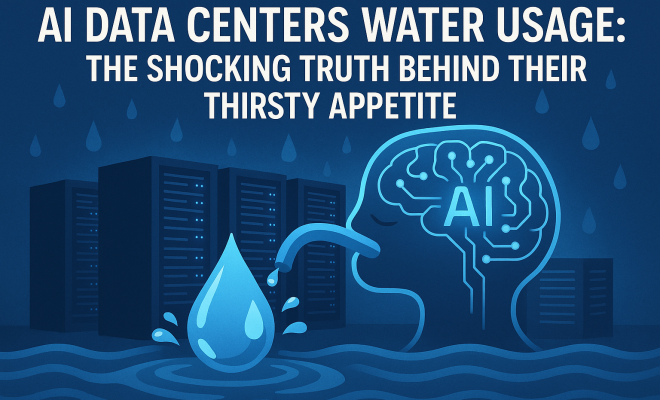
AI Data Centers’ Thirsty Appetite: Unveiling Shocking Water Usage in 2026
“`html
1. The Water Crisis Unveiled: Understanding the AI Data Center Demand
In a startling report published on July 5, 2026, by the Wall Street Journal, it has become alarmingly clear that AI data centers are consuming far more water than many tech giants had anticipated. As the world becomes increasingly reliant on artificial intelligence, the infrastructure required to support it is expanding at an unprecedented rate. This expansion isn’t just about servers and cooling systems; it’s also about water—a resource critical to the operation of these facilities. The report suggests that the water usage of these centers is rising sharply, raising serious environmental concerns, particularly in areas already prone to water scarcity.
Many of us might think of data as existing in a virtual realm, unaffected by physical limitations. However, the reality is starkly different. Data centers, especially those dedicated to AI, require significant water for cooling systems to prevent overheating of their extensive hardware. The report highlights a shocking contradiction: the very technology that promises to resolve pressing global issues may be deepening resource shortages, particularly water shortages. This contradiction has sparked widespread concern and discussion across social media platforms, with users expressing alarm over the hidden costs associated with AI’s growth.
2. Current Usage Statistics: A Deep Dive into AI Water Consumption
The data presented in the report provides a clear picture of the escalating water requirements for AI data centers. By 2026, it’s estimated that these facilities could collectively consume billions of gallons of water annually—far exceeding the figures reported by many tech companies. For instance, while some firms initially projected water usage to be manageable, actual consumption figures reveal a much grimmer reality. With AI applications proliferating in various sectors, including healthcare, finance, and transportation, the demand for computational resources is only expected to increase, leading to even higher water consumption rates.
Water shortages have historically been a significant concern globally, and the surge in demand from AI infrastructures may exacerbate this issue. The report highlights regions struggling with water supply, where the deployment of new AI data centers could lead to a profound impact on local ecosystems. In some areas, the competition for water between tech companies and local communities could reach a breaking point, raising ethical questions about resource allocation and sustainability practices.
According to a 2023 report by the International Energy Agency (IEA), data centers are projected to account for as much as 3% of global electricity demand, with water usage climbing in tandem. This correlation suggests that the more energy-intensive AI workloads become, the greater the strain on local water supplies will be. For instance, a single AI model training session can consume upwards of 700,000 liters of water—enough to meet the daily needs of over 200 families.
3. Local Impacts: The Community Consequences of AI Data Centers
As AI data centers expand, their impact on local communities cannot be ignored. The influx of these facilities is often seen as a boon for economic development, yet the hidden costs are increasingly coming to light. Communities near these data centers are facing unanticipated challenges related to water availability, which can affect everything from agriculture to drinking water supplies.
One critical aspect the report emphasizes is the strain on local water supplies. In some regions, the installation of AI data centers has led to severe depletion of water resources, raising questions about the long-term viability of such projects. Residents in these areas are becoming increasingly vocal about their concerns, fearing that the needs of powerful tech companies are overshadowing the essential requirements of local populations. As awareness grows, community activism around sustainable water use and responsible tech expansion is also on the rise.
For example, in states like Arizona and California, where water scarcity is a chronic issue, communities have protested against the establishment of new data centers. Local farmers have reported that their crops suffer due to decreased water availability, while residents face rising water costs. The situation underscores the need for tech companies to engage with local communities and consider the socio-economic implications of their operations.
4. Environmental Concerns: The Ecology at Risk
The environmental ramifications of excess water consumption are profound and troubling. The report outlines how the rapid growth of AI data centers is not just a local issue; it poses a real threat to broader ecological systems. With water being a finite resource, areas that experience significant depletion are risking damage to their biodiversity and overall ecosystems. As species struggle to adapt to changing water availability, the balance of these environments becomes increasingly fragile. (See: World Health Organization on water scarcity.)
Moreover, the reliance on mechanical cooling systems in data centers contributes to greenhouse gas emissions, which compound environmental issues. This paradox raises pressing questions about the sustainability of AI growth: how can we leverage technology that claims to solve our most pressing challenges while simultaneously contributing to a crisis in resource availability?
Recent studies estimate that the water used for cooling AI data centers can lead to a significant loss of aquatic habitats. For instance, areas where large data centers have been installed have seen declines in local fish populations and other aquatic life, which rely on stable water temperatures and quality. The environmental impact is often felt far beyond the immediate vicinity of the data center, affecting entire ecosystems.
5. Industry Response: How Tech Giants Are Reacting
In light of the findings from the report, many tech giants are facing mounting pressure to address the environmental impact of their AI data centers. Some companies have begun to acknowledge the issue, revising their estimates of water usage and exploring ways to mitigate their impact. Initiatives include the adoption of more efficient cooling technologies, recycling water within facilities, and investing in alternative energy sources to reduce their overall environmental footprint.
However, these responses often come under scrutiny. Critics argue that while some companies are taking steps in the right direction, the pace of change is insufficient given the urgency of the water crisis. Transparency in reporting water usage and a commitment to sustainable practices remain key demands from environmental groups and concerned citizens alike. As the conversation around AI data centers and water usage continues to evolve, the industry must be held accountable for its role in resource management.
One example of a positive industry response is Google’s implementation of advanced cooling systems that utilize seawater and ambient air to regulate temperatures without excessive freshwater use. This kind of innovation shows promise and could serve as a model for other tech companies looking to reduce their water footprint.
6. Technological Innovations: Solutions to the Water Crisis
Despite the troubling water statistics, there is room for optimism. Innovative technologies are being developed to improve water efficiency in AI data centers. For instance, some companies are exploring the use of evaporative cooling systems, which can significantly reduce the amount of water required for cooling purposes. Others are investigating artificial intelligence itself to optimize water usage, creating algorithms that can predict and adjust cooling needs based on real-time data.
Additionally, the concept of using reclaimed water—water that has been recycled from wastewater—has gained traction among industry leaders. By utilizing this resource, data centers can significantly alleviate pressure on local freshwater supplies. As awareness of water shortages grows, such innovations could become essential in helping the tech industry align its operations with sustainable practices.
Furthermore, companies are starting to explore hybrid cooling solutions that use a combination of air and water cooling systems to strike a balance between efficiency and resource conservation. Research shows that hybrid systems can reduce water usage by up to 50% compared to traditional cooling methods, which could transform the industry’s approach to data center management.
7. Policy and Regulation: The Role of Government
As the environmental impacts of AI data centers come to light, government action is becoming increasingly crucial. Policymakers are tasked with developing regulations that address water usage in the tech sector, ensuring that these companies are held accountable for their consumption. The report suggests a need for comprehensive policies that promote sustainable practices while supporting technological innovation.
Some regions are already implementing measures to control water usage among data centers, including stricter permitting processes and incentives for companies that adopt water-saving technologies. These initiatives aim to create a balance between economic development and environmental sustainability, encouraging tech companies to consider the long-term implications of their operations. As the dialogue around AI data centers and water usage continues, collaborative efforts between the tech industry and policymakers may pave the way for a more sustainable future.
For instance, in the European Union, regulatory frameworks are being developed that require data centers to disclose their water usage and implement water-saving technologies. This kind of regulation could set a global standard, pushing other regions to adopt similar measures. (See: CDC's guidelines on water consumption.)
8. Public Awareness and Activism: Mobilizing for Change
The recent findings about AI data centers’ water usage have ignited public interest and concern, leading to a surge in activism focused on environmental sustainability. People are increasingly aware of the hidden costs associated with technology, and many are demanding change from corporations and governments alike. Social media has played a pivotal role in amplifying these discussions, providing a platform for individuals to share their concerns and mobilize grassroots movements.
As public awareness grows, the pressure on companies to act responsibly increases. Consumers are increasingly inclined to support businesses that prioritize sustainability and transparency, pushing tech giants to reevaluate their practices. This shift in consumer sentiment could be a powerful driver for change, influencing how AI data centers address their water usage and environmental impact in the future.
Organizations such as the Sierra Club and Greenpeace are actively campaigning against unsustainable water practices in the tech industry, urging consumers to hold companies accountable. Campaigns that highlight the water usage of major tech firms have gained traction, leading to consumer boycotts and calls for pledges to reduce water consumption. This kind of activism is crucial, as it keeps the pressure on companies to innovate responsibly.
9. The Path Forward: Balancing Innovation and Responsibility
In summary, the revelations regarding AI data centers’ water usage present a complex challenge that requires immediate attention. As the demand for artificial intelligence continues to surge, the implications for water resources and environmental sustainability must be at the forefront of industry discussions. Balancing innovation with responsible resource management is essential to ensure that the technology we rely on does not come at the expense of our planet’s health.
Ultimately, the responsibility lies not only with tech companies but also with consumers, policymakers, and society as a whole. By fostering collaboration, advocating for sustainable practices, and remaining vigilant about the environmental impacts of technology, we can navigate the challenges ahead and strive for a future where AI benefits humanity without compromising our precious resources.
10. Frequently Asked Questions (FAQ)
1. Why do AI data centers use so much water?
AI data centers require significant amounts of water primarily for cooling purposes. The servers that run AI computations generate substantial heat, and water is used in cooling systems to keep temperatures within operational limits. As AI applications grow in complexity and scale, so too does the demand for cooling, which leads to increased water consumption.
2. How can AI data centers reduce their water usage?
Data centers can adopt several strategies to minimize water usage, including:
- Implementing advanced cooling technologies that reduce reliance on freshwater.
- Using reclaimed water for cooling systems, which helps conserve local freshwater resources.
- Utilizing artificial intelligence to optimize cooling processes based on real-time data.
- Investing in hybrid cooling systems that combine air and water cooling techniques.
3. What are the environmental impacts of AI data centers?
The environmental impacts of AI data centers extend beyond their water usage. The extensive energy consumption associated with these facilities contributes to greenhouse gas emissions. Additionally, excessive water withdrawal can lead to ecological damage, including the depletion of local water sources and harm to aquatic ecosystems.
4. Are there any regulations on water usage for data centers?
Yes, some regions are beginning to implement regulations that govern water usage in data centers. These regulations can include stricter permitting processes, mandatory reporting of water consumption, and incentives for companies that adopt sustainable practices. As awareness of the issue grows, more governments may take action to create comprehensive policies that address water usage in the tech sector. (See: New York Times on data centers and water usage.)
5. How can consumers influence the water usage of AI data centers?
Consumers can play a critical role in influencing corporate practices by advocating for transparency and sustainability. Supporting companies that prioritize responsible water usage and holding those that do not accountable through activism, boycotts, or public campaigns can create pressure for change. Additionally, consumers can choose to use services from companies that commit to sustainable practices, thereby fostering an industry-wide shift towards water conservation.
6. What is the global context of water usage in AI data centers?
The issue of water usage in AI data centers isn’t confined to any single region but has global implications. For instance, regions like India and China are facing water shortages and increased competition for resources. This global context highlights the need for international cooperation and shared practices in managing water usage effectively. Countries can learn from each other’s experiences and establish benchmarks for sustainable water management in tech industries.
7. What roles do innovation and research play in mitigating water usage?
Innovation and research are crucial in addressing the water usage crisis in AI data centers. Ongoing research in various fields, such as cooling technology, water recycling, and AI optimization, can lead to breakthroughs that significantly reduce water consumption. Collaboration between tech companies and research institutions can yield practical solutions that not only meet operational needs but also prioritize environmental sustainability.
8. How do climate change and extreme weather events affect water availability for data centers?
Climate change is leading to increased variability in weather patterns, which can exacerbate water scarcity in certain regions. Extreme weather events, including droughts and floods, can disrupt local water supplies, impacting the ability of AI data centers to access sufficient water for cooling. This makes it essential for data center operators to consider climate resilience in their planning and operations, ensuring they are prepared for fluctuating water availability.
9. What are the long-term implications of unsustainable water practices in AI data centers?
If the current trends in water consumption continue without intervention, the long-term implications could be dire. Communities may face severe water shortages, leading to conflicts over resources and potentially devastating impacts on agriculture and local economies. Additionally, the ecological repercussions could result in irreversible damage to local ecosystems, affecting biodiversity and the overall health of the environment.
10. What are some successful examples of sustainable practices in AI data centers?
Several companies are leading the way in adopting sustainable practices in their data centers. For instance, Microsoft’s commitment to becoming “water positive” by 2030 involves replenishing more water than the company consumes. Similarly, Facebook has invested in closed-loop water systems that minimize freshwater use and support local ecosystems. These examples highlight how the tech industry can implement innovative solutions to mitigate water usage effectively while fulfilling their operational requirements.
“`
Trending Now
Frequently Asked Questions
How much water do AI data centers use?
AI data centers are projected to consume billions of gallons of water annually by 2026, far exceeding initial estimates from tech companies. This sharp increase is driven by the need for cooling systems to manage the heat generated by extensive hardware.
Why do data centers need so much water?
Data centers, particularly those focused on AI, require significant water for cooling systems. This is essential to prevent overheating of the hardware, making water a critical resource for their operation.
What are the environmental impacts of AI data centers?
The rise in water usage by AI data centers raises serious environmental concerns, especially in regions already facing water scarcity. This increased demand can exacerbate existing resource shortages and contribute to ecological stress.
Are AI data centers contributing to water shortages?
Yes, the growth of AI data centers is contributing to water shortages. As these facilities consume more water than anticipated, they pose a risk to already strained water resources, contradicting the technology's promise to solve global issues.
What is the relationship between AI growth and water consumption?
The expansion of AI technology is directly linked to increased water consumption in data centers. As AI applications proliferate across various sectors, the demand for infrastructure, including water for cooling, has risen sharply.
Agree or disagree? Drop a comment and tell us what you think.