Why 2026 Tech Trends Will Revolutionize Your Daily Life: Foldables and AI Robots Are Here to Stay
“`html
1. The Rise of Foldable Smartphones
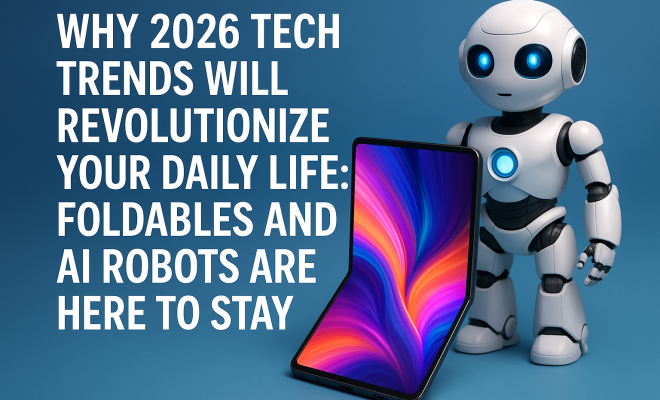
As we approach 2026, one of the most exciting 2026 tech trends is the anticipated surge in foldable smartphones. Companies like Samsung have already paved the way with their innovative Galaxy Z Fold series, but the real game changer could be Apple’s entry into this market with the rumored iPhone Fold. This device promises to blend powerful technology with a unique, user-friendly design that leverages the flexibility of folding screens. The concept itself isn’t just about making a phone that folds; it’s about revolutionizing how we interact with our devices, making multitasking easier and enhancing portability.
Consumers are not just looking for new devices; they’re searching for those that can seamlessly integrate into their lifestyles. The iPhone Fold is expected to not only feature a larger display in a compact form but also bring Apple’s renowned ecosystem into the foldable experience. This combination is likely to generate significant buzz on social media, attracting early adopters eager to showcase the latest tech.
2. AI Robots: The Domestic Helpers of Tomorrow
Alongside foldable smartphones, humanoid robots are expected to become household names by 2026. Enter NEO, a humanoid domestic assistant by company 1X, which is making waves in the tech community with its ability to engage in natural human interactions. These robots are being designed not just to perform tasks but to replicate human emotion and expressions, allowing them to forge a connection with users.
The rise of AI robots like NEO indicates a shifting perception toward robotics in our daily lives. Imagine coming home to a robot that can not only assist you with chores but also hold a conversation about your day. This technology is poised to create a sense of community and companionship, especially for those who might feel isolated. As these robots make their way into the consumer market, they’re set to become a significant point of interest on platforms like CES 2026, where enthusiasts will be eager to explore their capabilities.
3. The Impending Memory Crisis
While the promise of foldable smartphones and humanoid robots excites consumers, another trend is emerging that casts a shadow on this technological optimism: the looming global memory shortage. Recent reports indicate that the price of DDR5 memory could see a staggering increase, with Samsung doubling its costs and Framework raising prices by 50%. This situation creates a perfect storm for consumers, who are now grappling with the reality of rising tech costs.
The impending memory crisis could lead to widespread anxiety as individuals face potential price hikes for laptops and other essential electronic devices. This situation compels consumers to rethink their tech purchases and search for more affordable alternatives. As memories become more expensive, the conversation shifts from purely innovative advancements to financial implications, making it a vital aspect to consider in the landscape of 2026 tech trends.
4. Consumer Anxiety and the Search for Affordable Alternatives
The escalating costs of memory chips and laptops are driving a new wave of consumer behavior. With many individuals feeling the pressure of impending price increases, there’s a growing urgency to discover budget-friendly tech options. This trend has sparked innovation in the tech community, as companies look for ways to make their products more cost-effective without sacrificing performance.
As consumers navigate these challenging waters, they may turn to refurbished devices, older models, or alternative brands that promise similar functionalities at a reduced cost. This shift can redefine market dynamics as companies scramble to maintain their market share amidst changing consumer priorities. The need for affordability will likely push brands to innovate their pricing strategies, making this a crucial trend to monitor in 2026.
5. AI-Driven Interaction: The Future of Communication
The advancements in AI technology have led to the creation of robots capable of natural human interactions, which is a pivotal aspect of the tech trends emerging in 2026. NEO, for instance, is not just a robot; it’s a sophisticated piece of technology designed to engage users in meaningful conversations. This capability is transforming how we perceive robots and their role in our lives.
The ability to communicate with AI-driven assistants opens up new possibilities for how we interact with technology. Imagine having a robot that can understand your emotions, adapt to your mood, and respond accordingly. These developments are likely to spark discussions about the ethical implications of human-robot relationships and the potential benefits they bring to our lives, especially for those seeking companionship or assistance.
6. The Social Media Buzz: FOMO and the Tech Community
As upcoming technologies like the iPhone Fold and NEO gain traction, social media will play a vital role in shaping public perception and interest. The fear of missing out (FOMO) will drive a significant amount of engagement from consumers eager to be in the know about cutting-edge tech. As pre-orders for these devices surge, the excitement will spread like wildfire across platforms like Twitter and Instagram.
This buzz will not only highlight the innovative features of these products but also serve as a platform for consumers to share their experiences and opinions. The conversations surrounding these releases will create a community of tech enthusiasts who are passionate about the latest advancements, making social media an essential player in the narrative of 2026 tech trends. (See: the rise of foldable smartphones.)
7. The Intersection of Innovation and Affordability
In light of rising tech costs, the intersection of innovation and affordability will become a critical area of focus in 2026. Companies will need to strike a balance between delivering cutting-edge features and keeping products accessible to a broad audience. This challenge will prompt many brands to rethink their development strategies, potentially leading to breakthrough innovations that do not require exorbitant pricing.
We may see a surge in tech companies collaborating on shared resources to maintain quality while driving down costs. This cooperative approach could result in products that are not only innovative but also budget-friendly, creating an atmosphere of inclusivity within the tech landscape.
8. The Psychological Impact of Advanced Technologies
The emergence of advanced technologies like humanoid robots and foldable phones isn’t just about physical devices—it’s also about their psychological impact on users. The interaction with AI-driven robots could lead to significant shifts in how individuals perceive companionship and emotional support. As these technologies become more prevalent, questions regarding mental well-being and the implications of relying on AI for social interaction will come to the forefront.
Understanding these psychological effects is essential as we integrate these innovations into our daily lives. As we embrace the technological advancements of 2026, we must also consider how they affect our emotional and mental health, shaping the very fabric of our social interactions and community dynamics.
9. Preparing for the Tech Future
Looking ahead to 2026, it’s clear that the landscape of technology is evolving rapidly. The trends we’re witnessing today—foldable phones, AI robots, and rising costs—are not isolated phenomena but are interconnected forces that will shape our future. To stay ahead, consumers should not only keep an eye on the latest gadgets and innovations but also understand the implications of these developments.
You can prepare yourself for the tech future by staying informed, engaging with tech communities, and being open to adapting to new tools and practices. Embracing these changes will empower you to navigate the exhilarating yet challenging environment of emerging technologies, ensuring that you remain part of the conversation as we dive into a new era of innovation.
10. Emerging Tech in Healthcare
Another significant area to watch in 2026 is the integration of advanced technologies in healthcare. As telemedicine continues to evolve, we can expect to see more sophisticated wearable devices that monitor health metrics in real time, providing individuals with immediate feedback and allowing for proactive management of chronic conditions.
For instance, devices that monitor blood glucose levels for diabetics have already gained traction, but future innovations may incorporate AI to predict fluctuations and suggest lifestyle changes. The combination of personalized medicine and AI-driven insights could enhance patient outcomes and tailor treatments to individual needs, underscoring the role of technology in modern healthcare.
11. The Rise of Metaverse Experiences
The metaverse—a collective virtual shared space—continues to gain momentum and is poised to become more immersive by 2026. As technologies like virtual reality (VR) and augmented reality (AR) mature, users will find themselves in increasingly realistic environments for social interactions, work, and entertainment.
Major companies like Meta and Microsoft are investing heavily in creating virtual workspaces that allow for collaborative projects across long distances. These platforms not only enhance productivity but also seek to replicate the feeling of being in the same room, which we’ve all missed during recent years of remote work. The metaverse could redefine how we engage with one another—both personally and professionally.
12. Green Technology and Sustainability
In addition to personal tech advancements, sustainability will become a focal point for technological development in 2026. With growing concerns about climate change, many tech companies are pivoting toward eco-friendly practices. This includes developing energy-efficient devices, utilizing recyclable materials, and creating tech solutions that help reduce carbon footprints.
For instance, some smartphone manufacturers are now incorporating biodegradable materials into their devices, while others are focusing on energy-efficient manufacturing processes. Consumers are becoming more aware of their choices and will likely favor brands that demonstrate a commitment to sustainability, pushing companies to innovate in this area.
13. FAQ: What You Need to Know About 2026 Tech Trends
What are foldable smartphones?
Foldable smartphones are mobile devices that feature flexible screens, allowing them to fold into smaller sizes for portability while expanding to provide a larger display when in use. (See: AI robots as domestic helpers.)
How will AI robots impact daily life?
AI robots, like humanoid assistants, are designed to perform household tasks and engage in social interactions, potentially alleviating chores and providing companionship for users.
What is causing the memory crisis?
The memory crisis is primarily driven by increasing demand for high-performance memory chips, coupled with supply chain issues that have led to significant price hikes in recent months.
What can consumers do to cope with rising tech costs?
Consumers can consider exploring refurbished devices, older models, or alternative brands. Staying informed and timing purchases strategically can also help you navigate the rising costs.
How can technology improve healthcare?
Technology is improving healthcare through telemedicine, wearable health monitors, and AI-driven insights that allow for personalized and proactive medical care.
What role does sustainability play in upcoming tech trends?
Sustainability is increasingly influencing tech trends, as consumers seek eco-friendly products and companies strive to implement greener practices, including energy-efficient manufacturing and the use of recyclable materials.
What is the metaverse?
The metaverse is a shared virtual space that combines physical and digital realities for social interactions, work projects, and entertainment, creating immersive experiences for users.
14. Future-Proofing Your Skills for the Tech Landscape
As technology evolves, so do the skills required to navigate this landscape. It’s vital to invest in learning and development to keep pace with emerging trends. For instance, understanding how to work with AI and machine learning can enhance employability in the future job market. Online courses, workshops, and community college classes focusing on technology can provide you with the skills needed for tomorrow’s workforce.
Moreover, soft skills like adaptability, problem-solving, and communication will be more important than ever. As technology becomes more integrated into our daily lives, the ability to interact with both machines and people effectively will differentiate you in any field.
15. Understanding the Evolution of Consumer Tech
The evolution of consumer tech over the past decade has been staggering. With the introduction of smartphones, tablets, and now foldable devices, we’ve seen a shift toward more integrated and versatile technology. By 2026, these trends are expected to continue evolving, with a focus on creating devices that not only serve a purpose but also fit seamlessly into our daily lives.
Smart speakers, smart home devices, and wearables are examples of how technology is becoming more embedded in our routines. According to a report from Statista, the global smart home market is expected to reach $174 billion by 2025. This growth signifies a shift toward convenience and automation, allowing consumers to manage their homes in ways that were previously unimaginable.
16. Cybersecurity: The Growing Concern
As technology advances, so do cybersecurity threats. By 2026, we can expect a heightened focus on cybersecurity measures as more of our lives become digitized. The rise of Internet of Things (IoT) devices presents unique challenges, as each connected device potentially opens a new attack vector for cybercriminals. (See: humanoid robots in households.)
In 2022, Cybersecurity Ventures predicted that cybercrime would cost the world $10.5 trillion annually by 2025, highlighting the urgent need for robust security measures. Companies will need to invest in not just technology but also in educating consumers about safe practices to protect their data. Expect to see more innovations in biometric security, encryption, and AI-driven threat detection as part of the response to these growing concerns.
17. The Role of 5G in the Future of Tech
5G technology is set to revolutionize how we interact with technology in the coming years. With its high-speed connectivity and low latency, 5G will enable a new wave of applications that require real-time data processing, such as autonomous vehicles and augmented reality experiences. By 2026, cities across the world will be leveraging 5G to enhance public services and infrastructure.
According to a report by GSMA, global 5G connections are projected to reach 1.7 billion by 2025. This widespread adoption will pave the way for new business models and opportunities across various sectors, including healthcare, transportation, and entertainment. For consumers, this means richer experiences, whether it’s streaming high-definition video without buffering or using AR to visualize furniture in their homes before making a purchase.
18. Trends in Gaming Technology
The gaming industry is on the brink of a significant transformation. With advancements in hardware, software, and connectivity, gaming is becoming more immersive than ever. Technologies like virtual reality (VR) and augmented reality (AR) are creating new gaming experiences that blur the lines between the digital and the physical world.
By 2026, we can expect to see more cloud gaming services that allow players to access high-quality games without the need for expensive hardware. Companies like Google and Nvidia are already investing in this space, making gaming more accessible to a broader audience. This democratization of gaming technology could change how we think about ownership and access to video games.
19. Telecommuting and the Future of Work
The COVID-19 pandemic accelerated the shift toward remote work, and by 2026, we will likely see a permanent transformation in how we work. Hybrid work models are expected to become the norm, allowing employees to split their time between home and the office. This shift will require companies to invest in technology that supports collaboration and communication, making it easier for teams to work together regardless of location.
As remote work becomes ingrained in corporate culture, businesses will need to prioritize employee well-being and mental health. The integration of wellness apps, virtual team-building activities, and flexible work hours will be essential for maintaining morale and productivity in a remote environment.
20. Final Thoughts: Embracing Change in Technology
As we look toward 2026, it’s clear that the landscape of technology is both exciting and challenging. The trends we’ve discussed—from foldable smartphones to AI-driven robots and the rise of the metaverse—are just the beginning. To thrive in this rapidly changing environment, it’s essential to stay informed, be adaptable, and embrace innovation. The future is bright, and those who are ready to engage with these developments will find themselves at the forefront of technological transformation.
“`
Trending Now
Frequently Asked Questions
What are the latest trends in technology for 2026?
In 2026, exciting tech trends include the rise of foldable smartphones, with major players like Apple and Samsung leading the charge. Additionally, AI robots, such as humanoid assistants, are expected to become integral to daily life, enhancing how we interact with technology and providing companionship.
How will foldable smartphones change our daily lives?
Foldable smartphones are set to revolutionize daily life by enhancing multitasking, improving portability, and integrating seamlessly into users' lifestyles. Devices like the rumored iPhone Fold promise to offer larger displays in compact forms, making them more user-friendly and appealing.
What is the role of AI robots in households by 2026?
By 2026, AI robots are expected to serve as domestic helpers, performing tasks while also providing companionship. Robots like NEO are designed to engage in natural conversations, making them valuable for those seeking assistance and social interaction in their homes.
Will foldable smartphones be popular among consumers?
Yes, foldable smartphones are anticipated to gain immense popularity as consumers seek innovative devices that enhance their daily routines. The combination of advanced technology and unique designs, especially with Apple's potential entry, is likely to attract early adopters and tech enthusiasts.
What impact will AI robots have on social interactions?
AI robots are expected to positively impact social interactions by providing companionship and emotional engagement. As these humanoid assistants enter homes, they can help alleviate feelings of isolation, creating a sense of community and connection for users.
Agree or disagree? Drop a comment and tell us what you think.