Three Solar Blobs Set to Dazzle Earth with Potential Auroras and Disruptions
“`html
In the cosmic dance between the Sun and Earth, certain events can cause significant ripples in our planet’s magnetic field. Recently, scientists have reported the impending arrival of three massive solar coronal mass ejections (CMEs), informally dubbed ‘blobs of sun-stuff.’ These phenomena are predicted to strike Earth in the coming days, with the potential for minor to moderate geomagnetic storms. As a result, the Earth’s magnetic field could be disturbed, leading to disruptions in satellite communications and even GPS systems. This article will dive into the implications of these solar events, explore the science behind CMEs, and discuss the exciting prospect of seeing auroras at lower latitudes than usual.
The Nature of Coronal Mass Ejections
Coronal mass ejections are large expulsions of plasma and magnetic field from the Sun’s corona. These solar flares can release an incredible amount of energy, equivalent to millions of hydrogen bombs detonating simultaneously. When directed towards Earth, these CMEs can lead to various space weather phenomena, including auroras, geomagnetic storms, and disruptions to technological systems. Understanding CMEs is crucial for predicting their effects on our planet.
Scientists have been monitoring solar activity closely, especially during periods of heightened solar cycles. The recent surge in solar activity is associated with an increase in the number and intensity of solar flares and CMEs. As the Sun approaches its peak activity phase, known as solar maximum, the frequency of these events tends to rise dramatically, raising concerns about their potential impact on Earth.
The Current Solar Activity Surge
The recent report from EarthSky indicates that we are currently experiencing a notable spike in solar activity. The three coronal mass ejections in question are expected to reach Earth shortly, with scientists closely tracking their trajectories. These solar blobs are not just random occurrences; they are part of a larger pattern linked to the Sun’s 11-year solar cycle, which encompasses periods of increased solar activity and decreased activity.
The current solar maximum is characterized by an increase in sunspots, solar flares, and CMEs. This phase of the solar cycle has the potential to affect various technological systems on Earth, from power grids to communication networks. The CMEs can compress the magnetic field around the Earth, creating auroras and other striking atmospheric phenomena.
What to Expect from These CMEs
As the three blobs of solar matter make their way towards Earth, experts predict they could cause disturbances in our planet’s magnetic field. These disturbances can result in geomagnetic storms classified as minor to moderate, which can have various effects on Earth’s atmosphere and technological systems.
Geomagnetic storms generally fall into categories based on their intensity, ranging from G1 (minor) to G5 (extreme). While the upcoming CMEs are expected to produce lower-grade storms, they could still lead to noticeable effects such as the enhancement of auroral displays, disruptions in high-frequency radio communication, and GPS inaccuracies. For those near the poles, the auroras may become visible at latitudes that typically don’t experience such displays.
The Magic of Auroras
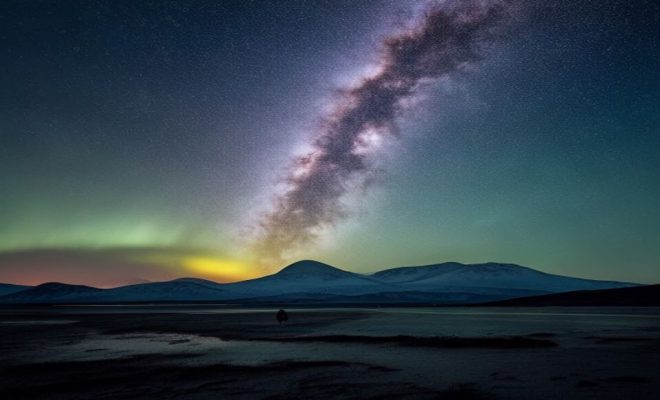
Auroras, often referred to as the northern and southern lights, are one of nature’s most stunning spectacles. They occur when charged particles from the Sun collide with gases in Earth’s atmosphere, resulting in vibrant displays of color—typically greens, reds, and purples. The possibility of seeing these lights at lower latitudes than usual is an exciting prospect for millions who may not otherwise have the opportunity to experience them.
The science behind auroras involves interactions between solar wind and the Earth’s magnetosphere. During geomagnetic storms, the intensity of the solar wind increases, allowing more particles to enter the magnetosphere. This process can significantly amplify auroral displays, making them visible in areas further from the poles.
Potential Disruptions to Communications and Technology
While the visual allure of auroras captivates many, there are darker implications of solar activity that cannot be overlooked. The disturbances caused by CMEs can disrupt satellite communications, including those used for weather forecasting, navigation, and telecommunications. The GPS systems that millions rely on for daily use may also experience inaccuracies during these events. (See: Coronal mass ejection on Wikipedia.)
Power grids can also be impacted, with the potential for fluctuations that may lead to outages or system failures. Utility companies often prepare for such storms by implementing protective measures to safeguard infrastructure. Understanding the potential impacts of solar flares and CMEs is crucial for maintaining the reliability of technology we often take for granted.
How to Prepare for Solar Storms
Being informed about solar activity can help individuals and communities prepare for potential impacts. Here are some practical steps you can take:
- Stay Informed: Monitor space weather forecasts from reliable sources, such as NOAA’s Space Weather Prediction Center. They provide updates on solar activity and potential impacts.
- Protect Equipment: Use surge protectors for electronic devices to minimize damage from electrical fluctuations caused by geomagnetic storms.
- Plan for Navigation Issues: If you rely on GPS for travel or navigation, consider having backup methods, such as physical maps or alternative navigation apps.
- Be Aware of Auroras: If you live in an area where auroras may be visible, keep an eye on aurora forecast websites for the chance to witness this awe-inspiring event.
The Emotional Charge of Witnessing Celestial Events
There’s something undeniably thrilling about witnessing a celestial event, particularly one tied to the dynamic forces of our Sun. The anticipation of seeing auroras, combined with the understanding that we are part of a much larger cosmic system, can evoke powerful emotions. Many people describe the experience of witnessing an aurora as life-changing, a moment of connection with nature that’s both humbling and awe-inspiring.
The opportunity to witness auroras at lower latitudes may excite those who have always wanted to see them but never had the chance. The idea that a natural phenomenon can disrupt technology while simultaneously providing a breathtaking light show creates a unique duality: beauty and chaos entwined. This emotional connection to celestial events drives interest and curiosity, prompting many to share their experiences on social media and inspire others to seek out the wonders of the universe.
Understanding the Solar Magnetic Cycle
The Sun operates on an approximately 11-year cycle, known as the solar cycle, which includes periods of solar maximum and solar minimum. During solar maximum, sunspots, solar flares, and CMEs increase dramatically. Conversely, during solar minimum, the Sun’s activity is markedly lower, and fewer solar flares occur. The current cycle, Solar Cycle 25, began in December 2019 and is expected to peak around 2025.
The dynamics of this cycle influence not only space weather but also terrestrial weather patterns. Some research suggests that increased solar activity can affect jet streams and weather in the mid-latitudes, although the connection is complex and not fully understood. Understanding the solar cycle is essential not just for predicting space weather but also for grasping its broader implications for Earth.
Solar Flares versus Coronal Mass Ejections
While often mentioned together, solar flares and coronal mass ejections are distinct phenomena. Solar flares are intense bursts of radiation caused by the release of magnetic energy associated with sunspots. They can happen without producing CMEs and can affect satellites and communication systems almost immediately.
In contrast, CMEs involve the ejection of plasma and magnetic fields from the solar corona and can take from 15 to 20 minutes to several days to reach Earth. While both can cause geomagnetic storms, the scale and nature of the disruptions differ. For example, a strong solar flare can disrupt radio communications for a few minutes, while a CME can lead to prolonged disturbances in GPS and power systems as the magnetic field interacts with the Earth’s magnetosphere.
Expert Perspectives on Solar Activity
Experts in solar physics and space weather continuously study these phenomena to understand their implications better. Dr. Lisa Upton, a solar physicist at NASA, emphasizes the importance of forecasting these events. “Predicting solar activity is challenging, but essential,” she states. “With the increasing reliance on technology, understanding how solar storms interact with our systems is vital.”
Additionally, Dr. David Hathaway, a NASA solar physicist, notes, “We’re entering a more active period in the solar cycle, which means more opportunities for solar flares and CMEs. It’s exciting, but we must prepare for the risks associated with these powerful events.” Their insights highlight the balance between awe for the natural phenomena and the necessity for preparation and understanding. (See: NASA's information on solar phenomena.)
FAQs about Solar Flares
What are solar flares?
Solar flares are sudden eruptions of increased brightness on the Sun, releasing vast amounts of energy. They are caused by the release of magnetic energy stored in the Sun’s atmosphere.
How do solar flares affect Earth?
Solar flares can disrupt radio communications, navigation systems, and even affect power grids on Earth. They may also enhance auroras at the poles.
What is the difference between a solar flare and a coronal mass ejection?
A solar flare is a sudden burst of radiation, while a coronal mass ejection is a significant release of plasma and magnetic fields from the Sun’s corona that can take longer to reach Earth.
How can I track solar activity?
You can track solar activity through various websites and apps that provide real-time updates on solar flares and CMEs. NOAA’s Space Weather Prediction Center is a reliable source.
Are there any long-term effects of solar flares on Earth?
While solar flares generally have immediate effects, long-term consequences on Earth’s climate are still being studied. Some research suggests solar activity may influence weather patterns over extended periods.
How Solar Flares Can Affect Climate Change
There’s an ongoing debate among scientists regarding the influence of solar activity on climate change. Some researchers propose that increased solar activity during solar maximums correlates with warmer temperatures on Earth, primarily due to more solar energy reaching our planet. Others argue that the effects are minimal compared to anthropogenic influences, such as greenhouse gas emissions.
A study conducted by the University of California found evidence that solar cycles can indeed affect regional climates, particularly in the Northern Hemisphere. For instance, during periods when solar activity peaks, some regions may experience enhanced temperatures and altered precipitation patterns. However, the extent of this effect remains a subject of active research, with many variables at play.
Interestingly, the potential cooling effects associated with solar minima (when there’s less solar activity) could have historical significance. The Little Ice Age (circa 1300 to 1850) is often linked to a period of low solar activity known as the Maunder Minimum. This correlation highlights the complexity of solar influences on Earth’s climate, suggesting that while solar flares and CMEs have immediate effects on technology and the atmosphere, their long-term impact on climate is still being unraveled.
Comparing Solar Activity with Other Space Weather Phenomena
Solar flares and CMEs are not the only space weather phenomena that can impact Earth. Other events, like solar energetic particle (SEP) events, are also noteworthy. SEPs consist of high-energy particles released during solar flares and can pose dangers to astronauts and satellites. These particles travel at nearly the speed of light and can lead to radiation exposure for astronauts outside Earth’s protective magnetic field. (See: CDC on solar activity and health.)
Compared to solar flares and CMEs, SEPs can have more immediate effects, often resulting in radiation storms that can disrupt electronic systems on satellites and pose health risks to astronauts. This makes monitoring solar activity critical for space missions and satellite operations. NASA’s Advanced Composition Explorer (ACE) satellite is among the tools used to study solar particles and predict their impact on Earth.
While solar flares and CMEs primarily influence Earth’s magnetosphere and atmosphere, SEPs can penetrate deeper into materials, which poses challenges for spacecraft design and operational protocols. Understanding the differences among these phenomena helps scientists refine their predictions and responses to space weather events.
Future Outlook: What Lies Ahead for Solar Activity?
As we move closer to the peak of Solar Cycle 25 in 2025, scientists expect increased solar activity, including more frequent solar flares and CMEs. This peak should be a thrilling time for both scientists and enthusiasts alike, as the Sun’s dynamic behavior may offer spectacular auroral displays and potentially higher risks for technological disruptions.
Research in solar physics is evolving, with new technologies and methods providing more insight into solar behavior. One promising area involves machine learning and artificial intelligence, which have shown potential in improving the accuracy of solar storm predictions. By analyzing vast amounts of data from solar observatories, researchers can develop algorithms that may help forecast solar events more reliably.
Furthermore, international collaboration among space agencies, such as NASA, ESA (European Space Agency), and JAXA (Japan Aerospace Exploration Agency), is essential for monitoring solar activity and developing effective response strategies. As we venture further into an era dominated by technology, understanding solar phenomena will play a critical role in safeguarding our infrastructure and ensuring public safety.
Embracing the Cosmic Dance
The impending arrival of three blobs of solar matter is more than just a scientific curiosity; it’s an invitation to engage with our universe. The potential for stunning auroras and the risk of technological disruptions remind us of the delicate balance between appreciation and caution. As we look up towards the skies in anticipation, we’re reminded of our place within the cosmos, where the Sun’s activity directly influences life on Earth.
With the rise of social media and the internet, information about solar activity spreads rapidly, allowing more people to participate in the excitement of these celestial events. As you prepare to witness the awe-inspiring displays of light, consider how these solar flares and CMEs are not just phenomena to observe but a reminder of the complex interplay between our planet and the sun. Embrace the cosmic dance and prepare for a spectacular show!
“`
Trending Now
Frequently Asked Questions
What are coronal mass ejections?
Coronal mass ejections (CMEs) are large expulsions of plasma and magnetic fields from the Sun's corona. They can release immense energy, leading to various space weather phenomena like auroras and geomagnetic storms when directed towards Earth.
How do CMEs affect Earth?
CMEs can disturb Earth's magnetic field, potentially causing minor to moderate geomagnetic storms. This disruption can lead to issues such as satellite communication failures and GPS inaccuracies, impacting technological systems on the planet.
What causes auroras?
Auroras are caused by solar particles from the Sun, such as those from coronal mass ejections, interacting with Earth's magnetic field and atmosphere. This interaction creates stunning displays of light, typically seen near polar regions but can occur at lower latitudes during significant solar events.
What is the current solar activity level?
There is a notable surge in solar activity, with three massive coronal mass ejections expected to impact Earth soon. This increase in solar flares and CMEs is associated with the Sun nearing its peak activity phase, known as solar maximum.
What is solar maximum?
Solar maximum is the peak phase of the solar cycle when the Sun exhibits heightened activity, including increased solar flares and coronal mass ejections. This phase can significantly affect space weather and has implications for Earth's technology and atmosphere.
Agree or disagree? Drop a comment and tell us what you think.