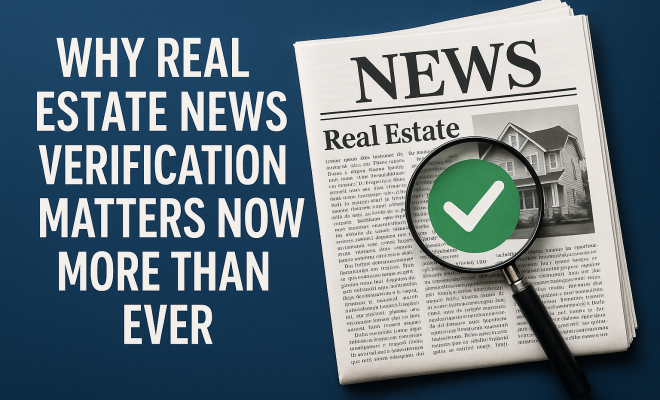
Why Real Estate News Verification Matters Now More Than Ever
“`html
In an age where information is just a click away, the real estate sector has seen a significant uptick in news and updates. However, not all of it is trustworthy. With the rapid flow of information, distinguishing fact from fiction in real estate news has become imperative for both investors and homeowners alike. This article tackles the challenges surrounding real estate news verification, providing insights into the importance of accurate information in this vital sector.
The Rise of Misinformation in Real Estate
As digital media continues to proliferate, misinformation has become a staggering issue across multiple domains, and real estate is no exception. Fake news articles or misleading headlines can create panic or false optimism in a market that is often already volatile. The repercussions of relying on unverified news can lead to misguided investments, erroneous pricing, and ultimately financial losses.
For instance, it’s not uncommon to see sensational articles claiming a housing market crash based on isolated data points that don’t represent the larger picture. Such articles can influence buyer sentiment, leading to hasty decisions that could have long-term consequences.
Understanding the Stakes
The stakes are particularly high given the amounts of money involved in real estate transactions. A wrong move can mean losing hundreds of thousands of dollars. When buyers or sellers act on unverified news, they might miss out on favorable deals or, conversely, panic and sell at an inopportune time.
Consider the case of a recent article claiming a major downturn in a city’s housing market. If investors take this at face value without seeking verification, they may choose to sell off their properties quickly, potentially exacerbating market decline. Conversely, potential buyers might see this as a signal to wait for further declines, missing out on advantageous purchase opportunities.
Key Indicators for Verification
When it comes to verifying real estate news, there are several indicators you can look for. Here are some pointers to help you discern reliable information:
- Source credibility: Consider the outlet providing the news. Established media organizations or industry-specific publications are generally more reliable.
- Author qualifications: Look for articles written by authors with a proven track record in real estate journalism or expertise in economic matters.
- Citations and data: Articles should reference solid data sources, such as government statistics, credible market reports, or expert interviews.
- Timeliness: Ensure that the news is current. Information can become outdated quickly in the fast-paced world of real estate.
Strategies for Effective News Verification
With the rise of misinformation, developing effective strategies becomes essential. You can employ a few methods to help you verify the authenticity of real estate news:
First, cross-reference multiple sources. If a particular news item stirs your interest or concern, check at least three other reputable sources to see if they corroborate the story. A consensus among various publications adds weight to the information.
Secondly, utilize social media judiciously. Platforms like Twitter and LinkedIn can be valuable for real-time updates, but they can also propagate unverified claims. Follow industry experts and reputable journalists who specialize in real estate to receive accurate and timely news.
Leveraging Technology for Verification
In today’s tech-driven world, various tools can aid in the verification process. Fact-checking websites, like Snopes or FactCheck.org, can be invaluable when evaluating the credibility of news stories, including those related to real estate.
Additionally, utilizing analytical tools that track market trends can help you make informed decisions based on solid data rather than sensationalist headlines. For example, platforms like Zillow or Redfin offer market analyses that are more reliable than random articles claiming drastic shifts in the market. (See: housing market trends and analysis.)
Risks of Ignoring Verification
The costs of ignoring the verification process can be significant. Beyond financial loss, misinformation can also damage reputations and relationships in the industry. If you act on unverified information, you risk not only your investments but also the trust of your clients or partners.
Moreover, the ripple effects of misinformation can extend to the broader market. In situations where panic ensues from false reports, entire communities may experience downturns, affecting property values and overall economic health.
Examples of Real Estate Misinformation
To highlight the importance of verification, let’s examine notable examples from the past. During the COVID-19 pandemic, numerous articles emerged, claiming dire housing market predictions. Many speculated that a massive crash was imminent. However, as verified reports later showed, the opposite occurred, and many markets actually experienced unprecedented growth.
This was largely due to low interest rates and a shift in buyer priorities. Those who acted on unverified predictions missed opportunities to purchase properties at lower prices.
Expert Opinions on Verification Techniques
Industry experts emphasize the importance of employing verification techniques in real estate news consumption. According to Dr. Jane Cole, a real estate economist, “The fluctuating nature of real estate markets makes it essential for stakeholders to verify news before acting. Relying on emotion or unverified data can lead to poor investment choices.”
Moreover, reputable real estate agents often recommend that buyers take the time to research market conditions thoroughly. “Buyers should feel empowered to ask questions and seek out multiple sources of information,” asserts agent Michael Stevens. “The more informed you are, the better decisions you’ll make.”
The Importance of Local Knowledge
One critical aspect of real estate news verification often overlooked is the value of local knowledge. Real estate markets can vary significantly from one region to another, and information that may be accurate in one area can be completely misleading in another. As a result, having a good understanding of your local market can significantly enhance your ability to discern credible news.
For instance, if you come across a general article stating that home prices are falling across the board, it’s crucial to look at local data. Some neighborhoods may still be experiencing price increases due to demand, while others might see declines. Local real estate agents are often the best source for this nuanced information, as they are intimately familiar with their market’s trends.
Statistics on Real Estate Information Accuracy
To further understand the implications of real estate news verification, consider recent statistics. A study by the National Association of Realtors found that 73% of home buyers used online resources to research their purchases. However, only 12% felt confident about the accuracy of the information they found.
This discrepancy underscores the critical need for verification. The same study revealed that misinformation can lead to buyers overpaying by as much as 14% if they act on misleading news. This statistic alone highlights how essential it is to approach real estate news critically.
Comparing Traditional vs. Online Media Sources
When verifying real estate news, it’s essential to recognize the differences between traditional media outlets and online sources. Traditional media, such as newspapers and well-established magazines, typically have editorial standards and fact-checking processes in place. These outlets have a reputation to uphold, which often makes them more trustworthy.
In contrast, online platforms can vary widely in quality. While some online sources are credible, others may prioritize sensationalism over accuracy to drive traffic. To navigate these differences, it’s advisable to check who owns the online publication, their funding sources, and their track record for accuracy. For example, online platforms that are associated with major newspapers or news networks are generally more reliable than lesser-known blogs. (See: impact of urban planning on real estate.)
Fostering a Culture of Verification
Creating a culture of verification within the real estate industry is essential for combating misinformation. This can start with real estate professionals encouraging their clients to seek out multiple sources before making decisions. Additionally, educational programs focused on media literacy can help consumers learn how to critically evaluate the news they encounter.
Real estate organizations could also form alliances to publish guidelines on best practices for information consumption. By fostering this culture, the industry can reduce the impact of misinformation and enhance trust among stakeholders.
Frequently Asked Questions
What are the best sources for real estate news?
Reliable sources typically include established newspapers, well-known real estate websites like Zillow or Realtor.com, and industry-specific publications such as the National Association of Realtors. Always check the credibility of the source and the expertise of the authors.
How can I identify fake real estate news?
Look for sensational headlines, lack of data or references, and check the publication’s reputation. If the article makes bold claims, cross-reference it with multiple reliable sources to confirm its accuracy.
Why is local market knowledge important?
Local market conditions can drastically differ from national trends. Understanding these specifics can help you better interpret news articles and make informed decisions based on your area’s unique dynamics.
What steps should I take if I suspect misinformation?
If you suspect misinformation, start by verifying the claims through multiple reputable sources. You can also consult industry experts or local real estate agents for their insights. If necessary, share your findings with others to help combat the spread of false information.
How can technology help in verifying real estate news?
Technology can aid in verifying real estate news through analytics tools that track market trends, or fact-checking websites that analyze news claims. Additionally, subscription services that provide real-time data on market conditions can offer further clarity.
Understanding Real Estate Data: What You Need to Know
Real estate data can be complex and multifaceted. Understanding the various types of data available can significantly enhance your ability to verify news reports. Key metrics include:
- Median Home Prices: This figure gives a snapshot of home values in a particular area. Analysts often focus on median prices rather than averages to avoid skewed results caused by extremely high or low sales.
- Inventory Levels: The number of homes available for sale can indicate whether a market is favoring buyers or sellers. High inventory levels typically suggest a buyers’ market, while low levels indicate a sellers’ market.
- Days on Market: How long properties take to sell can provide insight into the demand within a market. If homes are selling quickly, it usually points to a competitive market.
- Rent vs. Buy Calculations: Understanding the cost-effectiveness of renting versus buying can help you make better decisions. This often involves analyzing rental trends against home purchase prices.
The Role of Real Estate Agents in News Verification
Real estate agents play a crucial role in the verification of news within the industry. They serve as the frontline professionals who can help interpret and clarify news stories for their clients. Many agents have access to proprietary data that isn’t available to the general public, which allows them to provide insights based on real-time market trends.
For example, an agent with access to a comprehensive Multiple Listing Service (MLS) can offer a detailed analysis of recent sales and active listings in a specific neighborhood. This localized knowledge can counteract more generalized news coverage that may not accurately reflect the market conditions in a particular area. (See: latest real estate news updates.)
Emerging Trends in Real Estate Reporting
As the real estate landscape continues to evolve, so does the way information is reported. New trends in reporting can help consumers get more accurate and timely insights. One trend is the incorporation of data analytics in real estate reporting. Many news outlets are now using AI and big data to generate insights based on market trends, allowing for more nuanced reporting that can be verified against real-time data.
Another trend is the rise of video content. Many real estate professionals are turning to platforms like YouTube and Instagram to share market updates and property listings. These formats can lend authenticity to the information being shared as viewers can see the properties and hear directly from the agents involved.
Real-Life Verification Scenarios
To illustrate the importance of news verification, consider a scenario involving a rapidly growing suburban area. A viral article claims that this area is experiencing a housing bubble due to skyrocketing prices.
Upon further investigation, a local real estate agent might point out that the increase in prices is actually backed by new infrastructure developments and a strong influx of jobs in the area, rather than speculation. This is a perfect example of how localized insights can help mitigate the panic that misinformation can create.
Moving Forward: Best Practices for Real Estate News Consumers
As the landscape of real estate continues to change, consumers must remain vigilant. Here are some best practices to ensure you are consuming accurate and reliable information:
- Educate Yourself: Stay informed about the real estate market by enrolling in workshops or courses that focus on property investment and market analysis.
- Build a Network: Connect with other investors and professionals who can provide valuable insights and share information about the market.
- Subscribe to Trusted Newsletters: Many reputable real estate firms offer newsletters that provide data-backed insights. Subscribing can keep you informed without the noise of misinformation.
- Engage in Discussions: Participating in forums and social media groups dedicated to real estate can expose you to different viewpoints and information sources.
Conclusion: The Path Forward
The landscape of real estate news is ever-changing, and the importance of real estate news verification cannot be overstated. As we continue to navigate through a sea of information, being discerning consumers of news is more crucial than ever. By employing effective verification strategies, leveraging technology, and learning from past mistakes, you can protect your investments and make informed decisions that benefit your financial future.
Ultimately, the responsibility lies with you as the reader to ensure the accuracy of the information you consume. In a world where misinformation is rampant, being proactive about verification could mean the difference between success and failure in your real estate endeavors.
“`
Trending Now
Frequently Asked Questions
Why is it important to verify real estate news?
Verifying real estate news is crucial because misinformation can lead to misguided investments and financial losses. Inaccurate headlines may create unnecessary panic or false optimism, influencing buyer sentiment and decision-making, which can have long-term consequences in a volatile market.
What are the consequences of misinformation in real estate?
Misinformation in real estate can result in misguided investments, erroneous pricing, and financial losses. Buyers and sellers acting on unverified news may miss favorable deals or panic sell, exacerbating market volatility and leading to poor financial outcomes.
How can I verify real estate news?
To verify real estate news, cross-check information with multiple reputable sources, consult industry experts, and analyze data trends rather than isolated articles. Look for credible publications and official reports to ensure the accuracy of the information before making decisions.
What role does digital media play in real estate news?
Digital media significantly impacts real estate news by facilitating rapid information dissemination. However, this also increases the risk of misinformation, making it essential for investors and homeowners to critically evaluate the news they consume to avoid making ill-informed decisions.
How does misinformation affect buyer sentiment in real estate?
Misinformation can drastically affect buyer sentiment by creating panic or false optimism. Sensationalized articles may lead buyers to make hasty decisions, such as selling properties during downturns or delaying purchases during favorable market conditions, ultimately impacting their financial well-being.
What’s your take on this? Share your thoughts in the comments below — we read every one.