ECB’s Surprise Rate Hike: Impact on Your Wallet & Eurozone Economy
“`html
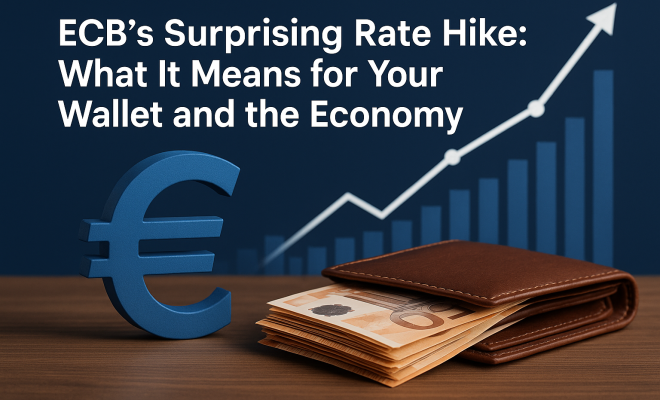
The European Central Bank (ECB) has just made waves with its unexpected decision to raise interest rates by 25 basis points, marking the first such increase in over two years. This adjustment raises the deposit facility rate from 2.00% to 2.25% and the main refinancing rate from 2.15% to 2.40%. In a landscape where market analysts widely anticipated rate cuts, this move has ignited discussions about inflation, borrowing costs, and the sustainability of the economic recovery across the eurozone.
Understanding the Significance of the ECB Interest Rates Hike
When a central bank like the ECB makes a significant policy shift, it sends ripples through the entire economy. The recent hike in ECB interest rates raises critical questions: Why did the ECB choose this moment to increase rates? What are the broader implications for businesses and consumers? To unpack these questions, it’s important to look at the economic climate leading up to this decision.
Inflation has remained a persistent concern across Europe, with prices rising faster than anticipated. Despite a backdrop of economic challenges, including slowdowns in key sectors like manufacturing and real estate, the ECB responded to inflationary pressures by tightening its monetary policy. This decision signals a clear intention to target inflation directly, even at the risk of potentially stifling growth in sectors that are just beginning to recover.
The Economic Climate Leading Up to the Rate Hike
As Europe grappled with a series of economic headwinds—such as the lingering effects of the pandemic, geopolitical tensions, and supply chain disruptions—many analysts expected the ECB to adopt a more dovish stance. The assumption was that the bank would prioritize growth over inflation management. However, the February 2026 inflation data, which showed an unexpected uptick, likely prompted the ECB to reconsider its strategy.
The consumer price index (CPI) indicated inflation rates climbing higher than the ECB’s target of 2%. With inflation holding firm, the central bank had little choice but to recalibrate its approach. The decision to raise ECB interest rates is a signal to markets that the central bank is serious about controlling inflation, even if it means risking a slowdown in recovery.
Immediate Impacts on Borrowing Costs
The immediate impact of the ECB’s decision is felt in borrowing costs for both households and businesses. With higher ECB interest rates, the cost of loans, including mortgages and business financing, will increase. Consumers can expect to see their mortgage payments rise, impacting disposable income and purchasing power.
For businesses, higher borrowing costs can lead to reduced investment in expansion and operations. Companies may need to rethink their growth strategies, particularly in an environment where consumer spending is volatile. The ripple effects of this rate hike could stifle momentum in sectors like manufacturing, which are already facing challenges due to reduced global demand and increased production costs.
Market Reactions and Social Media Buzz
As news of the ECB interest rates hike spread, it sparked a wave of reactions across financial markets and social media platforms. Many investors expressed surprise, as the market had largely priced in a different expectation—namely, a possible reduction in rates. This unexpected shift created immediate volatility in stock and bond markets, with many investors scrambling to reassess their strategies.
On platforms like Twitter and financial forums, discussions flourished about the implications of the rate hike on home loans and consumer debt. Questions about future mortgage rates took center stage, with potential homebuyers now facing uncertainty. The financial planning community is buzzing with debate about how consumers should adjust their strategies in light of these developments.
Economists Weigh In: Growth Forecasts Reassessed
In the aftermath of the ECB’s decision, economists are busy reassessing their growth forecasts for 2026. Many are warning that higher rates could have a dampening effect on economic recovery. The fragility of the recovery is a significant factor; sectors like real estate and manufacturing, which are critical to the eurozone’s economic health, may struggle under the weight of increased borrowing costs. (See: BBC coverage on ECB rate hike.)
Additionally, economists are poised to closely monitor how consumer sentiment adjusts in response to the rate hike. If consumers pull back on spending due to rising costs, the economic recovery could be jeopardized, leading to a potentially vicious cycle of lower growth and increased unemployment.
A Closer Look at Consumer Behavior
Consumer behavior is a crucial area to observe in the wake of the ECB interest rates hike. Higher borrowing costs often lead consumers to prioritize essential spending over discretionary purchases. For instance, as mortgage payments increase, individuals may defer buying new homes or renovations, which can ripple through sectors like construction and home improvement.
Moreover, the psychological impact of rising rates cannot be underestimated. When consumers perceive that borrowing costs are climbing, it may alter their spending habits, leading to increased savings and reduced expenditures on non-essential items. This shift could further exacerbate the already fragile recovery in consumer-driven sectors.
The Long-Term Implications of Higher ECB Interest Rates
While the immediate effects of the ECB interest rates hike are apparent, the long-term implications are far more complex. If inflation remains stubbornly high, the ECB may feel pressured to implement additional rate increases, which could exacerbate economic challenges. On the other hand, if inflation begins to taper off, the ECB might pivot again, creating a highly dynamic environment for monetary policy.
Long-term, the trajectory of ECB interest rates will directly influence investment strategies across the eurozone. Sectors that thrived in a low-interest environment may face significant headwinds, while other sectors, such as financial services, may see opportunities arise from increased demand for products that hedge against rising rates.
Comparative Analysis with Other Central Banks
To fully understand the implications of the ECB’s decision, it’s beneficial to compare its approach with that of other central banks around the globe. For instance, the U.S. Federal Reserve has also faced similar inflationary pressures but has adopted a different approach to managing interest rates. Their decisions reflect a balance between controlling inflation and fostering economic growth, which adds another layer of complexity to the global economic outlook.
Central banks in emerging markets have also grappled with inflation, often responding with aggressive rate hikes to stabilize their currencies and control local price levels. The ECB’s cautious approach, despite the recent hike, reflects a nuanced understanding of the eurozone’s unique economic landscape, where growth is still tenuous.
Looking Ahead: Strategic Financial Planning in a New Interest Rate Environment
As the dust settles from the recent ECB interest rates hike, individuals and businesses need to reassess their financial strategies. Homebuyers might want to lock in current mortgage rates before they climb higher, while businesses should evaluate their capital expenditures carefully. Adapting to this new financial landscape could mean the difference between thriving and merely surviving in the coming months.
Furthermore, financial advisors will play an essential role in helping clients navigate these changes. By staying informed about the latest economic developments and ECB policies, individuals can make better decisions about borrowing, spending, and investing.
Impact on Savings Rates
One aspect that often gets overshadowed by discussions on borrowing costs is the impact of rising ECB interest rates on savings rates. When interest rates increase, banks typically pass some of that increase onto consumers in the form of higher savings account rates. This can provide a much-needed boost for savers who have seen minimal returns in previous years.
For instance, if you have a savings account that offers an interest rate of 0.5% today, a hike in the ECB rates could see that rate climb to 1.5% or even higher, depending on market conditions. This is particularly advantageous for individuals nearing retirement, as they seek to maximize their savings return. Therefore, while borrowing may become more costly, savers stand to benefit in a higher interest rate environment. (See: Reuters report on interest rate changes.)
Sector-Specific Implications of the Rate Hike
The ECB interest rates hike won’t affect all sectors equally. Industries such as real estate, construction, and consumer goods may experience challenges due to increased borrowing costs. Conversely, sectors like banking and financial services might see a silver lining. Higher interest rates can lead to improved profit margins for banks, as they earn more from loans than they pay out on deposits.
Additionally, industries heavily reliant on consumer spending could see a downturn. For instance, retailers may suffer if consumers cut back on spending due to rising costs associated with financing purchases. On the other hand, businesses in manufacturing could face squeezed margins if their input costs rise while consumer demand softens.
Global Context: ECB Interest Rates Compared to Global Trends
In the global context, the recent ECB interest rate hike reflects a broader trend among central banks. Countries like the United States, Canada, and the UK have also raised interest rates to combat inflation. Understanding these global trends can help individuals and businesses strategize more effectively. For example, consumers with ties to international markets should monitor how changes in ECB policies might influence currency exchange rates, impacting imports and travel costs.
Expert Perspectives: Insights from Economists
To gain a deeper understanding of the ECB’s decision, various economists and financial experts have weighed in. Many agree that while the immediate effects may be challenging, the long-term goal of stabilizing inflation is crucial for sustainable economic recovery. Dr. Anna Schmidt, a renowned economist at the European Economic Institute, noted, “The ECB’s decision, while unexpected, allows the bank to regain control over inflationary pressures that have been building up for some time.”
Another expert, Mark Fischer, a financial analyst with a focus on European markets, emphasized the importance of this decision in the broader global context, stating, “As other central banks tighten their monetary policies, the ECB’s actions signal a commitment to maintaining competitive economic conditions in Europe.”
FAQs about ECB Interest Rates
What are ECB interest rates?
ECB interest rates refer to the rates set by the European Central Bank for its monetary policy operations, influencing borrowing and saving costs across the eurozone.
Why did the ECB raise interest rates now?
The ECB raised interest rates in response to rising inflation rates that exceeded their target, seeking to control inflation and stabilize the economy.
How will the rate hike affect my mortgage payments?
With higher ECB interest rates, mortgage rates are likely to increase. This means your monthly payments could go up if you have a variable-rate mortgage or if you’re looking to take out a new mortgage.
What should businesses do in response to the rate hike?
Businesses should reassess their investment strategies and consider the costs of borrowing. Planning for increased expenses and possibly reduced consumer spending is crucial in this new environment.
Will my savings account earn more interest now?
Potentially, yes. As banks adjust their rates in response to the ECB’s hike, consumers may see better returns on savings accounts and other deposit products.
How should I adjust my financial planning after the rate hike?
Consider locking in lower interest loans now if possible, increase your savings rate to take advantage of higher returns, and be mindful of budgeting for potential increases in living costs.
What the Future Holds for ECB Interest Rates
Looking ahead, many analysts are trying to predict how long these higher ECB interest rates will last and whether more increases are on the horizon. The economic landscape is changing rapidly, and various factors will influence future ECB decisions. Two critical elements to watch will be inflation trends and economic growth indicators across the eurozone.
As inflation persists above the ECB’s target, many analysts believe additional rate hikes could be necessary to rein in rising prices. However, if the economy shows signs of weakening due to higher borrowing costs, the ECB may choose to pause or even reverse course. The delicate balance of managing inflation while fostering growth will be the central bank’s primary challenge in the coming months.
Investor Strategies in a Higher Interest Rate Environment
Investors are also adjusting their strategies in response to the ECB interest rates hike. Higher rates typically lead to a stronger euro, which can impact export-oriented businesses. Investors might shift their focus towards sectors that thrive in a higher interest rate environment, such as financial services and utilities. Conversely, sectors like real estate or consumer discretionary may become less attractive as borrowing becomes more expensive and consumer sentiment shifts.
Asset allocation will likely be a key focus for investors as they reassess their portfolios in light of these changes. Diversifying investments and being mindful of interest rate sensitivities will become increasingly crucial for navigating this landscape.
Final Thoughts on the ECB’s Rate Hike
The ECB’s unexpected interest rate hike has created a complex web of implications for the eurozone economy, impacting everything from consumer behavior to business investment strategies. As we move forward, the effects of this decision will unfold, shaping the economic landscape in ways that are yet to be fully understood.
For now, one thing is clear: the conversation surrounding ECB interest rates is far from over, and both consumers and businesses must remain vigilant as they navigate this new financial terrain. The decisions made today will have lasting repercussions that could redefine economic recovery in the eurozone for years to come.
“`
Trending Now
Frequently Asked Questions
Why did the ECB raise interest rates?
The ECB raised interest rates by 25 basis points in response to persistent inflation concerns across Europe. Despite expectations for rate cuts, the unexpected uptick in inflation data prompted the ECB to tighten its monetary policy to target inflation directly.
What does the ECB rate hike mean for consumers?
The ECB's rate hike means higher borrowing costs for consumers, as interest rates on loans and mortgages may increase. This could impact consumer spending and savings, ultimately affecting individual wallets and economic growth.
How does the ECB's decision affect the economy?
The ECB's decision to raise interest rates could slow down economic recovery by increasing borrowing costs for businesses and consumers. While it aims to control inflation, it may also hinder growth in key sectors that are just beginning to recover.
What are the implications of higher interest rates on inflation?
Higher interest rates typically help to control inflation by discouraging borrowing and spending. The ECB's rate hike signals its intent to combat rising prices, which could stabilize the economy in the long run, despite potential short-term growth challenges.
What should businesses expect from the ECB's interest rate hike?
Businesses should expect increased borrowing costs and potentially reduced consumer spending due to the ECB's interest rate hike. This could lead to tighter budgets and a more cautious approach to investment and expansion as the economic landscape shifts.
Have you experienced this yourself? We’d love to hear your story in the comments.