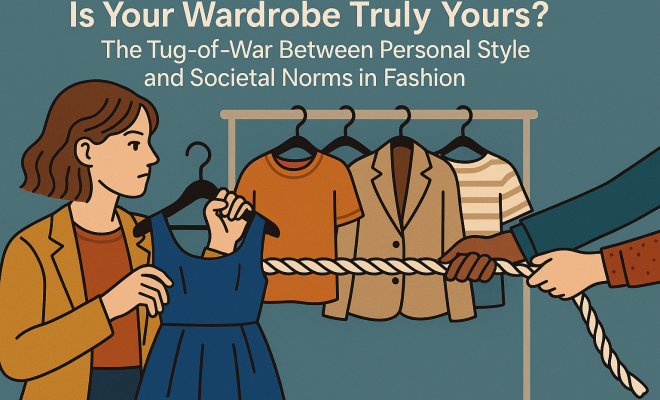
Is Your Wardrobe Truly Yours? The Tug-of-War Between Personal Style and Societal Norms in Fashion
“`html
The fashion industry has long been entwined with the concepts of personal style and societal norms, creating an ongoing debate that resonates deeply within contemporary culture. As trends emerge and evolve at a relentless pace, the question arises: is fashion a true reflection of personal expression, or is it more a manifestation of societal pressures and expectations? This examination of personal style vs societal norms in fashion reveals the complexities at play, influencing everything from consumer behavior to identity and status signaling.
The Essence of Personal Style
Personal style refers to the unique choices individuals make in how they dress. This is shaped by various factors, including personality, cultural background, and life experiences. It represents a canvas on which one’s identity can be painted, often transcending mere aesthetics. For many, cultivating a personal style is about embracing individuality and self-expression.
Fashion icons like Iris Apfel and David Bowie have demonstrated that personal style can challenge societal expectations. They have redefined norms, using clothing as a medium for storytelling and expression. When individuals craft their styles, they often draw from a myriad of influences—art, music, historical references, and even personal experiences. This eclectic mix allows them to communicate who they are without uttering a single word.
Understanding Societal Norms in Fashion
In contrast, societal norms in fashion encompass the trends and standards that dictate what is considered acceptable or desirable in clothing. These norms are perpetuated by various structures, such as media, celebrity culture, and even peer groups. For instance, the rise of social media platforms has significantly influenced fashion trends, creating an environment where consumers feel pressured to conform to popular styles.
Fashion weeks, global influencers, and marketing campaigns play pivotal roles in shaping these societal expectations. As trends rapidly ascend and descend, individuals often find themselves caught in a cycle of fast fashion—pressured to buy the latest looks to fit in and signal status within their social circles. This cycle can lead to impulsive purchasing, raising questions about authenticity and personal choice.
The Impact of Fast Fashion
The fast fashion phenomenon has transformed the industry, making trendy clothing more accessible and affordable than ever before. Brands like Zara, H&M, and Forever 21 have capitalized on this model, producing high volumes of clothing at breakneck speeds to satisfy consumer demand. However, this accessibility comes at a price—both environmentally and ethically.
Fast fashion results in a disposable culture, where clothing is often viewed as single-use items rather than long-term investments. This mindset can dilute personal style, as consumers may prioritize fleeting trends over meaningful, expressive choices. The environmental impact of fast fashion is staggering, with millions of tons of clothing ending up in landfills each year. This raises critical questions about consumer guilt and responsibility—how do our purchasing decisions align with our values?
Consumer Guilt and Identity
As consumers navigate the landscape of fast fashion, feelings of guilt can emerge when purchasing decisions clash with personal values. Many are increasingly aware of the environmental and ethical implications of their clothing choices, leading to a struggle between wanting to fit in and the desire for environmentally responsible consumption. This internal conflict is compounded by social media, where influencers often showcase their wardrobes filled with fast fashion pieces.
Consequently, the concept of identity becomes closely intertwined with consumer behavior. Individuals may feel the pressure to adopt certain styles to fit in with their peers, yet they may also seek to express their true selves through clothing. This dichotomy creates a tension that can influence purchasing decisions, leading to the question: are we dressing for ourselves or for societal acceptance?
Psychological Perspectives on Fashion Choices
Psychologists have explored the motivations behind clothing choices, revealing that they often reflect deep-seated desires for acceptance, validation, and self-expression. Studies suggest that clothing can significantly impact self-esteem and how individuals perceive themselves and wish to be perceived by others. Wearing attire that resonates with one’s personal style can boost confidence, whereas conforming to societal norms may lead to feelings of inadequacy. (See: How fashion reflects society.)
Moreover, the concept of status signaling plays a significant role in fashion choices. High-end brands often serve as markers of status and wealth, with many individuals gravitating toward luxury items to communicate their social standing. This behavior can create an illusion of authenticity, where personal style becomes overshadowed by brand affiliation. In this context, the line between personal style and societal norms blurs, leaving individuals questioning whether their choices are genuinely reflective of themselves or merely a response to external pressures.
Expert Perspectives on Personal Style vs Societal Norms in Fashion
Fashion experts continue to weigh in on the ongoing debate surrounding personal style and societal norms. Sociologist Dr. Elizabeth Currid-Halkett suggests that fashion serves as a social language, allowing individuals to communicate their identities and social standings without spoken words. In her view, understanding this language is essential for navigating the complexities of the fashion world.
On the other hand, fashion psychologist Dr. Karen Pine emphasizes the importance of self-awareness in shaping personal style. She argues that individuals should strive to understand their motivations behind clothing choices, encouraging them to embrace what feels authentic rather than succumbing to societal pressures. This awareness can empower individuals to curate wardrobes that genuinely reflect their identities, rather than fleeting trends dictated by the masses.
Finding a Balance: Embracing Both Personal Style and Societal Norms
While the tension between personal style and societal norms can feel overwhelming, finding a balance is possible. Individuals can embrace their unique styles while remaining open to influences from social trends. This approach allows for a more nuanced understanding of fashion—one that respects individual expression and acknowledges societal impact.
One way to achieve this balance is by curating a capsule wardrobe, focusing on versatile pieces that reflect personal style while allowing for occasional trend-inspired additions. This strategy encourages mindful consumption, enabling individuals to build a wardrobe that is both expressive and practical. Moreover, engaging with sustainable fashion brands can help mitigate the environmental impact of fast fashion, allowing consumers to align their purchasing habits with their values.
The Role of Social Media in Fashion Choices
Social media has revolutionized the way individuals engage with fashion, providing platforms for self-expression while also amplifying societal norms. Influencers and content creators showcase their personal styles, often setting trends that ripple through various social circles. While this can inspire creativity and self-expression, it can also perpetuate conformity.
As users scroll through curated feeds filled with perfectly styled outfits, it’s easy to feel the pressure to conform to certain aesthetics. To combat this, individuals can curate their social media experiences by following accounts that celebrate diversity in fashion, promoting body positivity, and encouraging unique styles. This shift can foster a more inclusive fashion culture that embraces personal expression and diminishes the hold of societal expectations.
Future Trends: Redefining Personal Style and Societal Norms
The future of fashion is poised for transformation, with a growing emphasis on sustainability, inclusivity, and authenticity. As consumers become more aware of the impact of their clothing choices, there is a collective push toward ethical fashion that prioritizes transparency and social responsibility.
Emerging trends suggest a shift away from fast fashion’s disposable culture, as more individuals seek to invest in timeless pieces that reflect their personal styles. This movement fosters a sense of connection with clothing, promoting durable quality over fleeting trends. Furthermore, brands are increasingly adopting inclusive practices, celebrating diverse representations of beauty and style that resonate with a broader audience.
Case Studies: Personal Style in Action
To illustrate the ongoing dialogue between personal style and societal norms in fashion, several case studies highlight individuals who have successfully navigated these complexities. For instance, the rise of streetwear, initially rooted in subcultures, has evolved to become mainstream. This transition demonstrates how personal style can redefine societal norms, as brands like Off-White and Supreme highlight the influence of urban culture on high fashion.
Another noteworthy example is the impact of body positivity movements on personal style. Individuals embracing their bodies, regardless of size or shape, have begun to challenge traditional beauty standards. This shift has prompted brands to expand their sizing options and feature diverse models, illustrating a growing recognition that fashion should cater to all body types. The body positivity movement emphasizes that fashion can be a tool for empowerment, encouraging individuals to embrace their personal style rather than conform to narrow societal ideals.
Statistics on Fashion Consumption Trends
Understanding the relationship between personal style and societal norms can be further elucidated by examining relevant statistics. According to a 2021 report by McKinsey & Company, the global fashion market is projected to reach $1.5 trillion by 2025. However, a significant percentage of consumers, approximately 66%, state that they feel guilty about their fashion purchases due to concerns over sustainability and ethical practices. (See: The fashion industry and society.)
Moreover, a survey by GlobalData found that 42% of consumers prefer to buy from brands that promote sustainability, underscoring a shift towards conscious consumption. This data highlights the growing awareness among consumers regarding their impact on the environment and showcases a potential shift in societal norms, where sustainability becomes a core aspect of personal style.
Frequently Asked Questions (FAQ)
What is personal style in fashion?
Personal style in fashion refers to the unique way an individual expresses themselves through their clothing choices. It encompasses personal preferences, cultural influences, and individual creativity, allowing each person to curate a wardrobe that aligns with their identity.
How do societal norms influence fashion choices?
Societal norms in fashion influence choices through established trends, expectations set by media and celebrities, and peer pressure. These norms can dictate what is seen as fashionable or acceptable, often compelling individuals to conform to specific styles to fit in.
Is fast fashion detrimental to personal style?
Fast fashion can detract from personal style by promoting a culture of disposability, where consumers prioritize trendy items over meaningful, expressive choices. This emphasis on rapid consumption can overshadow individuality, leading to a homogenization of style.
How can individuals maintain their personal style in a fast fashion world?
Individuals can maintain their personal style by curating a capsule wardrobe, focusing on versatile and timeless pieces that reflect their personality. Additionally, prioritizing sustainable and ethical brands can help align personal values with fashion choices.
What role do influencers play in shaping fashion trends?
Influencers play a significant role in shaping fashion trends by showcasing their styles on social media platforms. Their reach and impact can inspire followers to adopt similar looks, often reinforcing societal norms while also providing opportunities for personal expression.
What are some emerging trends in fashion relating to personal style and societal norms?
Emerging trends include the rise of sustainable fashion, an emphasis on inclusivity, and the celebration of diverse body types. These trends reflect a growing awareness of the importance of ethical practices and the desire for personal expression that goes beyond traditional societal norms.
Exploring the Historical Context of Fashion Norms
The evolution of fashion is deeply rooted in history, with societal norms often reflecting the cultural, political, and economic landscapes of different eras. For instance, the corset was once a symbol of femininity and societal expectations in the Victorian era. It dictated how women should present themselves, often prioritizing aesthetic appeal over comfort and personal expression. As fashion progressed into the 20th century, movements like the flapper era rejected these constraints, advocating for a more liberated and personal approach to style.
During the 1960s and 70s, the rise of counterculture movements further disrupted societal fashion norms. The hippie movement, for example, championed individuality and self-expression through bold colors, eclectic patterns, and second-hand clothing. This period highlighted a shift towards personal style, where individuals sought to express their values and beliefs through their clothing choices, challenging the status quo.
Understanding this historical context underscores the continuous tug-of-war between personal style and societal norms in fashion, reflecting broader societal changes and cultural dialogues. (See: Harvard University insights on fashion.)
The Influence of Technology on Fashion
Today, technology plays a significant role in shaping fashion trends and individual style. The digital age has transformed how consumers interact with fashion, providing tools that facilitate personal expression. Apps like Pinterest and Instagram allow users to curate their style inspirations and share their outfits, creating a global dialogue about fashion choices.
Moreover, technology has given rise to virtual fitting rooms and augmented reality, allowing consumers to visualize how clothing fits before purchasing. This innovation empowers consumers to choose pieces that align with their personal styles without the limitations of physical shopping. However, it also raises questions about whether technology enhances or detracts from the authenticity of personal style, as algorithms can inadvertently promote certain societal norms over others.
Cultural Appropriation vs. Cultural Appreciation in Fashion
Cultural appropriation is a contentious topic in the fashion industry, where elements from one culture are adopted by another, often without acknowledgment or respect. This phenomenon highlights the delicate balance between personal style and societal norms, as individuals may draw inspiration from diverse cultural backgrounds in their fashion choices.
In contrast, cultural appreciation involves understanding and respecting the origins of specific styles while celebrating them in a thoughtful manner. For example, incorporating traditional patterns or garments into personal style can be a beautiful homage when done respectfully. However, when cultural symbols are used without context—such as wearing Native American headdresses at music festivals—it can perpetuate harmful stereotypes and diminish the significance of those cultural elements.
As society grows increasingly aware of these distinctions, individuals are encouraged to approach their fashion choices with sensitivity and an informed perspective, blending personal style with an understanding of the broader societal implications.
Conclusion: Shaping the Future of Fashion
The ongoing conversation surrounding personal style vs societal norms in fashion highlights the complexities of identity, consumer behavior, and social expectations. As individuals navigate these competing forces, it becomes essential to embrace the notion that fashion can be both a personal expression and a reflection of societal influences.
Ultimately, the future of fashion lies in finding harmony between personal style and societal norms. By fostering self-awareness, promoting sustainable practices, and challenging traditional norms, individuals can redefine their relationship with fashion—creating a culture that celebrates individuality while recognizing the interconnectedness of our clothing choices.
“`
Trending Now
Frequently Asked Questions
What is personal style in fashion?
Personal style refers to the unique choices individuals make in how they dress, influenced by factors like personality, cultural background, and life experiences. It serves as a canvas for self-expression and identity, allowing individuals to communicate who they are through their clothing choices.
How do societal norms influence fashion?
Societal norms dictate what is considered acceptable or desirable in clothing, shaped by media, celebrity culture, and peer groups. These norms create pressure for individuals to conform to popular styles, especially influenced by trends emerging from social media and fashion events.
Can personal style challenge societal norms?
Yes, personal style can challenge societal norms as seen with fashion icons like Iris Apfel and David Bowie. They used their unique outfits to redefine expectations and promote individuality, demonstrating that fashion can be a powerful medium for storytelling and self-expression.
What role does social media play in fashion trends?
Social media plays a significant role in shaping fashion trends by creating a platform where popular styles can quickly gain traction. It influences consumer behavior and fosters a culture of conformity, making individuals feel pressured to adopt trending looks.
Is fashion more about personal expression or societal pressure?
Fashion embodies both personal expression and societal pressure. While it allows individuals to showcase their unique identities, it is also heavily influenced by societal norms and trends that can create expectations for how one should dress.
Have you experienced this yourself? We’d love to hear your story in the comments.