How Himalayan Tectonics and Climate Are Shaping Our Future: Surprising Insights
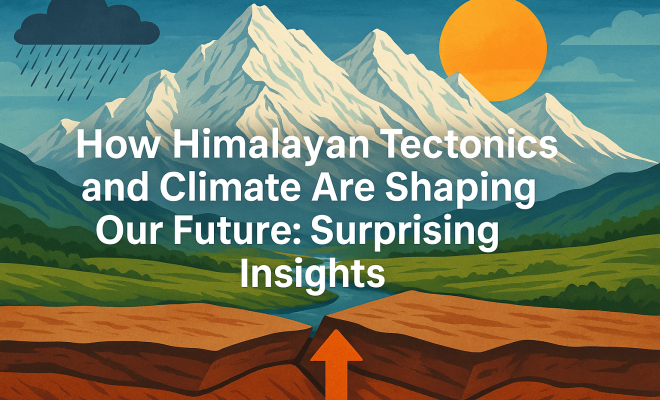
The majestic Himalayas, often referred to as the roof of the world, are not only a stunning natural wonder but also a focal point for scientific study. Recent research has uncovered fascinating insights into how Himalayan tectonics and climate interweave to shape the long-term erosion and landscape evolution of this iconic region. This intricate relationship has profound implications not only for geology but also for climate change, water resources, and the risk of natural disasters across South Asia.
The Interplay of Tectonics and Climate
The study of the Himalayan orogen reveals that the forces of tectonics and climate are inextricably linked in ways that challenge conventional understanding. As the Indian plate continues its relentless push northward, colliding with the Eurasian plate, the Himalayas rise, forming one of the youngest mountain ranges on Earth. However, this process is not solely a story of uplift; it is also about how climate influences erosion and landscape transformation over millions of years.
Surprisingly, research indicates that Himalayan tectonics and climate factors, such as precipitation, play a more significant role in shaping the landscape than previously believed. High levels of rainfall during monsoon seasons drive extensive erosion, which in turn influences the rate at which the mountains rise. This connection between uplift and erosion is counterintuitive but critical in understanding the evolutionary dynamics of the region.
The Role of Rainfall in Erosion
The role of rainfall in the Himalayan tectonics landscape evolution is particularly noteworthy. The monsoon rains that sweep across South Asia are not merely weather phenomena; they are fundamental to the geological processes that shape the Himalayas. When heavy rains fall, they accelerate the erosion of rock and soil, transporting sediments down the slopes and into river valleys.
This erosion feeds back into the tectonic processes at play. As material is removed from the mountains, it can allow for further uplift, creating a cycle that is essential to the long-term stability and evolution of the range. As researchers delve deeper into the interaction between rainfall and erosion, they reveal a system that is more dynamic and responsive than previously thought.
Impact on Natural Hazards and Water Resources
The implications of this study extend beyond geology into areas that directly affect human populations. The Himalayas serve as a crucial watershed for millions across South Asia. The rivers that originate in these mountains, including the Ganges, Indus, and Brahmaputra, provide water for agriculture, drinking, and industry.
As Himalayan tectonics and climate change continue to influence the landscape, the availability of water resources could be impacted. Changes in monsoon patterns due to climate change could lead to either increased flooding or drought, both of which present significant risks to the populations dependent on these water sources.
Moreover, the erosion processes in the Himalayas are linked to landslide risks, which pose a severe threat to communities living in the foothills. Understanding the connection between tectonics and climate can help in developing strategies for disaster risk management, potentially saving lives and safeguarding infrastructure in vulnerable areas.
Future Research Directions
As scientists continue to explore the complexities of Himalayan tectonics, future research will likely focus on several key areas. One important direction is improving climate models to better predict how changing weather patterns will impact erosion and mountain evolution. Additionally, researchers may investigate the social implications of these geological changes, particularly how shifts in water availability and natural hazards affect local communities.
Furthermore, the ongoing study of the Himalayas serves as a critical reminder of the interconnectedness of natural systems. As climate change poses unprecedented challenges, understanding the geological processes at play in regions like the Himalayas can inform broader discussions about sustainability and environmental management.
Conclusion
The relationship between Himalayan tectonics and climate is a compelling narrative of how our planet’s systems interact over geological timescales. This research not only enhances our understanding of mountain formation and erosion but also highlights the importance of these dynamics for millions of people who rely on the resources provided by the Himalayas. As we look to the future, the insights gained from studying this remarkable region will be vital in addressing the challenges posed by climate change and natural hazards in South Asia.