Unlocking the Universe: A Groundbreaking 3D Map of 47 Million Galaxies and Its Implications for Dark Energy
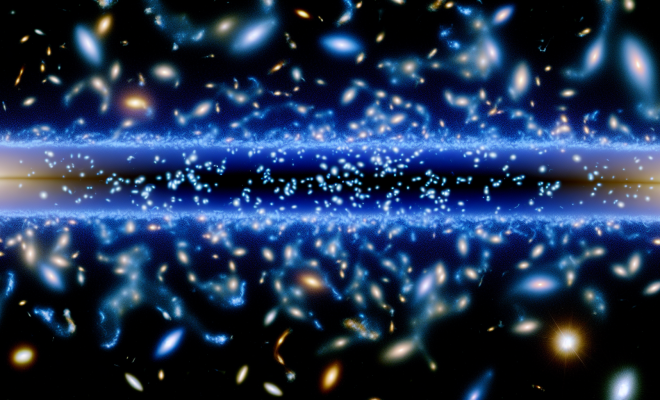
In a remarkable advancement in cosmic cartography, researchers at Ohio State University have unveiled a comprehensive 3D map that charts a staggering 47 million galaxies. This monumental project, detailed in a publication dated April 28, 2026, aims to deepen our understanding of dark energy—a mysterious force that is believed to be driving the accelerated expansion of the universe. The implications of this research could reshape our understanding of the fundamental forces at play in the cosmos.
The Journey to Mapping the Cosmos
The creation of this extensive 3D map is not just a technical achievement; it is the culmination of years of dedication and collaboration among astronomers and astrophysicists. The project harnessed data from various astronomical surveys, employing advanced techniques to analyze the distribution of galaxies across vast distances. By meticulously examining the redshift of galaxies, scientists can infer their distances from Earth, which is crucial for constructing an accurate 3D representation of the universe.
Understanding Redshift and Cosmic Distances
Redshift occurs when light from an object in space is stretched to longer wavelengths as it moves away from us, a phenomenon described by the Doppler effect. The greater the redshift, the faster the object is receding, which allows astronomers to estimate its distance. This method is pivotal in mapping out the structure of the universe and understanding how galaxies are distributed on cosmic scales.
The Role of Dark Energy in Cosmic Expansion
Dark energy remains one of the most profound mysteries in modern astrophysics. It is theorized to make up approximately 68% of the universe, yet its exact nature remains elusive. The accelerating expansion of the universe, first discovered in 1998, has led scientists to propose the existence of dark energy as the driving force behind this phenomenon. The 3D galaxy map created by the Ohio State researchers offers a new lens through which to study this enigmatic force.
Cosmological Models and Dark Energy
The new data from the 3D map provides an invaluable resource for testing existing cosmological models, particularly those related to dark energy. Two prevailing theories that describe dark energy are the cosmological constant, which suggests a uniform energy density throughout space, and dynamic models that propose changes in energy density over time. By analyzing the distribution of galaxies, researchers can glean insights into which model may be more accurate.
Methodology Behind the Mapping Project
The mapping project employed a combination of wide-field surveys and sophisticated computational techniques. Using data from telescopes and space observatories, researchers compiled a vast dataset that spans billions of light-years. They then applied algorithms to filter and organize this data, resulting in a detailed 3D visualization of galaxy clusters and voids.
Tools and Technologies Used
- Wide-Field Surveys: Surveys like the Sloan Digital Sky Survey (SDSS) and the Dark Energy Survey (DES) provided essential data on galaxy positions and redshifts.
- Data Processing Algorithms: Advanced algorithms helped in processing massive datasets, enabling researchers to extract meaningful patterns and structures.
- Computational Resources: High-performance computing facilities were crucial in handling the extensive calculations required for 3D mapping.
Significance of the 3D Map
The 3D map of 47 million galaxies represents a significant leap forward in our quest to comprehend the universe. Its implications extend beyond dark energy, offering insights into galaxy formation, cosmic structure, and the overall evolution of the universe.
Impacts on Galaxy Formation Theories
By analyzing the spatial distribution of galaxies, researchers can test theories of galaxy formation and evolution. The map allows for the study of galaxy clusters, their interactions, and the influence of dark matter—an additional component that, along with dark energy, plays a critical role in shaping the universe.
Future Directions in Cosmic Research
This monumental map opens up numerous avenues for future research. Scientists can utilize the data to conduct more refined studies on the distribution of dark energy and its effect on the fabric of space-time.
Potential Research Areas
- Investigating Cosmic Voids: The map can help identify and analyze cosmic voids—large, empty spaces between galaxy clusters—which provide clues about the nature of dark energy.
- Exploring Galaxy Clusters: Further studies can examine the dynamics of galaxy clusters and how they influence our understanding of dark matter and dark energy.
- Refining Cosmological Models: Ongoing analysis of the map data may lead to refinements in existing cosmological models, enhancing our understanding of the universe’s expansion.
Collaboration Across Disciplines
The success of this mapping project underscores the importance of interdisciplinary collaboration in advancing our understanding of the universe. Researchers from various fields, including physics, computer science, and astronomy, have come together to tackle one of the most challenging questions in science today.
Engaging the Scientific Community
By sharing their findings with the broader scientific community, the Ohio State researchers encourage other scientists to utilize the 3D map in their studies. This collaborative approach is essential for fostering innovation and accelerating discoveries in the field of cosmology.
Conclusion
The creation of a 3D map charting 47 million galaxies marks a transformative moment in our exploration of the cosmos. As researchers continue to analyze the data, the potential to unlock the secrets of dark energy grows, paving the way for a deeper understanding of the universe and our place within it. With each new discovery, we move closer to answering fundamental questions about the nature of reality and the forces that govern the cosmos.