Beavers as Climate Change Indicators: Unraveling Their Impact on Arctic Ecosystems
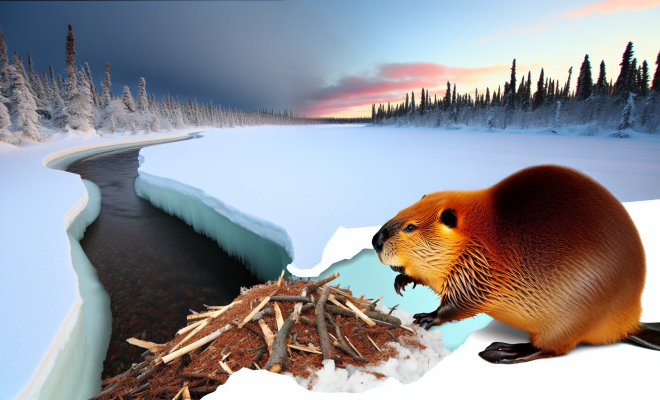
The North American beaver, scientifically known as Castor canadensis, has long been recognized not only for its remarkable engineering skills but also for its significant role in shaping landscapes and ecosystems. Recent research conducted by scholars at Anglia Ruskin University (ARU) in Cambridge, England, has unveiled how these industrious rodents are responding to the challenges posed by climate change, specifically their expanding populations in the Arctic Northwest Territories of Canada.
The Role of Beavers in Ecosystem Engineering
Beavers are often referred to as nature’s engineers due to their ability to modify their environment extensively. They construct dams that create ponds and wetlands, which serve as essential habitats for numerous species. These wetland areas can enhance biodiversity, improve water quality, and even mitigate flooding. However, in recent decades, the pressures of climate change have begun to influence beaver behaviors, particularly their migration patterns and dam-building activities.
Climate Change and Beaver Migration
As temperatures rise and precipitation patterns shift, beavers are venturing further north into regions previously deemed inhospitable. The research from ARU highlights a clear correlation between climate change and the northward expansion of beaver populations. The Arctic Northwest Territories, known for their harsh climates and unique ecosystems, are witnessing the arrival of these creatures, which are adapting to the changing environment.
Innovative Research Methods
The study employed advanced techniques, such as dendrochronology and satellite imagery, to analyze the ecological impact of beavers in the Arctic. Dendrochronology, the science of tree-ring dating, allowed scientists to examine growth rings in trees that have been affected by beaver activities. By identifying browsing scars—marks left by beavers as they gnaw on tree bark—researchers could ascertain the timeline of beaver colonization in the area.
Dendrochronology: A Window into the Past
This methodology provided invaluable insight into plant responses to beaver activity. For instance, trees that showed signs of browsing scars from beavers exhibited growth patterns that indicated fluctuations in their environment over time. By examining these growth rings, researchers could develop a more comprehensive understanding of how beavers interact with their surroundings and how their populations have changed in response to climate shifts.
Satellite Imagery: Tracking Hydrological Changes
In conjunction with dendrochronology, satellite imagery played a crucial role in monitoring the hydrological changes brought about by beaver dams. The analysis revealed that one particular lodge-dam complex led to a significant expansion of surface water between 2015 and 2019. This finding underscores how beaver engineering not only transforms local environments but also contributes to broader hydrological changes in the Arctic landscape.
Beavers and Their Impact on the Arctic Ecosystem
The expansion of beaver populations into the Arctic has far-reaching implications for the region’s ecosystems. The creation of wetlands by beaver dams can enhance habitat availability for various wildlife species, thus promoting biodiversity. Additionally, these wetlands play a critical role in carbon sequestration, which is increasingly important in the context of climate change.
Biodiversity and Habitat Creation
Wetlands created by beavers can support a wide array of flora and fauna, from aquatic plants to migratory birds. As these rodents build dams and create ponds, they inadvertently foster an environment that can sustain diverse life forms. The presence of beavers can thus be seen as a positive force for ecological resilience, particularly in areas facing the pressures of climate change.
Carbon Sequestration and Climate Mitigation
In the fight against climate change, carbon sequestration has emerged as a critical strategy. Beavers, through their dam-building activities, contribute to this process by creating wetlands that can store carbon in both vegetation and soil. As organic matter accumulates in these wetland areas, it effectively captures carbon dioxide from the atmosphere, helping to mitigate the impacts of climate change.
Challenges and Future Considerations
While the expansion of beaver populations into the Arctic presents numerous ecological benefits, it also raises several challenges. For instance, the presence of beavers in areas where they were previously absent can lead to conflicts with human activities, particularly in agriculture and forestry. Understanding these dynamics is essential for developing effective management strategies that balance ecological benefits with human interests.
Human-Wildlife Conflicts
As beavers establish themselves in new areas, their dam-building activities can result in flooding of agricultural land and disruption of forestry operations. This has led to tensions between conservation efforts aimed at protecting beaver populations and the economic interests of local communities. Addressing these conflicts requires a nuanced approach that considers both ecological and economic factors.
Management Strategies for Coexistence
To mitigate potential conflicts, wildlife managers and conservationists are exploring various strategies to promote coexistence between beavers and human activities. These strategies may include:
- Beaver Relocation: In some cases, relocating beavers to areas less prone to human conflict can be an effective solution.
- Flow Devices: Installing structures that regulate water levels can help manage flooding without harming beaver populations.
- Education and Awareness: Raising public awareness about the ecological benefits of beavers can foster a more positive perception and acceptance of these animals.
Conclusion: Beavers as Indicators of Environmental Change
The research from Anglia Ruskin University sheds light on the critical role that beavers play in shaping Arctic ecosystems and their potential as indicators of environmental change. As climate change continues to alter landscapes and ecosystems, the expansion of beaver populations into the Arctic serves as a reminder of the interconnectedness of species and their environments.
By employing innovative research methods, scientists are not only able to track the impacts of beavers but also gain insights into broader ecological changes occurring in response to climate change. As we move forward, it becomes imperative to embrace the role of beavers in our ecosystems and develop sustainable management practices that allow for their coexistence with human activities.
Ultimately, the story of beavers is one of adaptation and resilience—a reflection of nature’s ability to respond to change, even in the face of unprecedented challenges. As they continue to build their dams and alter their landscapes, beavers remind us of the importance of preserving our natural world amidst the ever-evolving impacts of climate change.