NASA Monitors 91-Foot Asteroid Set to Pass Earth Safely in 2026
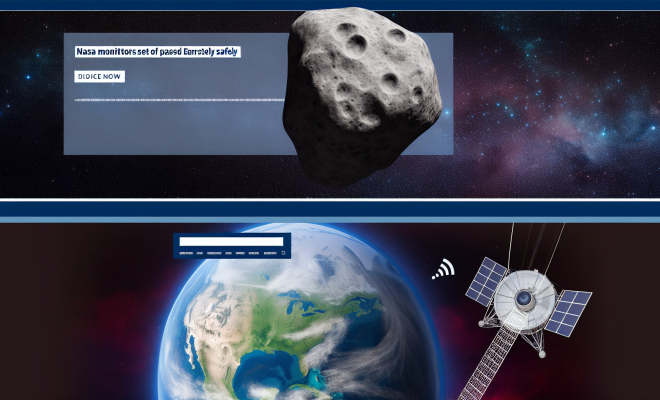
In the ever-vigilant pursuit of safeguarding our planet from potential cosmic threats, NASA has identified asteroid 2026 FV6, a 91-foot space rock that resembles the size of a commercial airplane. This particular asteroid is making headlines as it is projected to make a close pass by Earth on April 13, 2026. However, space enthusiasts and the general public can rest easy, as the asteroid poses no risk of collision.
The Size and Trajectory of Asteroid 2026 FV6
Asteroid 2026 FV6 measures approximately 91 feet in diameter, which is relatively small in the context of celestial bodies. For scale, its size is comparable to a commercial airliner, making it a noteworthy, yet not alarming, object in the vastness of space. As it approaches Earth, 2026 FV6 will travel at an impressive speed, but its trajectory has been calculated to ensure that it will pass at a safe distance of 1.78 million miles from our planet.
Understanding the Distance
To put this distance into perspective, 1.78 million miles is about 7.4 times farther than the Moon. This significant separation reassures astronomers that there is no risk of a collision. It is a common occurrence for asteroids and other celestial objects to pass by Earth without incident, and NASA’s role in monitoring these events is crucial for planetary defense.
The Importance of Monitoring Near-Earth Objects
Nebulous yet fascinating, near-Earth objects (NEOs) like 2026 FV6 are tracked meticulously by NASA and other space agencies worldwide. The agency has developed sophisticated tools and methods to identify and monitor these objects to assess any potential threat they may pose. In doing so, NASA not only ensures the safety of our planet but also enhances our understanding of the solar system.
Planetary Defense Initiatives
NASA’s ongoing efforts to track and study asteroids are part of its broader planetary defense strategy. The agency is committed to detecting, tracking, and characterizing NEOs to help mitigate any future risks. This endeavor includes:
- Cataloging: Continually updating a database of known asteroids and their trajectories.
- Risk Assessment: Analyzing the potential impact risks associated with each object.
- Public Awareness: Educating the public about the nature of these objects and the measures in place for protection.
- Technological Development: Innovating new technologies to deflect or disrupt potential threats.
Why Flybys Matter
Even though asteroid 2026 FV6 will not pose any threat to Earth, its approach provides an invaluable opportunity for scientists. Every flyby of an asteroid allows researchers to gather data about its composition, structure, and behavior. These insights contribute significantly to our understanding of asteroids and the history of our solar system.
Scientific Research from Flybys
Data collected from asteroids can reveal important information:
- Composition: Understanding what asteroids are made of can inform theories about the formation of planets.
- Impact History: Studying craters and surface features helps scientists understand past impacts on Earth and other celestial bodies.
- Potential Resources: Some asteroids contain precious metals and other materials that could be valuable in future space exploration and resource utilization.
The Future of Asteroid Monitoring
With the growing number of identified asteroids, the importance of monitoring continues to escalate. NASA’s efforts in tracking NEOs are expected to expand with the advent of new technologies and missions. One such initiative is the upcoming Double Asteroid Redirection Test (DART), which aims to test the feasibility of redirecting an asteroid, should the need arise in the future.
Conclusion: A Safe Passage
As asteroid 2026 FV6 approaches in 2026, it serves as a reminder of the delicate balance we maintain within our solar system. The absence of a collision risk allows us to focus on the scientific opportunities presented by its flyby. NASA’s vigilance and proactive monitoring demonstrate our commitment to planetary defense while fostering a deeper understanding of the universe beyond our blue planet.
In summary, while asteroid 2026 FV6 poses no threat to Earth, its journey serves as a catalyst for scientific inquiry and enhances our capacity to protect our planet from future cosmic threats. As we look toward the stars, we can be assured that the eyes of NASA and the global scientific community are always watching, ready to respond to any challenge that may arise from the depths of space.