The Tech Edvocate

Top Menu

  • Advertisement
  • Apps
  • Home Page
  • Home Page Five (No Sidebar)
  • Home Page Four
  • Home Page Three
  • Home Page Two
  • Home Tech2
  • Icons [No Sidebar]
  • Left Sidbear Page
  • Lynch Educational Consulting
  • My Account
  • My Speaking Page
  • Newsletter Sign Up Confirmation
  • Newsletter Unsubscription
  • Our Brands
  • Page Example
  • Privacy Policy
  • Protected Content
  • Register
  • Request a Product Review
  • Shop
  • Shortcodes Examples
  • Signup
  • Start Here
    • Governance
    • Careers
    • Contact Us
  • Terms and Conditions
  • The Edvocate
  • The Tech Edvocate Product Guide
  • Topics
  • Write For Us
  • Advertise

Main Menu

  • Start Here
    • Our Brands
    • Governance
      • Lynch Educational Consulting, LLC.
      • Dr. Lynch’s Personal Website
      • Careers
    • Write For Us
    • The Tech Edvocate Product Guide
    • Contact Us
    • Books
    • Edupedia
    • Post a Job
    • The Edvocate Podcast
    • Terms and Conditions
    • Privacy Policy
  • Topics
    • Assistive Technology
    • Child Development Tech
    • Early Childhood & K-12 EdTech
    • EdTech Futures
    • EdTech News
    • EdTech Policy & Reform
    • EdTech Startups & Businesses
    • Higher Education EdTech
    • Online Learning & eLearning
    • Parent & Family Tech
    • Personalized Learning
    • Product Reviews
  • Advertise
  • Tech Edvocate Awards
  • The Edvocate
  • Pedagogue
  • School Ratings

logo

The Tech Edvocate

  • Start Here
    • Our Brands
    • Governance
      • Lynch Educational Consulting, LLC.
      • Dr. Lynch’s Personal Website
        • My Speaking Page
      • Careers
    • Write For Us
    • The Tech Edvocate Product Guide
    • Contact Us
    • Books
    • Edupedia
    • Post a Job
    • The Edvocate Podcast
    • Terms and Conditions
    • Privacy Policy
  • Topics
    • Assistive Technology
    • Child Development Tech
    • Early Childhood & K-12 EdTech
    • EdTech Futures
    • EdTech News
    • EdTech Policy & Reform
    • EdTech Startups & Businesses
    • Higher Education EdTech
    • Online Learning & eLearning
    • Parent & Family Tech
    • Personalized Learning
    • Product Reviews
  • Advertise
  • Tech Edvocate Awards
  • The Edvocate
  • Pedagogue
  • School Ratings
  • US Battery as a Service Market Shifts Toward Fleet-Based Energy

  • The Startling Truth: Why Americans Distrust AI with Their Health

  • This Crucial Deadline for Banks Is Closer Than You Think

  • Baffling: CrowdStrike’s $500 Million AI Bet Reshapes Cybersecurity

  • This Crucial Autonomous Driving Rule Could Cost You Everything

  • Baffling: Microsoft AI CEO Demands Halt to Conscious AI Development

  • O seară în ritmul tău: atmosfera divertismentului de cazinou pe internet

  • Outrageous: AppLovin Hit With Lawsuit Over AI Claims — What Investors Need to Know

  • 9 Critical Ways AI Investment Fraud Is Quietly Draining Your Bank Account

  • Is the AI Bubble Bursting? OpenAI’s Funding Woes Revealed

Tech News
Home›Tech News›Fed Signals 2026 Rate Hikes Amid Surging Gas Prices & Iran Conflict

Fed Signals 2026 Rate Hikes Amid Surging Gas Prices & Iran Conflict
By Matthew Lynch
April 9, 2026
0
Spread the love

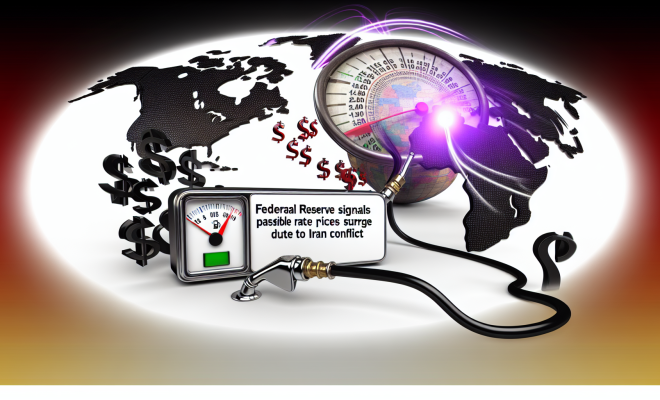
The landscape of U.S. monetary policy is shifting as Federal Reserve officials are now considering the likelihood of interest rate hikes in 2026, driven primarily by a surge in gas prices linked to the ongoing conflict in Iran. This change in perspective marks a significant pivot from the earlier expectation of potential rate cuts, reflecting the central bank’s response to evolving inflationary pressures.

Inflationary Pressures from Rising Oil Prices

As tensions in Iran have escalated, the impact on global oil markets has been profound. Higher gas prices have raised concerns among Federal Reserve policymakers, who now believe that these price surges could prolong inflationary trends longer than previously anticipated. The rising cost of energy is a critical component in the inflation equation, and many officials are increasingly vocal about the need to adjust monetary policy accordingly.

A Shift in Policy Expectations

Market expectations have undergone a remarkable transformation. Previously, the financial markets were pricing in rate cuts as early as 2024, following a period characterized by sustained interest rate reductions over 18 months. However, as inflation data continues to paint a concerning picture, the sentiment has shifted dramatically. Analysts now foresee no rate cuts until late 2027, indicating a significant recalibration in how investors view the Fed’s approach to managing inflation.

Key Insights from Federal Reserve Officials

In recent meetings, several Federal Reserve officials have expressed their concerns regarding the trajectory of inflation and the role of energy prices. The consensus among many policymakers is that if oil and gas prices remain elevated, the Fed may be compelled to implement interest rate hikes to stabilize the economy.

  • Oil Price Pressures: The rising costs at the pump are not merely a short-term inconvenience but could translate into broader economic implications.
  • Long-Term Inflation Risks: Persistent inflation can erode purchasing power, making it vital for the Fed to act decisively.
  • Policy Tools: Interest rate adjustments remain one of the primary tools at the Fed’s disposal to combat inflation.

The Broader Economic Context

The Federal Reserve’s renewed focus on interest rate hikes comes against a backdrop of complex economic factors. The ongoing conflict in Iran is a critical variable, as geopolitical tensions can lead to unpredictable oil supply disruptions, further exacerbating inflationary pressures. Additionally, the global economy is still navigating challenges stemming from the COVID-19 pandemic, supply chain disruptions, and varying recovery rates among different sectors.

Investor Reaction and Market Implications

The reaction from investors has been swift and significant. As the prospect of prolonged higher interest rates becomes more likely, market participants are reassessing their strategies. The stock market has shown signs of volatility as investors digest the implications of these policy shifts. Higher interest rates typically mean increased borrowing costs, which can dampen consumer spending and business investment.

What This Means for Consumers

For the average consumer, the ramifications of these shifts in monetary policy can be felt in various ways:

  • Higher Borrowing Costs: Consumers looking to finance homes, cars, or other major purchases may face higher interest rates, increasing their overall costs.
  • Inflation Impact: As inflation continues to loom, families may need to adjust their budgets to accommodate rising prices across various sectors.
  • Job Market Dynamics: While the labor market has shown resilience, higher interest rates could eventually lead to slower job growth.

Looking Ahead: The Role of Energy Prices

As Federal Reserve officials navigate this challenging environment, the trajectory of energy prices will be a key factor influencing policy decisions. The Fed’s dual mandate aims to promote maximum employment while ensuring price stability; balancing these objectives will be crucial in the months ahead. Policymakers will likely continue to monitor market developments closely, especially as they relate to the ongoing geopolitical situation in Iran.

Conclusion

In summary, the Federal Reserve’s current stance indicates a growing concern over the potential for prolonged inflation driven by rising gas prices due to the unrest in Iran. As market expectations shift towards the possibility of interest rate hikes in 2026, both investors and consumers must remain vigilant in adapting to the evolving financial landscape. The central bank’s decisions in the coming months will be critical in shaping the economic outlook and addressing the challenges posed by inflation.


Previous Article

Stock Market Insights: Key Players to Watch ...

Next Article

Broadridge’s DLT Repo Platform Soars: $8 Trillion ...

Matthew Lynch

Related articles More from author

  • Tech News

    ‘Trap’ Review: Josh Hartnett Plays a Serial Killer in an M. Night Shyamalan Thriller Where Each Twist is More Contrived ...

    August 3, 2024
    By Matthew Lynch
  • Tech News

    Best comedy podcasts on Apple Podcasts

    July 27, 2026
    By Matthew Lynch
  • Tech News

    Get one streaming subscription to rule them all for just £15.69 — for life

    August 10, 2024
    By Matthew Lynch
  • Tech News

    China Unveils Revolutionary Space Telescope for Astronomy

    April 5, 2026
    By Matthew Lynch
  • Tech News

    Federal Student Loan Repayment Overhaul: What Borrowers Must Know for 2026

    July 28, 2026
    By Matthew Lynch
  • Tech News

    How to exclude internal traffic Google Analytics

    July 13, 2026
    By Matthew Lynch

Search

Login & Registration

  • Log in
  • Entries feed
  • Comments feed
  • WordPress.org

Newsletter

Signup for The Tech Edvocate Newsletter and have the latest in EdTech news and opinion delivered to your email address!

About Us

Since technology is not going anywhere and does more good than harm, adapting is the best course of action. That is where The Tech Edvocate comes in. We plan to cover the PreK-12 and Higher Education EdTech sectors and provide our readers with the latest news and opinion on the subject. From time to time, I will invite other voices to weigh in on important issues in EdTech. We hope to provide a well-rounded, multi-faceted look at the past, present, the future of EdTech in the US and internationally.

We started this journey back in June 2016, and we plan to continue it for many more years to come. I hope that you will join us in this discussion of the past, present and future of EdTech and lend your own insight to the issues that are discussed.

Newsletter

Signup for The Tech Edvocate Newsletter and have the latest in EdTech news and opinion delivered to your email address!

Contact Us

The Tech Edvocate
910 Goddin Street
Richmond, VA 23231
(601) 630-5238
[email protected]

Copyright © 2026 Matthew Lynch. All rights reserved.