NASA’s Artemis II Mission Ready for Lunar Journey as Orion Prepares for Key Tests
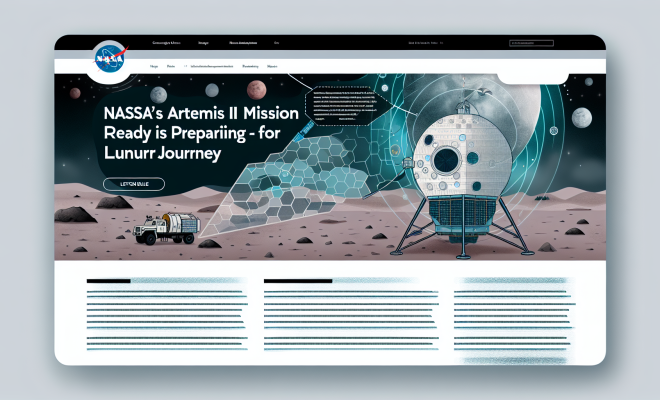
NASA has officially cleared the Artemis II mission for its upcoming lunar flight, marking a significant milestone in the agency’s ambitious plan to return humans to the Moon. As preparations ramp up, the Orion spacecraft is set to undergo a critical engine burn test, a pivotal moment that will play a crucial role in ensuring the spacecraft’s readiness for its historic journey.
Artemis II: A Leap Towards Human Exploration
The Artemis II mission is poised to be the first crewed flight in NASA’s Artemis program, which aims to establish a sustainable human presence on the Moon by the end of the decade. Following the success of the Artemis I uncrewed mission, which demonstrated the capabilities of the Space Launch System (SLS) and Orion spacecraft, the Artemis II flight will take astronauts on a mission around the Moon, a precursor to future lunar landings.
Orion’s Critical Engine Burn Test
As part of the final preparations for the Artemis II mission, the Orion spacecraft is gearing up for a critical engine burn test. This test is essential for validating the performance of Orion’s main engine and ensuring all systems are functioning correctly. NASA engineers will closely monitor the results to confirm that the spacecraft can execute the maneuvers necessary for a successful lunar flyby.
The Science Behind the Engine Burn
The engine burn test will focus on assessing the propulsion system’s ability to perform under the conditions expected during the mission. This includes a thorough evaluation of the spacecraft’s engines, which are designed to provide the necessary thrust to navigate through space and execute crucial maneuvers, such as entering and exiting lunar orbit. The data collected from this test will be invaluable in refining the mission’s operational protocols.
Addressing the Toilet Issue
In addition to the technical preparations, the Artemis II crew has encountered an unexpected challenge: a toilet issue within the Orion spacecraft. NASA has acknowledged this problem and is actively working to resolve it to ensure the comfort and safety of the astronauts during their journey. Proper sanitation facilities are a critical component of long-duration space missions, and NASA’s quick response showcases its commitment to addressing potential issues before they escalate.
The Importance of Crew Comfort
Ensuring that crew members have access to functional sanitary systems is paramount. The complexities of space travel necessitate meticulous planning and contingency measures for every aspect of the mission. NASA’s engineers and medical teams are collaborating to rectify the toilet issue swiftly, reinforcing the agency’s dedication to the well-being of its astronauts.
Looking Ahead: The Future of Lunar Exploration
The successful execution of Artemis II will pave the way for subsequent missions, including Artemis III, which aims to land astronauts on the Moon’s surface. This mission will further NASA’s goal of establishing a sustainable presence on the Moon, which is seen as a stepping stone for future crewed missions to Mars. The Artemis program is not only about lunar exploration; it represents a broader vision of human space exploration beyond Earth.
International Collaboration and Technological Advancements
Nasa’s Artemis program is also a testament to international collaboration in space exploration. Various global space agencies and private sector partners are contributing to the mission, enhancing the technological capabilities needed for successful lunar operations. This collaborative spirit is essential for addressing the challenges of deep-space exploration and ensuring that humanity can extend its reach into the cosmos.
Conclusion: A New Era of Exploration
With the Artemis II mission on the brink of launch, NASA is ready to usher in a new era of lunar exploration. The upcoming engine burn test will be a critical step towards preparing the Orion spacecraft for its journey around the Moon, while the agency’s proactive approach to resolving any issues, such as the toilet problem, reflects its commitment to mission success and crew safety.
As we stand on the threshold of a new chapter in human spaceflight, the Artemis program not only aims to return us to the Moon but also seeks to inspire a new generation of explorers and scientists. The lessons learned from Artemis II will shape our future endeavors, including the ambitious goal of sending humans to Mars, ultimately expanding our understanding of the universe and our place within it.