Pentagon Closes Press Corridor Following Court Ruling on New York Times Credentials
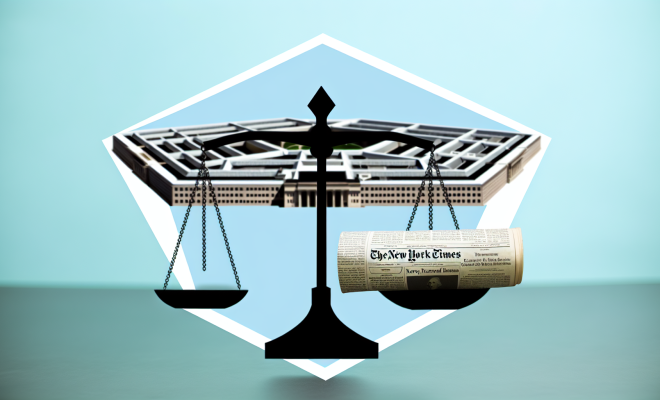
The U.S. Department of Defense has announced significant changes to press operations at the Pentagon, coinciding with a recent federal court ruling that reinstated press credentials for several journalists from the New York Times. On March 31, 2026, the Pentagon declared its decision to close the ‘Correspondents’ Corridor’, a long-standing facility used by reporters for decades, as part of its response to the ruling by U.S. District Judge Paul Friedman.
Background of the Ruling
Judge Friedman’s ruling came in response to a lawsuit filed by seven New York Times journalists who had their press credentials revoked by the Pentagon. The judge found that the Pentagon’s actions constituted illegal viewpoint discrimination, suggesting that the Defense Department was favoring pro-government outlets over those deemed less favorable. The court’s decision highlighted the importance of maintaining a free press, especially in governmental operations, where transparency is crucial.
Impact of the Decision
The Pentagon’s decision to close the Correspondents’ Corridor signifies a substantial shift in how military and defense-related news will be reported. The corridor has served as a vital space for journalists to gather information, conduct interviews, and participate in press conferences. Moving forward, the Defense Department has indicated that journalists will be escorted for press conferences and interviews, with arrangements handled through its Public Affairs Office.
Concerns Over Press Freedom
The decision to close the corridor raises concerns among media advocates and press freedom organizations. Critics argue that the new arrangements could inhibit journalists’ ability to cover the Pentagon effectively. By requiring escorts, reporters may have less freedom to navigate the building and pursue stories, potentially impacting the depth and breadth of coverage available to the public.
Pentagon’s Response and Plans to Appeal
In response to the ruling, the Pentagon has expressed its disagreement and plans to appeal Judge Friedman’s decision. The Defense Department contends that its actions are necessary for maintaining security within its facilities and ensuring that information disseminated to the public is accurate and controlled. Officials are likely to argue that the closure of the corridor is a necessary precaution in light of the ongoing security concerns surrounding military operations.
Reactions from the Journalism Community
The journalism community has reacted swiftly to the Pentagon’s announcement. Many journalists and media organizations have voiced their concerns, emphasizing the importance of unrestricted access to information, particularly regarding matters of national security and defense policy. The National Press Club and other press advocacy groups have decried the Pentagon’s decision, asserting that it undermines the principles of transparency and accountability that are essential to a functioning democracy.
The Broader Implications for Press Access
This situation at the Pentagon reflects broader trends in the relationship between government entities and the media. As various government agencies have increasingly adopted more stringent measures regarding press access, the implications for journalism are profound. In an age where information is critical, any limitations on press access could hinder the public’s ability to receive timely and accurate news.
What’s Next for the New York Times Journalists?
For the seven New York Times journalists who were at the center of this case, the reinstatement of their press credentials marks a significant victory, albeit amid a changing landscape of press access at the Pentagon. Their ability to report on defense matters will be crucial, especially as the nation faces various security challenges and the need for transparency in military operations grows.
Final Thoughts
The Pentagon’s decision to close the Correspondents’ Corridor, while it attempts to appeal the ruling, raises essential questions about the future of press freedom in the U.S. As this situation unfolds, it remains critical to observe how government policies will shape the landscape of journalism, particularly in areas concerning national security. The balance between security and the public’s right to know will be a focal point in the ongoing dialogue about the role of the press in a democratic society.
As developments continue, all eyes will be on the Pentagon and the implications this case holds not only for the New York Times but for journalists across the country seeking to report on government actions and policies.