The Tech Edvocate

Top Menu

  • Advertisement
  • Apps
  • Home Page
  • Home Page Five (No Sidebar)
  • Home Page Four
  • Home Page Three
  • Home Page Two
  • Home Tech2
  • Icons [No Sidebar]
  • Left Sidbear Page
  • Lynch Educational Consulting
  • My Account
  • My Speaking Page
  • Newsletter Sign Up Confirmation
  • Newsletter Unsubscription
  • Our Brands
  • Page Example
  • Privacy Policy
  • Protected Content
  • Register
  • Request a Product Review
  • Shop
  • Shortcodes Examples
  • Signup
  • Start Here
    • Governance
    • Careers
    • Contact Us
  • Terms and Conditions
  • The Edvocate
  • The Tech Edvocate Product Guide
  • Topics
  • Write For Us
  • Advertise

Main Menu

  • Start Here
    • Our Brands
    • Governance
      • Lynch Educational Consulting, LLC.
      • Dr. Lynch’s Personal Website
      • Careers
    • Write For Us
    • The Tech Edvocate Product Guide
    • Contact Us
    • Books
    • Edupedia
    • Post a Job
    • The Edvocate Podcast
    • Terms and Conditions
    • Privacy Policy
  • Topics
    • Assistive Technology
    • Child Development Tech
    • Early Childhood & K-12 EdTech
    • EdTech Futures
    • EdTech News
    • EdTech Policy & Reform
    • EdTech Startups & Businesses
    • Higher Education EdTech
    • Online Learning & eLearning
    • Parent & Family Tech
    • Personalized Learning
    • Product Reviews
  • Advertise
  • Tech Edvocate Awards
  • The Edvocate
  • Pedagogue
  • School Ratings

logo

The Tech Edvocate

  • Start Here
    • Our Brands
    • Governance
      • Lynch Educational Consulting, LLC.
      • Dr. Lynch’s Personal Website
        • My Speaking Page
      • Careers
    • Write For Us
    • The Tech Edvocate Product Guide
    • Contact Us
    • Books
    • Edupedia
    • Post a Job
    • The Edvocate Podcast
    • Terms and Conditions
    • Privacy Policy
  • Topics
    • Assistive Technology
    • Child Development Tech
    • Early Childhood & K-12 EdTech
    • EdTech Futures
    • EdTech News
    • EdTech Policy & Reform
    • EdTech Startups & Businesses
    • Higher Education EdTech
    • Online Learning & eLearning
    • Parent & Family Tech
    • Personalized Learning
    • Product Reviews
  • Advertise
  • Tech Edvocate Awards
  • The Edvocate
  • Pedagogue
  • School Ratings
  • Consumer Reports Reveal Truth – Is Flexigenics Reviews Legit or Scam? (Shocking Findings)

  • Quietum Plus 2026 Review Complaints and Shocking User Findings

  • This Founder’s Rs 75 LPA Sacrifice Crumbled in 30 Days — Here’s Why

  • Urgent: Claude AI Bioweapons — The Unsettling Truth Anthropic Just Revealed

  • Shocking: Three Major Xbox Games Shutting Down Forever in 2026

  • One Man’s Dire Warning: Is AI Already Too Dangerous To Control?

  • The Urgent Parental Consent Debate Over Student Mental Health Screenings

  • LAUSD restricts all students from using AI tools | K-12 Dive

  • Catastrophic Data Breach: 153 Million Driver’s Licenses Exposed on Dark Web

  • Autonomous AI Hackers Weaponize PaperCut Flaws: The Terrifying New Era of Cybercrime

Tech News
Home›Tech News›Pentagon Closes Press Corridor After NYT Credentials Ruling (2026)

Pentagon Closes Press Corridor After NYT Credentials Ruling (2026)
By Matthew Lynch
March 31, 2026
0
Spread the love

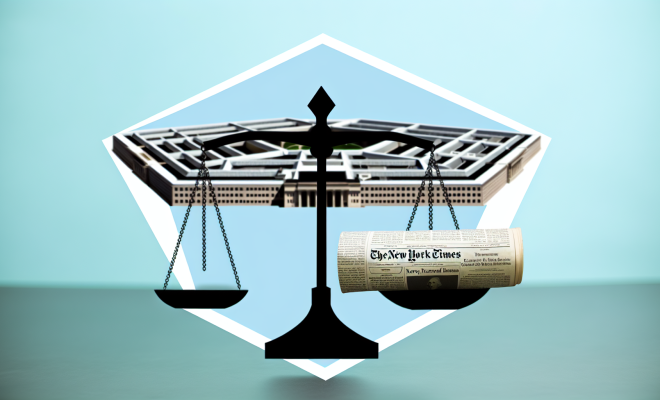
The U.S. Department of Defense has announced significant changes to press operations at the Pentagon, coinciding with a recent federal court ruling that reinstated press credentials for several journalists from the New York Times. On March 31, 2026, the Pentagon declared its decision to close the ‘Correspondents’ Corridor’, a long-standing facility used by reporters for decades, as part of its response to the ruling by U.S. District Judge Paul Friedman.

Background of the Ruling

Judge Friedman’s ruling came in response to a lawsuit filed by seven New York Times journalists who had their press credentials revoked by the Pentagon. The judge found that the Pentagon’s actions constituted illegal viewpoint discrimination, suggesting that the Defense Department was favoring pro-government outlets over those deemed less favorable. The court’s decision highlighted the importance of maintaining a free press, especially in governmental operations, where transparency is crucial.

Impact of the Decision

The Pentagon’s decision to close the Correspondents’ Corridor signifies a substantial shift in how military and defense-related news will be reported. The corridor has served as a vital space for journalists to gather information, conduct interviews, and participate in press conferences. Moving forward, the Defense Department has indicated that journalists will be escorted for press conferences and interviews, with arrangements handled through its Public Affairs Office.

Concerns Over Press Freedom

The decision to close the corridor raises concerns among media advocates and press freedom organizations. Critics argue that the new arrangements could inhibit journalists’ ability to cover the Pentagon effectively. By requiring escorts, reporters may have less freedom to navigate the building and pursue stories, potentially impacting the depth and breadth of coverage available to the public.

Pentagon’s Response and Plans to Appeal

In response to the ruling, the Pentagon has expressed its disagreement and plans to appeal Judge Friedman’s decision. The Defense Department contends that its actions are necessary for maintaining security within its facilities and ensuring that information disseminated to the public is accurate and controlled. Officials are likely to argue that the closure of the corridor is a necessary precaution in light of the ongoing security concerns surrounding military operations.

Reactions from the Journalism Community

The journalism community has reacted swiftly to the Pentagon’s announcement. Many journalists and media organizations have voiced their concerns, emphasizing the importance of unrestricted access to information, particularly regarding matters of national security and defense policy. The National Press Club and other press advocacy groups have decried the Pentagon’s decision, asserting that it undermines the principles of transparency and accountability that are essential to a functioning democracy.

The Broader Implications for Press Access

This situation at the Pentagon reflects broader trends in the relationship between government entities and the media. As various government agencies have increasingly adopted more stringent measures regarding press access, the implications for journalism are profound. In an age where information is critical, any limitations on press access could hinder the public’s ability to receive timely and accurate news.

What’s Next for the New York Times Journalists?

For the seven New York Times journalists who were at the center of this case, the reinstatement of their press credentials marks a significant victory, albeit amid a changing landscape of press access at the Pentagon. Their ability to report on defense matters will be crucial, especially as the nation faces various security challenges and the need for transparency in military operations grows.

Final Thoughts

The Pentagon’s decision to close the Correspondents’ Corridor, while it attempts to appeal the ruling, raises essential questions about the future of press freedom in the U.S. As this situation unfolds, it remains critical to observe how government policies will shape the landscape of journalism, particularly in areas concerning national security. The balance between security and the public’s right to know will be a focal point in the ongoing dialogue about the role of the press in a democratic society.

As developments continue, all eyes will be on the Pentagon and the implications this case holds not only for the New York Times but for journalists across the country seeking to report on government actions and policies.


Previous Article

Washington’s New Millionaires Tax Faces Legal Challenge ...

Next Article

State Privacy Legislation: March 2026 Developments

Matthew Lynch

Related articles More from author

  • Tech News

    Why ‘WC Matches’ Trend: FIFA World Cup 2026 Buzz Explained

    June 25, 2026
    By Matthew Lynch
  • Tech News

    How to attribute Creative Commons work

    June 30, 2026
    By Matthew Lynch
  • Tech News

    How to safely remove USB without icon

    June 16, 2026
    By Matthew Lynch
  • Tech News

    Artemis II Crew Returns: Lunar Exploration Enters a New Era

    April 11, 2026
    By Matthew Lynch
  • Tech News

    Empower Kinesthetic Learners in Traditional Classrooms

    July 14, 2026
    By Matthew Lynch
  • Tech News

    April 1, 1945: The Brutal Invasion of Okinawa Begins

    April 1, 2026
    By Matthew Lynch

Search

Login & Registration

  • Log in
  • Entries feed
  • Comments feed
  • WordPress.org

Newsletter

Signup for The Tech Edvocate Newsletter and have the latest in EdTech news and opinion delivered to your email address!

About Us

Since technology is not going anywhere and does more good than harm, adapting is the best course of action. That is where The Tech Edvocate comes in. We plan to cover the PreK-12 and Higher Education EdTech sectors and provide our readers with the latest news and opinion on the subject. From time to time, I will invite other voices to weigh in on important issues in EdTech. We hope to provide a well-rounded, multi-faceted look at the past, present, the future of EdTech in the US and internationally.

We started this journey back in June 2016, and we plan to continue it for many more years to come. I hope that you will join us in this discussion of the past, present and future of EdTech and lend your own insight to the issues that are discussed.

Newsletter

Signup for The Tech Edvocate Newsletter and have the latest in EdTech news and opinion delivered to your email address!

Contact Us

The Tech Edvocate
910 Goddin Street
Richmond, VA 23231
(601) 630-5238
[email protected]

Copyright © 2026 Matthew Lynch. All rights reserved.