The Tech Edvocate

Top Menu

  • Advertisement
  • Apps
  • Home Page
  • Home Page Five (No Sidebar)
  • Home Page Four
  • Home Page Three
  • Home Page Two
  • Home Tech2
  • Icons [No Sidebar]
  • Left Sidbear Page
  • Lynch Educational Consulting
  • My Account
  • My Speaking Page
  • Newsletter Sign Up Confirmation
  • Newsletter Unsubscription
  • Our Brands
  • Page Example
  • Privacy Policy
  • Protected Content
  • Register
  • Request a Product Review
  • Shop
  • Shortcodes Examples
  • Signup
  • Start Here
    • Governance
    • Careers
    • Contact Us
  • Terms and Conditions
  • The Edvocate
  • The Tech Edvocate Product Guide
  • Topics
  • Write For Us
  • Advertise

Main Menu

  • Start Here
    • Our Brands
    • Governance
      • Lynch Educational Consulting, LLC.
      • Dr. Lynch’s Personal Website
      • Careers
    • Write For Us
    • The Tech Edvocate Product Guide
    • Contact Us
    • Books
    • Edupedia
    • Post a Job
    • The Edvocate Podcast
    • Terms and Conditions
    • Privacy Policy
  • Topics
    • Assistive Technology
    • Child Development Tech
    • Early Childhood & K-12 EdTech
    • EdTech Futures
    • EdTech News
    • EdTech Policy & Reform
    • EdTech Startups & Businesses
    • Higher Education EdTech
    • Online Learning & eLearning
    • Parent & Family Tech
    • Personalized Learning
    • Product Reviews
  • Advertise
  • Tech Edvocate Awards
  • The Edvocate
  • Pedagogue
  • School Ratings

logo

The Tech Edvocate

  • Start Here
    • Our Brands
    • Governance
      • Lynch Educational Consulting, LLC.
      • Dr. Lynch’s Personal Website
        • My Speaking Page
      • Careers
    • Write For Us
    • The Tech Edvocate Product Guide
    • Contact Us
    • Books
    • Edupedia
    • Post a Job
    • The Edvocate Podcast
    • Terms and Conditions
    • Privacy Policy
  • Topics
    • Assistive Technology
    • Child Development Tech
    • Early Childhood & K-12 EdTech
    • EdTech Futures
    • EdTech News
    • EdTech Policy & Reform
    • EdTech Startups & Businesses
    • Higher Education EdTech
    • Online Learning & eLearning
    • Parent & Family Tech
    • Personalized Learning
    • Product Reviews
  • Advertise
  • Tech Edvocate Awards
  • The Edvocate
  • Pedagogue
  • School Ratings
  • 100 Best Payroll Apps

  • 100 Best HR Apps

  • 100 Best Project Management Apps

  • 100 Best Invoicing Apps

  • 100 Best CRM Apps

  • The Game-Changing September Beauty Products You Need to Try

  • Revelado: El Secreto Detrás de los Productos Más Vendidos de Septiembre que Querrás Tener

  • This Crucial FDA Hearing Could Transform Mental Healthcare Forever

  • WoW’s New Paid Race Sparked Outrage: Here’s Why Gamers Are Furious

  • You Won’t Believe How AI Chatbots Are Quietly Wrecking Mental Health

Tech News
Home›Tech News›Solar Plasma Cloud to Hit Earth April 1, 2026: What It Means

Solar Plasma Cloud to Hit Earth April 1, 2026: What It Means
By Matthew Lynch
March 30, 2026
0
Spread the love

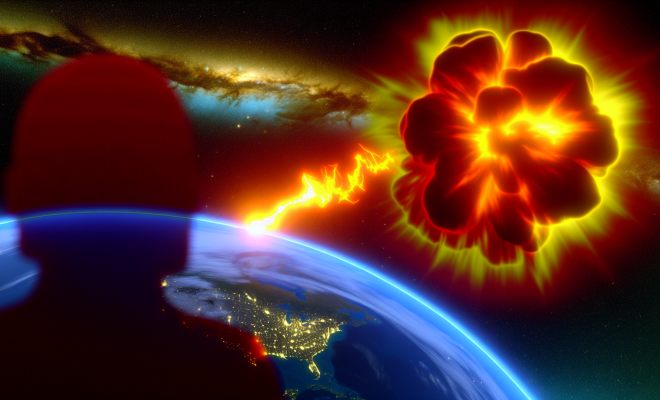
In a startling announcement, Russian scientists from the Institute of Space Research have revealed that a plasma cloud, ejected from the Sun following a significant solar flare, is projected to impact Earth on the evening of April 1, 2026. This event raises critical questions about our planet’s vulnerability to solar phenomena and the potential consequences for technology and life on Earth.

The Source of the Plasma Cloud

The plasma cloud in question originates from a massive solar flare classified as high-class. Solar flares are explosive bursts of energy that occur when magnetic energy that has built up in the solar atmosphere is suddenly released. During such events, the Sun can eject coronal mass ejections (CMEs), which are large expulsions of plasma and magnetic field from the Sun’s corona.

The Expected Impact on Earth

According to the basic scenario outlined by the scientists, the plasma cloud is expected to graze the outer edges of Earth’s atmosphere, leading to a prolonged interaction with the solar substance for two to three days. However, the dynamics of space weather are complex, and there are numerous variables that could influence the actual outcome of this event.

Potential Scenarios

  • Direct Impact: If the plasma cloud strikes the Earth’s central dense region, it could lead to significant geomagnetic storms, which have the potential to disrupt satellite operations and power grids.
  • Near Miss: In a less severe outcome, the plasma cloud may pass by Earth entirely, mitigating the risks associated with solar activity.
  • Extended Interaction: Should Earth remain enveloped in the solar substance for the predicted duration, there could be a range of impacts on communication systems and technologies reliant on satellite infrastructure.

Challenges in Forecasting Solar Events

While the scientists have made predictions based on current data, they emphasize that accurate forecasting in the realm of solar phenomena remains an elusive goal. The chaotic nature of the Sun’s behavior and the complexities involved in simulating space weather make precise predictions challenging.

As such, while scientists can estimate the probability of impact, the uncertainty surrounding the exact trajectory and effects of the plasma cloud means that they cannot provide definitive assurances about what will occur. This unpredictability is a reminder of the dynamic and often turbulent relationship between our planet and the solar environment.

Understanding Solar Flares and Their Effects

Solar flares and CMEs can have far-reaching effects on Earth. When these bursts of solar energy collide with the Earth’s magnetic field, they can create geomagnetic storms, which are disturbances in the magnetosphere. These storms can lead to:

  • Increased auroral activity, resulting in spectacular displays of the Northern and Southern Lights.
  • Disruption of radio communications and navigation systems.
  • Potential damage to satellites, including loss of functionality or complete failure.
  • Induction of electrical currents in power lines, which may cause transformers to fail and lead to widespread blackouts.

The Importance of Monitoring Solar Activity

Given the potential threats posed by solar flares and associated plasma clouds, ongoing monitoring and research into solar activity are essential. Organizations like NASA and the European Space Agency (ESA) invest in solar observatories and satellite missions dedicated to studying the Sun and improving our understanding of its behavior.

Moreover, advancements in technology, such as improved predictive models and real-time monitoring systems, are crucial for mitigating the impacts of solar events. As scientists develop better forecasting tools, they can enhance our preparedness for the inevitable occurrences of solar activity.

Conclusion: Preparing for Solar Events

As we approach the anticipated date of April 1, 2026, and the potential impact of this plasma cloud, it serves as a reminder of the dynamic nature of our solar system and the importance of remaining vigilant. While scientists cannot predict with absolute certainty the outcome of this event, their ongoing research provides valuable insights into the interactions between the Sun and Earth.

In the coming days, it will be essential for the public to stay informed through reliable channels, as scientists continue to monitor the situation. Understanding the impacts of solar phenomena on our technology and infrastructure is vital for ensuring that we are prepared for the challenges posed by our ever-changing universe.

Previous Article

Vega: Your Guide to the Summer Sky’s ...

Next Article

X1.5 Solar Flare Causes R3 Radio Blackout ...

Matthew Lynch

Related articles More from author

  • Tech News

    This Crucial Report Reveals the Disturbing Truth About AI in Education

    August 27, 2026
    By Matthew Lynch
  • Tech News

    Can I create collections in Postman?

    August 15, 2026
    By Matthew Lynch
  • Tech News

    Your EV Could Earn You $2,750 a Year – Here’s How Massachusetts Is Leading the Charge

    August 4, 2026
    By Matthew Lynch
  • Tech News

    YouTube Studio dashboard overview

    August 8, 2026
    By Matthew Lynch
  • Tech News

    Quantum Circuits: Unraveling the Pervasive Impact of Noise

    April 2, 2026
    By Matthew Lynch
  • Tech News

    Today’s NYT Strands Hints, Answers and Help for Aug. 15, #165

    August 17, 2024
    By Matthew Lynch

Search

Login & Registration

  • Log in
  • Entries feed
  • Comments feed
  • WordPress.org

Newsletter

Signup for The Tech Edvocate Newsletter and have the latest in EdTech news and opinion delivered to your email address!

About Us

Since technology is not going anywhere and does more good than harm, adapting is the best course of action. That is where The Tech Edvocate comes in. We plan to cover the PreK-12 and Higher Education EdTech sectors and provide our readers with the latest news and opinion on the subject. From time to time, I will invite other voices to weigh in on important issues in EdTech. We hope to provide a well-rounded, multi-faceted look at the past, present, the future of EdTech in the US and internationally.

We started this journey back in June 2016, and we plan to continue it for many more years to come. I hope that you will join us in this discussion of the past, present and future of EdTech and lend your own insight to the issues that are discussed.

Newsletter

Signup for The Tech Edvocate Newsletter and have the latest in EdTech news and opinion delivered to your email address!

Contact Us

The Tech Edvocate
910 Goddin Street
Richmond, VA 23231
(601) 630-5238
[email protected]

Copyright © 2026 Matthew Lynch. All rights reserved.