The Tech Edvocate

Top Menu

  • Advertisement
  • Apps
  • Home Page
  • Home Page Five (No Sidebar)
  • Home Page Four
  • Home Page Three
  • Home Page Two
  • Home Tech2
  • Icons [No Sidebar]
  • Left Sidbear Page
  • Lynch Educational Consulting
  • My Account
  • My Speaking Page
  • Newsletter Sign Up Confirmation
  • Newsletter Unsubscription
  • Our Brands
  • Page Example
  • Privacy Policy
  • Protected Content
  • Register
  • Request a Product Review
  • Shop
  • Shortcodes Examples
  • Signup
  • Start Here
    • Governance
    • Careers
    • Contact Us
  • Terms and Conditions
  • The Edvocate
  • The Tech Edvocate Product Guide
  • Topics
  • Write For Us
  • Advertise

Main Menu

  • Start Here
    • Our Brands
    • Governance
      • Lynch Educational Consulting, LLC.
      • Dr. Lynch’s Personal Website
      • Careers
    • Write For Us
    • The Tech Edvocate Product Guide
    • Contact Us
    • Books
    • Edupedia
    • Post a Job
    • The Edvocate Podcast
    • Terms and Conditions
    • Privacy Policy
  • Topics
    • Assistive Technology
    • Child Development Tech
    • Early Childhood & K-12 EdTech
    • EdTech Futures
    • EdTech News
    • EdTech Policy & Reform
    • EdTech Startups & Businesses
    • Higher Education EdTech
    • Online Learning & eLearning
    • Parent & Family Tech
    • Personalized Learning
    • Product Reviews
  • Advertise
  • Tech Edvocate Awards
  • The Edvocate
  • Pedagogue
  • School Ratings

logo

The Tech Edvocate

  • Start Here
    • Our Brands
    • Governance
      • Lynch Educational Consulting, LLC.
      • Dr. Lynch’s Personal Website
        • My Speaking Page
      • Careers
    • Write For Us
    • The Tech Edvocate Product Guide
    • Contact Us
    • Books
    • Edupedia
    • Post a Job
    • The Edvocate Podcast
    • Terms and Conditions
    • Privacy Policy
  • Topics
    • Assistive Technology
    • Child Development Tech
    • Early Childhood & K-12 EdTech
    • EdTech Futures
    • EdTech News
    • EdTech Policy & Reform
    • EdTech Startups & Businesses
    • Higher Education EdTech
    • Online Learning & eLearning
    • Parent & Family Tech
    • Personalized Learning
    • Product Reviews
  • Advertise
  • Tech Edvocate Awards
  • The Edvocate
  • Pedagogue
  • School Ratings
  • Wenn Ordnung den Bildschirm beruhigt: Warum klare Abläufe Casino-Unterhaltung einladender machen

  • Reddit AI Reviews: The Quiet Reshaping of Online Opinion

  • The Chilling Truth: Iran Cyberattacks Europe’s Food and Blood Supplies

  • Anthropic’s $3.4 Billion Bet on Gas: The Unseen Cost of AI’s Future

  • Tribit FlyBuds C3 Earbuds: Premium Features at a Budget-Friendly Price

  • Is AuraCam Pro’s Emotional AI a Privacy Nightmare or Security Breakthrough?

  • Unprecedented: N-able’s Global Shutdown After 30+ Zero-Days Revealed

  • The Urgent Truth: Your AI Tools for Financial Advisors Could Be a Compliance Nightmare

  • Unmasking the Troubling Truth About EU’s Digital Omnibus and Your Data

  • Outrageous: Your US Car Insurance 2026 Bill Is About to Explode – Here’s Why

Tech News
Home›Tech News›ISS Retirement 2030: Is a New Era of Space Exploration at Risk?

ISS Retirement 2030: Is a New Era of Space Exploration at Risk?
By Matthew Lynch
March 22, 2026
0
Spread the love

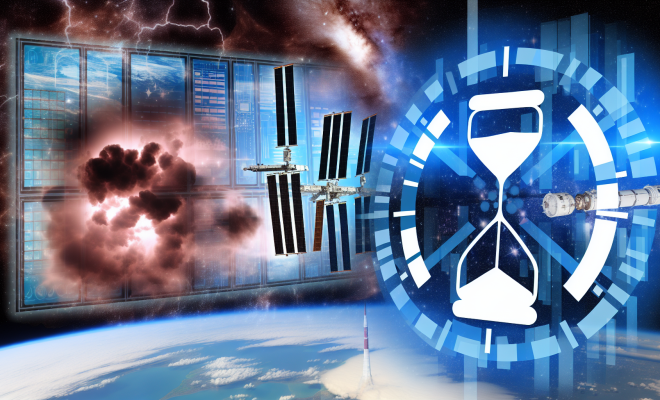
The International Space Station (ISS) has stood as a beacon of human ingenuity and international cooperation in low Earth orbit (LEO) for over two decades. However, as the countdown to its decommissioning approaches, concerns are mounting regarding the future of space exploration and research, particularly for the United States. With a projected retirement date of 2030, the ISS faces significant challenges, including structural degradation and escalating operational costs.

Challenges Facing the ISS

The ISS has been continuously occupied since November 2000, serving as a platform for scientific research and international collaboration. Yet, its longevity is now in question. The station is experiencing structural wear and tear that necessitates careful consideration of its future. NASA, which has been the primary operator of the ISS, is beginning to pivot towards commercial space stations, aiming to transition operations to private entities.

Transition to Commercial Space Stations

NASA’s plan to shift towards commercial space platforms is seen as a necessary evolution in space exploration. Companies like Blue Origin and Boeing are developing private space stations, which could potentially fill the gap left by the ISS. However, this transition raises concerns about a potential lapse in operational capabilities. If these commercial ventures do not come to fruition in time, the U.S. could find itself without a viable presence in LEO, hampering ongoing research and international partnerships.

China’s Tiangong Space Station: A Growing Competitor

Compounding the uncertainty for the U.S. is the emergence of China’s Tiangong space station, which has been operational since 2022. Tiangong supports crewed missions and scientific research, positioning itself as a significant player in the realm of space exploration. As the only active LEO station apart from the ISS, Tiangong has the potential to dominate the landscape of microgravity research.

Potential Impacts on Global Collaboration

The rise of Tiangong could influence global collaborations in space research. If the U.S. cannot maintain a presence in LEO, it risks ceding leadership to China, which may dictate the terms of international partnerships in space. This scenario is particularly concerning given the importance of microgravity research for future missions, including NASA’s Artemis program, which aims to return humans to the Moon and eventually send them to Mars.

The Importance of Microgravity Research

Microgravity research conducted aboard the ISS has yielded critical insights into human health, life support systems, and technologies necessary for deep-space exploration. As the ISS prepares for retirement, the implications for ongoing research are profound:

  • Human Health: Understanding how long-duration spaceflight affects the human body is crucial for future missions to the Moon and Mars.
  • Life Support Systems: Developing sustainable life support technologies is essential for missions that will last for months or years.
  • Deep-Space Technologies: Innovations in materials science and other fields are necessary to ensure the safety and effectiveness of spacecraft.

The loss of the ISS would create a significant gap in these areas, delaying advancements that are vital to the success of NASA’s Artemis program and other exploratory missions.

A Call for Action

The impending retirement of the ISS presents a unique challenge for the U.S. space program. Policymakers and space agencies must act swiftly to ensure a seamless transition to commercial space stations. This includes:

  • Expediting the development of private space stations to ensure availability by the time the ISS is decommissioned.
  • Fostering international partnerships to maintain collaboration in space research.
  • Investing in research to address potential gaps in microgravity studies.

Failure to address these issues could leave the U.S. at a disadvantage, impacting not only its space ambitions but also its standing in the global arena of scientific research.

The Future of Space Exploration

As the world awaits the transition from the ISS to commercial space platforms, the future of space exploration hangs in the balance. The United States must navigate these uncertain waters carefully, balancing the need for innovation with the necessity of maintaining a strong presence in low Earth orbit. The countdown to the ISS retirement is not merely a date on a calendar; it represents a pivotal moment in the history of human space exploration, one that could shape the next generation of scientific discovery.

In conclusion, the ISS’s retirement is more than just an administrative decision; it is a catalyst for change that could redefine humanity’s relationship with space. As new commercial ventures emerge and international dynamics shift, the U.S. must ensure that it remains a leader in the pursuit of knowledge beyond our planet.


Previous Article

ISS Retirement 2030: Will US Lose Space ...

Next Article

JWST Uncovers Surprising Atmosphere on Ancient Super-Earth ...

Matthew Lynch

Related articles More from author

  • Tech News

    How to use database tools in IntelliJ IDEA?

    August 14, 2026
    By Matthew Lynch
  • Tech News

    This One Macroeconomic Shift Just Triggered a Catastrophic Bitcoin Market Crash

    October 9, 2026
    By Matthew Lynch
  • Tech News

    Explosive Legal Battle Threatens Student Loan Forgiveness for Millions

    August 29, 2026
    By Matthew Lynch
  • Tech News

    How to create lead capture form

    June 29, 2026
    By Matthew Lynch
  • Tech News

    How to create template in ClickUp

    July 20, 2026
    By Matthew Lynch
  • Tech News

    Top 7 Fixes for ‘Operation Did Not Complete Successfully’ Virus Error in Windows 11

    February 20, 2024
    By Matthew Lynch

Search

Login & Registration

  • Log in
  • Entries feed
  • Comments feed
  • WordPress.org

Newsletter

Signup for The Tech Edvocate Newsletter and have the latest in EdTech news and opinion delivered to your email address!

About Us

Since technology is not going anywhere and does more good than harm, adapting is the best course of action. That is where The Tech Edvocate comes in. We plan to cover the PreK-12 and Higher Education EdTech sectors and provide our readers with the latest news and opinion on the subject. From time to time, I will invite other voices to weigh in on important issues in EdTech. We hope to provide a well-rounded, multi-faceted look at the past, present, the future of EdTech in the US and internationally.

We started this journey back in June 2016, and we plan to continue it for many more years to come. I hope that you will join us in this discussion of the past, present and future of EdTech and lend your own insight to the issues that are discussed.

Newsletter

Signup for The Tech Edvocate Newsletter and have the latest in EdTech news and opinion delivered to your email address!

Contact Us

The Tech Edvocate
910 Goddin Street
Richmond, VA 23231
(601) 630-5238
[email protected]

Copyright © 2026 Matthew Lynch. All rights reserved.