ISS Retirement 2030: Is a New Era of Space Exploration at Risk?
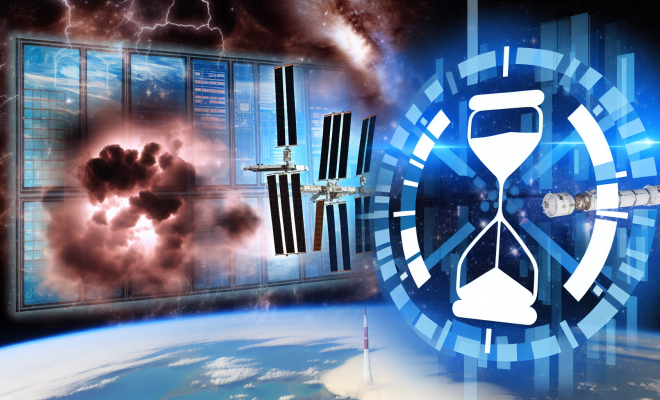
The International Space Station (ISS) has stood as a beacon of human ingenuity and international cooperation in low Earth orbit (LEO) for over two decades. However, as the countdown to its decommissioning approaches, concerns are mounting regarding the future of space exploration and research, particularly for the United States. With a projected retirement date of 2030, the ISS faces significant challenges, including structural degradation and escalating operational costs.
Challenges Facing the ISS
The ISS has been continuously occupied since November 2000, serving as a platform for scientific research and international collaboration. Yet, its longevity is now in question. The station is experiencing structural wear and tear that necessitates careful consideration of its future. NASA, which has been the primary operator of the ISS, is beginning to pivot towards commercial space stations, aiming to transition operations to private entities.
Transition to Commercial Space Stations
NASA’s plan to shift towards commercial space platforms is seen as a necessary evolution in space exploration. Companies like Blue Origin and Boeing are developing private space stations, which could potentially fill the gap left by the ISS. However, this transition raises concerns about a potential lapse in operational capabilities. If these commercial ventures do not come to fruition in time, the U.S. could find itself without a viable presence in LEO, hampering ongoing research and international partnerships.
China’s Tiangong Space Station: A Growing Competitor
Compounding the uncertainty for the U.S. is the emergence of China’s Tiangong space station, which has been operational since 2022. Tiangong supports crewed missions and scientific research, positioning itself as a significant player in the realm of space exploration. As the only active LEO station apart from the ISS, Tiangong has the potential to dominate the landscape of microgravity research.
Potential Impacts on Global Collaboration
The rise of Tiangong could influence global collaborations in space research. If the U.S. cannot maintain a presence in LEO, it risks ceding leadership to China, which may dictate the terms of international partnerships in space. This scenario is particularly concerning given the importance of microgravity research for future missions, including NASA’s Artemis program, which aims to return humans to the Moon and eventually send them to Mars.
The Importance of Microgravity Research
Microgravity research conducted aboard the ISS has yielded critical insights into human health, life support systems, and technologies necessary for deep-space exploration. As the ISS prepares for retirement, the implications for ongoing research are profound:
- Human Health: Understanding how long-duration spaceflight affects the human body is crucial for future missions to the Moon and Mars.
- Life Support Systems: Developing sustainable life support technologies is essential for missions that will last for months or years.
- Deep-Space Technologies: Innovations in materials science and other fields are necessary to ensure the safety and effectiveness of spacecraft.
The loss of the ISS would create a significant gap in these areas, delaying advancements that are vital to the success of NASA’s Artemis program and other exploratory missions.
A Call for Action
The impending retirement of the ISS presents a unique challenge for the U.S. space program. Policymakers and space agencies must act swiftly to ensure a seamless transition to commercial space stations. This includes:
- Expediting the development of private space stations to ensure availability by the time the ISS is decommissioned.
- Fostering international partnerships to maintain collaboration in space research.
- Investing in research to address potential gaps in microgravity studies.
Failure to address these issues could leave the U.S. at a disadvantage, impacting not only its space ambitions but also its standing in the global arena of scientific research.
The Future of Space Exploration
As the world awaits the transition from the ISS to commercial space platforms, the future of space exploration hangs in the balance. The United States must navigate these uncertain waters carefully, balancing the need for innovation with the necessity of maintaining a strong presence in low Earth orbit. The countdown to the ISS retirement is not merely a date on a calendar; it represents a pivotal moment in the history of human space exploration, one that could shape the next generation of scientific discovery.
In conclusion, the ISS’s retirement is more than just an administrative decision; it is a catalyst for change that could redefine humanity’s relationship with space. As new commercial ventures emerge and international dynamics shift, the U.S. must ensure that it remains a leader in the pursuit of knowledge beyond our planet.