Uber and Rivian Join Forces for Revolutionary Autonomous Robotaxi Initiative
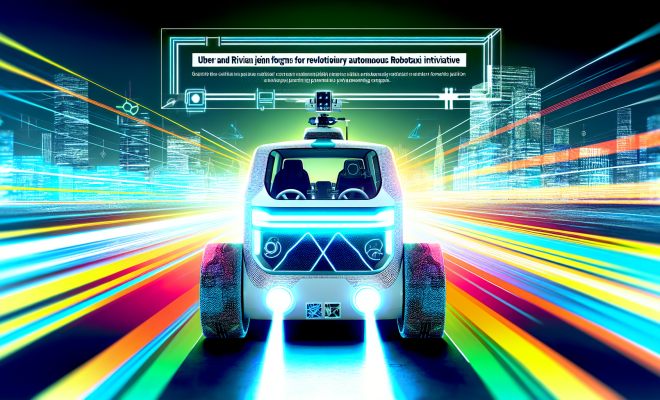
In a groundbreaking announcement that signals a significant leap forward in the evolution of transportation, Uber Technologies and Rivian Automotive have unveiled a strategic partnership aimed at deploying up to 50,000 fully autonomous robotaxis by the end of the decade. This collaboration is expected to reshape urban mobility, providing an innovative solution to the growing demand for efficient and environmentally friendly transportation options.
Investment and Deployment Plans
Uber has committed to invest up to $1.25 billion in Rivian over the course of this partnership, which is set to extend through 2031. The initial phase of the project will see the deployment of 10,000 fully autonomous R2 robotaxis, with an option to purchase an additional 40,000 vehicles by 2030. These robotaxis will be exclusively available on the Uber platform, ensuring that riders have access to the latest advancements in autonomous vehicle technology.
Initial Launch Cities and Expansion Strategy
The first commercial deployments of the Rivian robotaxis are slated for San Francisco and Miami in 2028. Following this initial launch, the companies plan to expand their operations to a total of 25 cities by 2031. This phased approach not only allows for careful monitoring of performance metrics but also enables the companies to refine their technology based on real-world data gathered from the early deployments.
Regulatory Approval and Performance Milestones
Before the full realization of this ambitious project can take place, both companies must navigate the complex landscape of regulatory approval. The initial investment of $300 million has already been committed following the signing of the partnership agreement; however, additional funding will be contingent upon achieving specific autonomous performance milestones. These benchmarks are essential to ensure safety and reliability in the deployment of autonomous vehicles.
Rivian’s Role in the Partnership
Rivian, known for its electric vehicles tailored for adventure and sustainability, brings valuable expertise in manufacturing and technology to the partnership. The company’s R2 robotaxi is designed with cutting-edge features that prioritize efficiency, safety, and user experience. As the automotive industry pivots towards electrification and autonomy, Rivian’s innovative approach positions it as a key player in this transformative era.
Uber’s Vision for Autonomous Mobility
Uber has long been at the forefront of the ride-hailing industry, constantly seeking to enhance its service offerings. The introduction of autonomous vehicles aligns perfectly with Uber’s goal of creating a more sustainable and scalable transportation model. By partnering with Rivian, Uber aims to set a new standard in urban mobility, reducing congestion and emissions while improving accessibility for riders.
Market Impact and Future Prospects
The partnership between Uber and Rivian is expected to have significant implications for the autonomous vehicle market. With both companies leveraging their respective strengths, they are poised to accelerate the adoption of autonomous mobility solutions. This collaboration may also encourage other companies in the tech and automotive sectors to explore similar partnerships, paving the way for broader advancements in autonomous technology.
Potential Challenges
While the partnership holds immense promise, it is not without its challenges. Key obstacles include:
- Regulatory Hurdles: The approval process for autonomous vehicles varies by region and can be complex, potentially delaying deployment timelines.
- Technological Reliability: Ensuring the safety and reliability of autonomous systems is critical for public acceptance and regulatory approval.
- Market Competition: As more players enter the autonomous vehicle space, competition may intensify, impacting market share and profitability.
Conclusion
The alliance between Uber and Rivian marks a pivotal moment in the journey towards fully autonomous transportation. With substantial financial backing and a clear roadmap for deployment, this partnership is set to redefine how people move within urban environments. As the world grapples with the challenges of climate change and urban congestion, the introduction of autonomous robotaxis may offer a glimpse into a more sustainable and efficient future.
As both companies prepare for the rollout of their first robotaxis in just a few years, the industry and consumers alike will be watching closely to see how this ambitious venture unfolds.