Young Crescent Moon & Venus Align: March 2026 Sky Spectacle
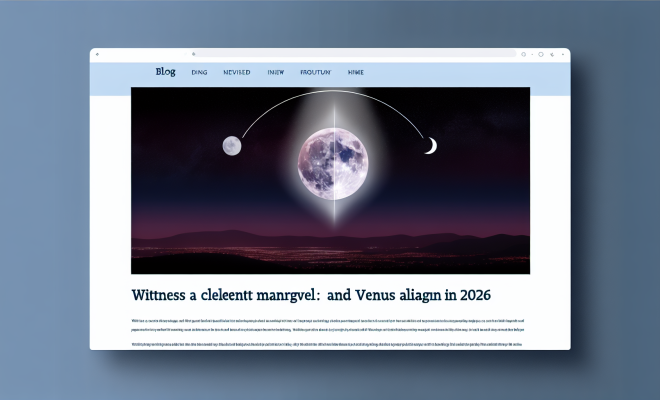
The night sky holds countless wonders, but few events capture the imagination quite like the sighting of a young crescent moon. On March 19, 2026, stargazers will have the opportunity to observe one of the youngest visible moons of the year, appearing alongside the luminous planet Venus shortly after sunset. This astronomical event is not just a treat for avid astronomers; it also offers an accessible spectacle for casual skywatchers.
Timing and Visibility
The crescent moon that will grace the evening sky on March 19 will be remarkably young, less than 24 hours old. This makes it an exceptionally challenging yet rewarding sight for those looking to catch a glimpse of it. The crescent will be visible in the western horizon shortly after sunset, making Venus a valuable guidepost for those attempting to locate the moon amidst the twilight sky.
Optimal Conditions for Stargazing
One of the key factors contributing to the visibility of this celestial pairing is the proximity to the recent new moon. The new moon phase, which occurs shortly before March 19, brings about pristine dark skies, reducing light pollution and enhancing the visibility of celestial objects. With fewer artificial lights competing for attention, both the young crescent moon and Venus will stand out brilliantly, making this an ideal time for stargazing.
The Significance of Venus
Often referred to as the Evening Star or the Morning Star, Venus is one of the brightest objects in the night sky, second only to the moon itself. Its prominence makes it an excellent reference point for astronomers and casual observers alike. On the evening of March 19, Venus will shine brightly near the young crescent moon, serving as a beacon that can help guide skywatchers to the elusive lunar sighting.
How to Spot the Young Crescent Moon
- Location: Find a clear view of the western horizon, away from tall buildings and trees.
- Timing: Head outside shortly after sunset. The best time to view will be during the early evening.
- Equipment: While the moon can be seen with the naked eye, binoculars or a small telescope can enhance the experience.
- Patience: As the moon is quite young, it may be challenging to spot. Take your time and let your eyes adjust to the fading light.
What Makes a Young Crescent Moon Special?
A young crescent moon presents a unique visual phenomenon. At this stage, the moon is just beginning to reflect sunlight, creating a delicate, thin sliver of light. This slender crescent can appear almost ethereal, especially against the darkening sky. The sight of such a young moon is a reminder of the lunar cycle and the constant motion of celestial bodies.
A Celestial Learning Opportunity
For those interested in astronomy, the alignment of the young crescent moon and Venus provides an excellent opportunity for learning. Observers can take time to consider the phases of the moon, the orbits of celestial bodies, and how these factors influence visibility. Engaging in discussions about the mechanics of the solar system can enhance the experience, making it not only a visual spectacle but also an educational one.
Upcoming Astronomical Events
The encounter between the young crescent moon and Venus is just one of many astronomical events to look forward to in 2026. As the year progresses, enthusiasts can anticipate various conjunctions, meteor showers, and even eclipses. Each event offers unique opportunities for observation and understanding of our universe.
How to Stay Updated
For those keen on keeping up with astronomical events, several resources are available:
- Mobile Apps: Applications like SkySafari and Star Walk provide real-time updates and alerts for celestial events.
- Websites: Websites such as Space.com and NASA regularly publish articles and updates on upcoming astronomical phenomena.
- Local Astronomy Clubs: Joining local clubs can provide access to telescopes, knowledgeable members, and group stargazing events.
Conclusion
The evening of March 19, 2026, promises to be a memorable occasion for skywatchers, as the young crescent moon and Venus align beautifully in the western sky. With ideal conditions and the right preparation, anyone can partake in this celestial event. Whether you are a seasoned astronomer or a curious novice, this is an opportunity not to be missed. So mark your calendars, gather your friends and family, and prepare to witness a stunning display of nature’s beauty in the night sky!