Mercury’s Celestial Dance: Observing the Stationary Planet on March 19, 2026
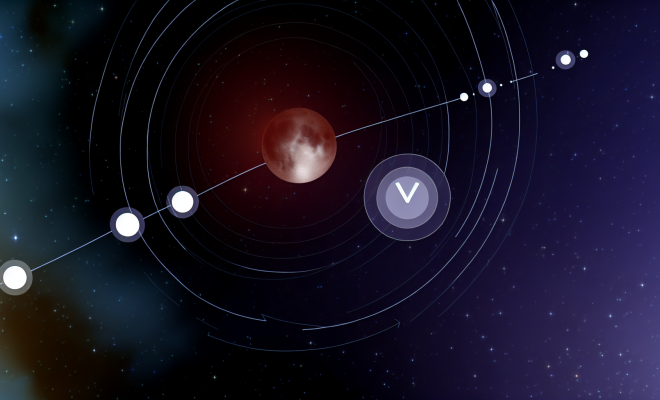
On Thursday, March 19, 2026, stargazers and astronomy enthusiasts will have a unique opportunity to witness the planet Mercury as it reaches a stationary position at 4 P.M. EDT. This fascinating event marks a moment when Mercury appears to pause in its orbit, providing an excellent chance for observation.
Understanding Mercury’s Stationary Position
Mercury is known for its rapid orbit around the Sun, completing a full revolution in just 88 Earth days. However, during certain times, the planet appears to slow down and temporarily halt against the backdrop of the stars. This phenomenon, known as a stationary position, occurs due to the relative motion of Earth and Mercury as they orbit the Sun.
When Mercury reaches its stationary point, it offers a rare display for observers on Earth. This event will take place at 4 P.M. EDT on March 19, and it will be visible in the early morning sky, about 30 minutes before sunrise.
Optimal Viewing Conditions
For those eager to catch a glimpse of Mercury, optimal viewing conditions are essential. The planet will be located low on the eastern horizon, appearing as a bright point of light. With a magnitude of 1.3, Mercury will be relatively easy to spot, even in areas with light pollution, provided that observers have a clear view of the horizon.
As the morning progresses, Mercury will rise to nearly 4° high, making it an exciting target for both casual observers and seasoned astronomers alike. The planet will take on a distinctive appearance, presenting itself as a slim, 20-percent-lit crescent when viewed through optical instruments such as telescopes or binoculars.
What to Expect After March 19
Following its stationary position, Mercury will continue to brighten in the days to come. By March 22, the planet’s magnitude is expected to increase to an impressive 0.9, making it even more prominent in the pre-dawn sky. This gradual brightening is a phenomenon that observers should take note of, as it indicates Mercury’s increasing visibility as Earth moves in relation to the planet.
The Science Behind the Phenomenon
Understanding why Mercury appears to stand still can be attributed to the mechanics of celestial motion. As two planets orbit the Sun, their relative speeds and distances create the illusion of one planet pausing while the other continues moving. This phenomenon can also be seen with other planets, but Mercury, being the closest to the Sun, exhibits this effect more frequently due to its rapid orbit.
The stationary position of Mercury is more than just a visual spectacle; it serves as a reminder of the dynamic and intricate dance of celestial bodies within our solar system. By studying these movements, astronomers can glean valuable insights into planetary dynamics and the gravitational interactions that govern their orbits.
Tools for Observation
For those wishing to observe Mercury during its stationary phase, several tools can enhance the experience:
- Binoculars: A good pair of binoculars can provide an excellent view of Mercury’s crescent shape, making it easier to distinguish from other celestial objects.
- Telescope: A telescope will offer the best viewing experience, allowing observers to see more details of the planet’s surface and its crescent phase.
- Star charts or apps: Utilizing star charts or astronomy apps can help locate Mercury in the sky and provide information on its brightness and position.
Preparation is key for a successful observation. Ensure to check local weather conditions for clear skies, and choose a location with minimal light pollution to enhance visibility.
Conclusion
The stationary position of Mercury on March 19, 2026, presents a captivating opportunity for both amateur and experienced astronomers. As the planet brightens and becomes more visible in the days following this event, it invites curiosity and wonder about the cosmos. Observing Mercury not only showcases the beauty of our solar system but also encourages a deeper understanding of the mechanics that govern celestial bodies. So, mark your calendars and prepare your telescopes; the sky will offer a dazzling display that should not be missed!