The Tech Edvocate

Top Menu

  • Advertisement
  • Apps
  • Home Page
  • Home Page Five (No Sidebar)
  • Home Page Four
  • Home Page Three
  • Home Page Two
  • Home Tech2
  • Icons [No Sidebar]
  • Left Sidbear Page
  • Lynch Educational Consulting
  • My Account
  • My Speaking Page
  • Newsletter Sign Up Confirmation
  • Newsletter Unsubscription
  • Our Brands
  • Page Example
  • Privacy Policy
  • Protected Content
  • Register
  • Request a Product Review
  • Shop
  • Shortcodes Examples
  • Signup
  • Start Here
    • Governance
    • Careers
    • Contact Us
  • Terms and Conditions
  • The Edvocate
  • The Tech Edvocate Product Guide
  • Topics
  • Write For Us
  • Advertise

Main Menu

  • Start Here
    • Our Brands
    • Governance
      • Lynch Educational Consulting, LLC.
      • Dr. Lynch’s Personal Website
      • Careers
    • Write For Us
    • The Tech Edvocate Product Guide
    • Contact Us
    • Books
    • Edupedia
    • Post a Job
    • The Edvocate Podcast
    • Terms and Conditions
    • Privacy Policy
  • Topics
    • Assistive Technology
    • Child Development Tech
    • Early Childhood & K-12 EdTech
    • EdTech Futures
    • EdTech News
    • EdTech Policy & Reform
    • EdTech Startups & Businesses
    • Higher Education EdTech
    • Online Learning & eLearning
    • Parent & Family Tech
    • Personalized Learning
    • Product Reviews
  • Advertise
  • Tech Edvocate Awards
  • The Edvocate
  • Pedagogue
  • School Ratings

logo

The Tech Edvocate

  • Start Here
    • Our Brands
    • Governance
      • Lynch Educational Consulting, LLC.
      • Dr. Lynch’s Personal Website
        • My Speaking Page
      • Careers
    • Write For Us
    • The Tech Edvocate Product Guide
    • Contact Us
    • Books
    • Edupedia
    • Post a Job
    • The Edvocate Podcast
    • Terms and Conditions
    • Privacy Policy
  • Topics
    • Assistive Technology
    • Child Development Tech
    • Early Childhood & K-12 EdTech
    • EdTech Futures
    • EdTech News
    • EdTech Policy & Reform
    • EdTech Startups & Businesses
    • Higher Education EdTech
    • Online Learning & eLearning
    • Parent & Family Tech
    • Personalized Learning
    • Product Reviews
  • Advertise
  • Tech Edvocate Awards
  • The Edvocate
  • Pedagogue
  • School Ratings
  • Wenn Ordnung den Bildschirm beruhigt: Warum klare Abläufe Casino-Unterhaltung einladender machen

  • Reddit AI Reviews: The Quiet Reshaping of Online Opinion

  • The Chilling Truth: Iran Cyberattacks Europe’s Food and Blood Supplies

  • Anthropic’s $3.4 Billion Bet on Gas: The Unseen Cost of AI’s Future

  • Tribit FlyBuds C3 Earbuds: Premium Features at a Budget-Friendly Price

  • Is AuraCam Pro’s Emotional AI a Privacy Nightmare or Security Breakthrough?

  • Unprecedented: N-able’s Global Shutdown After 30+ Zero-Days Revealed

  • The Urgent Truth: Your AI Tools for Financial Advisors Could Be a Compliance Nightmare

  • Unmasking the Troubling Truth About EU’s Digital Omnibus and Your Data

  • Outrageous: Your US Car Insurance 2026 Bill Is About to Explode – Here’s Why

Online Learning & eLearning
Home›Online Learning & eLearning›4 Practices That Will Make Your Online Course a Success

4 Practices That Will Make Your Online Course a Success

By Matthew Lynch
December 23, 2021
0
Spread the love

Are you new to online learning and need some advice on making your course a success. Well, look no further; we can help. In this article, we will discuss four practices that will make your online course a success.

Practice One: Assess Intentionally. Don’t Over-Assess.

Assessment is necessary. We all know that. You can’t know if your students are grasping the material if there is no assessment. However, you must be intentional with your assessment in online learning.

When you do have to assess, remember that there are many ways to do it other than merely giving a test or quiz. A few assessment tools are:

  • Seesaw is a journal that allows the teacher and student to journal back and forth.
  • Google Docs can be used like Seesaw.
  • With Flipgrid, the teacher assigns a question or prompt, and the student videos their response.
  • Adobe Spark allows the students to show their creative side by creating short videos, social graphics, web pages, and more.

Practice Two: Use Project-Based Learning

Project-based learning is simple. You give your students a real-world problem, and they get to solve it using the lessons they’ve learned in their online classes. They implement their ideas, experience hurdles, analyze, reapply, and keep on learning. Students (and their families) can potentially learn a lot from project-based learning.

Teachers often think of Science experiments when they think of project-based learning, but there are so many other ways to incorporate it into online learning. 

Two other avenues you may be thinking of are creation and creative thinking, but there are more areas. For instance, you can have your students build a raised vegetable garden. They’ll be learning Math through the measurements. 

Have them journal with you using the Seesaw app or Google Docs so that they’ll be documenting their discoveries. This is English and can also be used for assessment. 

Have them research the when’s, why’s, and how’s of raised vegetable gardens. This will cover Science and History. 

Then, have them do a video presentation telling what they did, what wasn’t working right, and what they had to change to make it work right. This will play into Speech and is also another form of assessment. 

Lastly, have them share their vegetable garden with the needy. Thus, they have served the community.

Practice Three: Create Student Engagement and Accountability in Online Learning

When students do projects together, they create a sense of belonging. They create a classroom community where they want to participate, and when they want to participate, life is much simpler for you as the teacher! The goal is to enhance their sense of self-esteem through the completion of their projects and, thus, enhance their engagement in the online classroom.

Practice Four: Plan Your Closing Activity

Every lesson and every course should end with a wrap-up activity. Give your students a conclusion of what they just learned. Let your students know what’s next. Remind them when their assignments are due. Lastly, do something to end on a happy note.

Conclusion

In this article, we have outlined 3 practices that will make your online course a success. Do you know have any tips to share? If so, leave them in the comment section below.


Previous Article

3 Practices That Will Supercharge Your Online ...

Next Article

Tips for Teaching Students Remotely

Matthew Lynch

Related articles More from author

  • Elementary EducationOnline Learning & eLearning

    Take a screenshot on any iPhone

    March 30, 2023
    By Matthew Lynch
  • Online Learning & eLearning

    The Limitations Of eLearning And What You Can Do About Them

    January 27, 2020
    By Matthew Lynch
  • How to Use System Restore in Windows 11
    EdTech Startups & BusinessesOnline Learning & eLearning

    How to Use System Restore in Windows 11

    March 19, 2023
    By Matthew Lynch
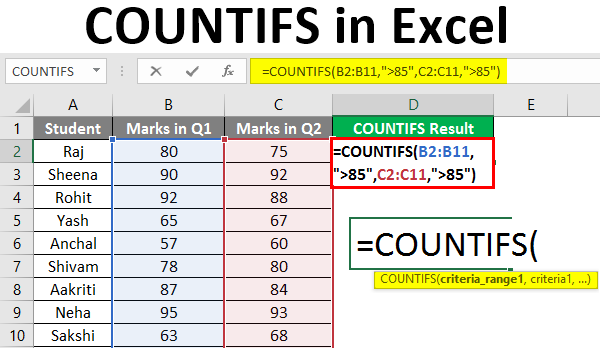
  • COUNTIF Formula in Microsoft Excel
    Online Learning & eLearning

    How to Use the COUNTIF Formula in Microsoft Excel

    March 25, 2023
    By Matthew Lynch
  • Early Childhood & K-12 EdTechHigher Education EdTechOnline Learning & eLearning

    8 Essentials for a Virtual School that Works

    May 17, 2017
    By Matthew Lynch
  • Online Learning & eLearning

    Best Paid Survey Websites In 2024

    March 14, 2024
    By Matthew Lynch

Search

Login & Registration

  • Log in
  • Entries feed
  • Comments feed
  • WordPress.org

Newsletter

Signup for The Tech Edvocate Newsletter and have the latest in EdTech news and opinion delivered to your email address!

About Us

Since technology is not going anywhere and does more good than harm, adapting is the best course of action. That is where The Tech Edvocate comes in. We plan to cover the PreK-12 and Higher Education EdTech sectors and provide our readers with the latest news and opinion on the subject. From time to time, I will invite other voices to weigh in on important issues in EdTech. We hope to provide a well-rounded, multi-faceted look at the past, present, the future of EdTech in the US and internationally.

We started this journey back in June 2016, and we plan to continue it for many more years to come. I hope that you will join us in this discussion of the past, present and future of EdTech and lend your own insight to the issues that are discussed.

Newsletter

Signup for The Tech Edvocate Newsletter and have the latest in EdTech news and opinion delivered to your email address!

Contact Us

The Tech Edvocate
910 Goddin Street
Richmond, VA 23231
(601) 630-5238
[email protected]

Copyright © 2026 Matthew Lynch. All rights reserved.