The Tech Edvocate

Top Menu

  • Advertisement
  • Apps
  • Home Page
  • Home Page Five (No Sidebar)
  • Home Page Four
  • Home Page Three
  • Home Page Two
  • Home Tech2
  • Icons [No Sidebar]
  • Left Sidbear Page
  • Lynch Educational Consulting
  • My Account
  • My Speaking Page
  • Newsletter Sign Up Confirmation
  • Newsletter Unsubscription
  • Our Brands
  • Page Example
  • Privacy Policy
  • Protected Content
  • Register
  • Request a Product Review
  • Shop
  • Shortcodes Examples
  • Signup
  • Start Here
    • Governance
    • Careers
    • Contact Us
  • Terms and Conditions
  • The Edvocate
  • The Tech Edvocate Product Guide
  • Topics
  • Write For Us
  • Advertise

Main Menu

  • Start Here
    • Our Brands
    • Governance
      • Lynch Educational Consulting, LLC.
      • Dr. Lynch’s Personal Website
      • Careers
    • Write For Us
    • The Tech Edvocate Product Guide
    • Contact Us
    • Books
    • Edupedia
    • Post a Job
    • The Edvocate Podcast
    • Terms and Conditions
    • Privacy Policy
  • Topics
    • Assistive Technology
    • Child Development Tech
    • Early Childhood & K-12 EdTech
    • EdTech Futures
    • EdTech News
    • EdTech Policy & Reform
    • EdTech Startups & Businesses
    • Higher Education EdTech
    • Online Learning & eLearning
    • Parent & Family Tech
    • Personalized Learning
    • Product Reviews
  • Advertise
  • Tech Edvocate Awards
  • The Edvocate
  • Pedagogue
  • School Ratings

logo

The Tech Edvocate

  • Start Here
    • Our Brands
    • Governance
      • Lynch Educational Consulting, LLC.
      • Dr. Lynch’s Personal Website
        • My Speaking Page
      • Careers
    • Write For Us
    • The Tech Edvocate Product Guide
    • Contact Us
    • Books
    • Edupedia
    • Post a Job
    • The Edvocate Podcast
    • Terms and Conditions
    • Privacy Policy
  • Topics
    • Assistive Technology
    • Child Development Tech
    • Early Childhood & K-12 EdTech
    • EdTech Futures
    • EdTech News
    • EdTech Policy & Reform
    • EdTech Startups & Businesses
    • Higher Education EdTech
    • Online Learning & eLearning
    • Parent & Family Tech
    • Personalized Learning
    • Product Reviews
  • Advertise
  • Tech Edvocate Awards
  • The Edvocate
  • Pedagogue
  • School Ratings
  • US Battery as a Service Market Shifts Toward Fleet-Based Energy

  • The Startling Truth: Why Americans Distrust AI with Their Health

  • This Crucial Deadline for Banks Is Closer Than You Think

  • Baffling: CrowdStrike’s $500 Million AI Bet Reshapes Cybersecurity

  • This Crucial Autonomous Driving Rule Could Cost You Everything

  • Baffling: Microsoft AI CEO Demands Halt to Conscious AI Development

  • O seară în ritmul tău: atmosfera divertismentului de cazinou pe internet

  • Outrageous: AppLovin Hit With Lawsuit Over AI Claims — What Investors Need to Know

  • 9 Critical Ways AI Investment Fraud Is Quietly Draining Your Bank Account

  • Is the AI Bubble Bursting? OpenAI’s Funding Woes Revealed

How To
Home›How To›How to Draw a Sphere

How to Draw a Sphere

By Matthew Lynch
November 14, 2023
0
Spread the love

If you’re an aspiring artist, understanding the basics of creating realistic three-dimensional shapes is an essential skill. One of the fundamental shapes for drawing real-world objects is a sphere. Learning how

to draw a sphere can help you create more complex forms later on. In this article, we will break down the steps to draw a realistic sphere.

Step 1: Draw a circle

Begin by drawing a circle on your paper. You can use a compass or any circular object as a guide if you want to achieve a near-perfect circle. Ensure that the circle is even and smooth, as this will be the base shape of your sphere.

Step 2: Determine the light source

Before adding shading and depth, determine where your light source is coming from. By establishing this, you’ll know which areas of your sphere need to be lighter and which need to be darker. In most cases, it’s easiest to choose light coming from above, but feel free to experiment with different angles to learn how light and shadows behave in various scenarios.

Step 3: Add highlights

To create the illusion of depth, you need to add highlights and shadows on the sphere. First, using your established light source, determine where on your sphere the brightest highlight would be. This area should be close to the edge where your light source is hitting directly. Use an eraser or leave the area untouched if using graphite for lighter shading.

Step 4: Begin shading

Now it’s time to start shading! Start by creating a gradient that goes from dark to light around the sphere’s surface. Remember that as you move away from the highlighted area (toward the opposite side of the light source), your shading should become gradually darker.

Step 5: Add shadows

Once you have shaded most of your sphere and created contrast between highlights and darker areas, it’s time to add more definitive shadows. Keep in mind the cast shadow on the surface underneath your sphere. This shadow will also have a gradient effect, with the darkest part being closest to the sphere while fading gradually as it moves outward.

Step 6: Blend and smooth

After completing your shading and shadows, use your finger or a blending tool to smooth out any harsh lines or transitions. The goal is to make everything appear seamless and natural. If needed, you may revisit highlights or shaded areas to create clean edges and emphasize lights and darks.

Step 7: Add reflective light

To make your sphere appear even more realistic, add reflective light subtly. Reflective light results from the bounce-back of light from surrounding surfaces. By adding some lighter shading on the opposite side of the primary light source, you can enhance the sense of depth and realism in your drawing.

Congratulations! You’ve now learned how to draw a convincing sphere using basic shading and lighting techniques. With practice and consistency, you’ll be able to create even more complex shapes and objects by building upon this foundation.

Previous Article

How to Knit Adorable Baby Pants

Next Article

4 Ways to Keep Dogs in the ...

Matthew Lynch

Related articles More from author

  • How To

    3 Ways to Play Plinko

    March 31, 2024
    By Matthew Lynch
  • How To

    How to Start a Pellet Stove: 13 Steps

    April 2, 2024
    By Matthew Lynch
  • How To

    3 Ways to Flatten a Rolled Map or Poster

    December 25, 2023
    By Matthew Lynch
  • How To

    8 Ways to Clean Grout Without Scrubbing

    February 13, 2024
    By Matthew Lynch
  • How To

    3 Ways to Keep Dogs off Your Lawn  

    October 10, 2023
    By Matthew Lynch
  • How To

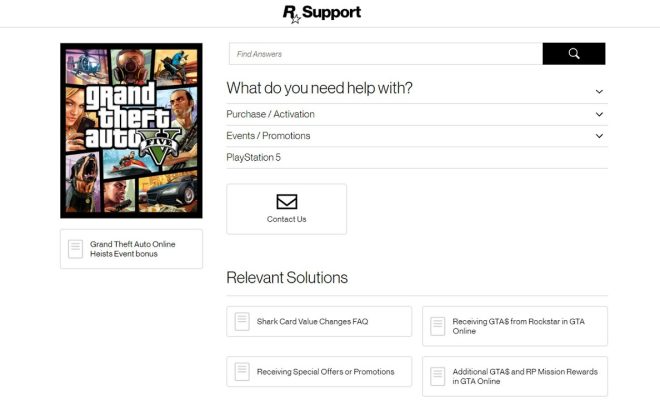
    3 Ways to Contact Rockstar Support

    March 22, 2024
    By Matthew Lynch

Search

Login & Registration

  • Log in
  • Entries feed
  • Comments feed
  • WordPress.org

Newsletter

Signup for The Tech Edvocate Newsletter and have the latest in EdTech news and opinion delivered to your email address!

About Us

Since technology is not going anywhere and does more good than harm, adapting is the best course of action. That is where The Tech Edvocate comes in. We plan to cover the PreK-12 and Higher Education EdTech sectors and provide our readers with the latest news and opinion on the subject. From time to time, I will invite other voices to weigh in on important issues in EdTech. We hope to provide a well-rounded, multi-faceted look at the past, present, the future of EdTech in the US and internationally.

We started this journey back in June 2016, and we plan to continue it for many more years to come. I hope that you will join us in this discussion of the past, present and future of EdTech and lend your own insight to the issues that are discussed.

Newsletter

Signup for The Tech Edvocate Newsletter and have the latest in EdTech news and opinion delivered to your email address!

Contact Us

The Tech Edvocate
910 Goddin Street
Richmond, VA 23231
(601) 630-5238
[email protected]

Copyright © 2026 Matthew Lynch. All rights reserved.