The Tech Edvocate

Top Menu

  • Advertisement
  • Apps
  • Home Page
  • Home Page Five (No Sidebar)
  • Home Page Four
  • Home Page Three
  • Home Page Two
  • Home Tech2
  • Icons [No Sidebar]
  • Left Sidbear Page
  • Lynch Educational Consulting
  • My Account
  • My Speaking Page
  • Newsletter Sign Up Confirmation
  • Newsletter Unsubscription
  • Our Brands
  • Page Example
  • Privacy Policy
  • Protected Content
  • Register
  • Request a Product Review
  • Shop
  • Shortcodes Examples
  • Signup
  • Start Here
    • Governance
    • Careers
    • Contact Us
  • Terms and Conditions
  • The Edvocate
  • The Tech Edvocate Product Guide
  • Topics
  • Write For Us
  • Advertise

Main Menu

  • Start Here
    • Our Brands
    • Governance
      • Lynch Educational Consulting, LLC.
      • Dr. Lynch’s Personal Website
      • Careers
    • Write For Us
    • The Tech Edvocate Product Guide
    • Contact Us
    • Books
    • Edupedia
    • Post a Job
    • The Edvocate Podcast
    • Terms and Conditions
    • Privacy Policy
  • Topics
    • Assistive Technology
    • Child Development Tech
    • Early Childhood & K-12 EdTech
    • EdTech Futures
    • EdTech News
    • EdTech Policy & Reform
    • EdTech Startups & Businesses
    • Higher Education EdTech
    • Online Learning & eLearning
    • Parent & Family Tech
    • Personalized Learning
    • Product Reviews
  • Advertise
  • Tech Edvocate Awards
  • The Edvocate
  • Pedagogue
  • School Ratings

logo

The Tech Edvocate

  • Start Here
    • Our Brands
    • Governance
      • Lynch Educational Consulting, LLC.
      • Dr. Lynch’s Personal Website
        • My Speaking Page
      • Careers
    • Write For Us
    • The Tech Edvocate Product Guide
    • Contact Us
    • Books
    • Edupedia
    • Post a Job
    • The Edvocate Podcast
    • Terms and Conditions
    • Privacy Policy
  • Topics
    • Assistive Technology
    • Child Development Tech
    • Early Childhood & K-12 EdTech
    • EdTech Futures
    • EdTech News
    • EdTech Policy & Reform
    • EdTech Startups & Businesses
    • Higher Education EdTech
    • Online Learning & eLearning
    • Parent & Family Tech
    • Personalized Learning
    • Product Reviews
  • Advertise
  • Tech Edvocate Awards
  • The Edvocate
  • Pedagogue
  • School Ratings
  • Can Kayak book directly

  • How to list hotel on Booking.com

  • How to optimize Airbnb listing

  • How to get more bookings on Booking.com

  • How accurate is Kayak price forecast

  • How does Hopper app work

  • Travelocity vs Hotels.com comparison

  • Is Kayak a booking site or search engine

  • Can Google Flights find error fares

  • How to bundle flights and hotels Travelocity

Uncategorized
Home›Uncategorized›Speed it up or slow it down? The boundaries of reading apps for children

Speed it up or slow it down? The boundaries of reading apps for children

By Matthew Lynch
November 20, 2016
0
Spread the love

Natalia Kucirkova, The Open University

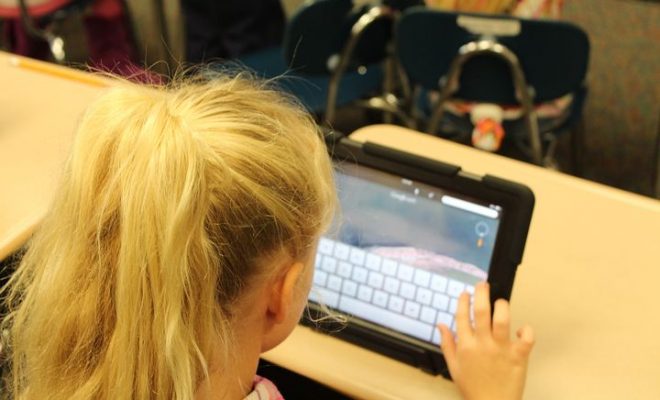
A series of binary discussions has been plaguing early reading instruction for quite some time now: phonics versus whole language, reading for pleasure versus reading for learning, digital versus paper books. And it seems that there is a new tug-of-war on the educational horizon: spritzing versus slow reading.

Spritz is a recently developed programme that brings speed-reading to the untrained eye. Its makers claim that users can ultimately read 1,000 words per minute. Their goal is to have 15% of the world’s texts available in Spritz format by 2016.

But a message is coming from the other direction too. Those who revere and often romanticise printed books argue that we need to slow down. They warn that the digital age has made us shallow readers who flit from text to text without taking anything in.

We have a clear conflict here. On one hand, lots of people want to read faster, especially now that there is more to read out there than at any other time in human history. On the other hand, we hear that children in the digital age do not read in depth and the often cited culprit is the device in their hand – the technology that distracts them from picking up a good book.

Is a middle ground possible?

Reading and writing always come hand-in-hand. If readers whizz through rather than engage with texts, this will ultimately be reflected in the type of texts made available to them.

Spritz certainly responds to the zeitgeist to read fast in order to cope in a text-saturated era. You can also see this tendency in the proliferation of listicles on news websites and contents pages that tell you how long it will take you to read an article. Some say that the only way to cope with large email volumes, is to binge-read our inboxes. Spritz could be thus seen as another invention that panders to our growing tendency to read more but in less depth.

At the same time, readers – be they young or old – need to be given time to pause and think with the author of a text. Slow reading is, for many, synonymous with deep reading and reading for learning and there are in fact technological developments happening to help readers improve their deep reading – almost the antidote to Spritz.

There are reading annotation systems with built-in interactive discussion to help readers – students in particular – to better understand what they are reading. These slow them down in their reading by asking them questions or prompting them to pause and take notes. Similarly for younger readers, there are read-to-learn apps that explain vocabulary and thus help with reading comprehension.

So which approach is better for the contemporary reader? We can now whizz through every page on the internet by installing Spritzlet on our web browser. It may not be long until slow reading widgets will become available to help us highlight information in onscreen texts, underline unfamiliar words, unpick abstract metaphors and provide links to facts.

In thinking about how to teach children to read effectively in digital age, we need to stop thinking in terms of slow and fast.

There is a difference between reading an email or a chemistry textbook or a novel. We use different reading formats for different contents, and different contents & formats for different purposes. These different purposes come with different personal investments and hence different reading techniques.

There is already a disturbing disconnect between the content and format of reading happening in schools and outside the classrooms. Let’s not increase this gap with another fictitious dichotomy.

The Conversation

Natalia Kucirkova, KTP Associate for Booktrust, The Open University

This article was originally published on The Conversation. Read the original article.

TagsEdtechedtechchatelearningSTEAMSTEM
Previous Article

Top 5 Apps for Teacher Communication

Next Article

Is Early Exposure to Social Media A ...

Matthew Lynch

Related articles More from author

  • EdTech NewsOnline Learning & eLearning

    The world learns a lesson that technology in schools doesn’t improve education

    June 27, 2016
    By Matthew Lynch
  • Early Childhood & K-12 EdTechHigher Education EdTech

    Educational Technologies and Concepts that Every Teacher Should Know: Part IV

    June 15, 2016
    By Matthew Lynch
  • EdTech News

    How Big is the EdTech Marketplace?

    January 16, 2017
    By Matthew Lynch
  • Early Childhood & K-12 EdTech

    Teach Kids to Code and Secure Their Future

    March 11, 2017
    By Matthew Lynch
  • EdTech Futures

    Learning vs. Testing: Can Tech Bridge the Gap?

    June 27, 2016
    By Matthew Lynch
  • Uncategorized

    Five studies find online courses are not working well at community colleges

    August 17, 2016
    By Matthew Lynch

Search

Login & Registration

  • Log in
  • Entries feed
  • Comments feed
  • WordPress.org

Newsletter

Signup for The Tech Edvocate Newsletter and have the latest in EdTech news and opinion delivered to your email address!

About Us

Since technology is not going anywhere and does more good than harm, adapting is the best course of action. That is where The Tech Edvocate comes in. We plan to cover the PreK-12 and Higher Education EdTech sectors and provide our readers with the latest news and opinion on the subject. From time to time, I will invite other voices to weigh in on important issues in EdTech. We hope to provide a well-rounded, multi-faceted look at the past, present, the future of EdTech in the US and internationally.

We started this journey back in June 2016, and we plan to continue it for many more years to come. I hope that you will join us in this discussion of the past, present and future of EdTech and lend your own insight to the issues that are discussed.

Newsletter

Signup for The Tech Edvocate Newsletter and have the latest in EdTech news and opinion delivered to your email address!

Contact Us

The Tech Edvocate
910 Goddin Street
Richmond, VA 23231
(601) 630-5238
[email protected]

Copyright © 2026 Matthew Lynch. All rights reserved.