The Tech Edvocate

Top Menu

  • Advertisement
  • Apps
  • Home Page
  • Home Page Five (No Sidebar)
  • Home Page Four
  • Home Page Three
  • Home Page Two
  • Home Tech2
  • Icons [No Sidebar]
  • Left Sidbear Page
  • Lynch Educational Consulting
  • My Account
  • My Speaking Page
  • Newsletter Sign Up Confirmation
  • Newsletter Unsubscription
  • Our Brands
  • Page Example
  • Privacy Policy
  • Protected Content
  • Register
  • Request a Product Review
  • Shop
  • Shortcodes Examples
  • Signup
  • Start Here
    • Governance
    • Careers
    • Contact Us
  • Terms and Conditions
  • The Edvocate
  • The Tech Edvocate Product Guide
  • Topics
  • Write For Us
  • Advertise

Main Menu

  • Start Here
    • Our Brands
    • Governance
      • Lynch Educational Consulting, LLC.
      • Dr. Lynch’s Personal Website
      • Careers
    • Write For Us
    • The Tech Edvocate Product Guide
    • Contact Us
    • Books
    • Edupedia
    • Post a Job
    • The Edvocate Podcast
    • Terms and Conditions
    • Privacy Policy
  • Topics
    • Assistive Technology
    • Child Development Tech
    • Early Childhood & K-12 EdTech
    • EdTech Futures
    • EdTech News
    • EdTech Policy & Reform
    • EdTech Startups & Businesses
    • Higher Education EdTech
    • Online Learning & eLearning
    • Parent & Family Tech
    • Personalized Learning
    • Product Reviews
  • Advertise
  • Tech Edvocate Awards
  • The Edvocate
  • Pedagogue
  • School Ratings

logo

The Tech Edvocate

  • Start Here
    • Our Brands
    • Governance
      • Lynch Educational Consulting, LLC.
      • Dr. Lynch’s Personal Website
        • My Speaking Page
      • Careers
    • Write For Us
    • The Tech Edvocate Product Guide
    • Contact Us
    • Books
    • Edupedia
    • Post a Job
    • The Edvocate Podcast
    • Terms and Conditions
    • Privacy Policy
  • Topics
    • Assistive Technology
    • Child Development Tech
    • Early Childhood & K-12 EdTech
    • EdTech Futures
    • EdTech News
    • EdTech Policy & Reform
    • EdTech Startups & Businesses
    • Higher Education EdTech
    • Online Learning & eLearning
    • Parent & Family Tech
    • Personalized Learning
    • Product Reviews
  • Advertise
  • Tech Edvocate Awards
  • The Edvocate
  • Pedagogue
  • School Ratings
  • Is the AI Bubble Bursting? OpenAI’s Funding Woes Revealed

  • Why Millions Are Skipping College for These 7 Online Courses Right Now

  • The Astonishing Truth About PS5 Pro vs Xbox Ally X Financing

  • The Urgent Truth About 2026 Privacy Laws: Why Your Business Could Face Catastrophic Fines

  • Shocking: Esports Pros Reveal the Critical Steps to Protect Your Earnings

  • The Staggering Truth About These New Weight Loss Drugs — And Why You Need to Know

  • The Quiet Crisis: Why Your Auto Loan Interest Rates Are Still Skyrocketing

  • Elvis’s Ghost Haunts AI: The $41 Million Anthropic Copyright Lawsuit Explained

  • 7 Micro-SaaS Tools Quietly Transforming Freelance Productivity — Don’t Miss Out!

  • Who Really Owns the Moon? The Shocking Truth About Lunar Real Estate

Digital & Mobile Technology
Home›Digital & Mobile Technology›Level 1 vs. Level 2 vs. Level 3 Charging Explained

Level 1 vs. Level 2 vs. Level 3 Charging Explained
By Matthew Lynch
July 6, 2023
0
Spread the love

Electric vehicles (EVs) have grown in popularity over the years, and charging them has become more accessible than ever before. However, many EV owners are still confused about the differences between the available charging levels.

Here’s a breakdown of each one.

Level 1 Charging:

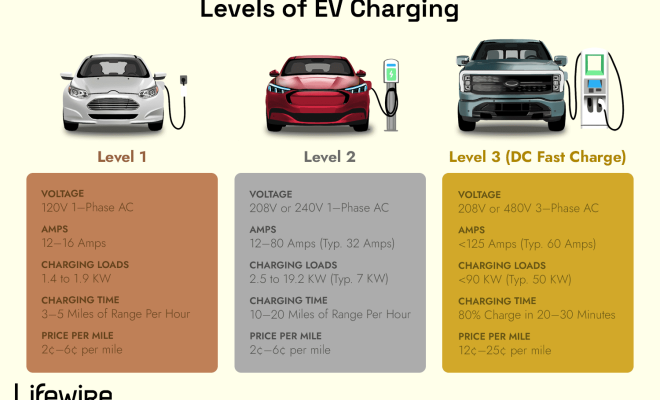
Level 1 charging, commonly called trickle charging, is the most basic charging method available. This charging level uses a standard household outlet, and it’s the slowest way to charge your EV. The charging rate is typically around 3-5 miles per hour, which means it can take up to 25 hours to charge an electric vehicle fully. Level 1 charging is best suited for those who can park their vehicle overnight.

Level 2 Charging:

Level 2 charging uses a 240-volt circuit, which is commonly used for large appliances. This charging level provides a faster rate of around 25-30 miles per hour, which means that you can charge the battery from zero to full in approximately 3-6 hours, depending on the size of the battery. Level 2 chargers can be installed either at home or in public charging stations, and its speed and convenience make it the most commonly used charging method by EV owners.

Level 3 Charging:

Level 3 charging, also known as DC fast charging, is the quickest and most powerful charging level. This charging method uses direct current (DC) and has a charging rate of around 100 miles of range in just 30 minutes. Level 3 charging can only be found at public charging stations, and it’s usually installed in areas where drivers would need to charge their EVs quickly, such as interstates, rest areas, and commercial areas.

Which Charging Level is Right for You?

The answer to this question mainly depends on your driving habits and lifestyle. If you need to travel long distances, you should consider level 3 charging since it will allow you to quickly charge your EV on the go. On the other hand, if you can park your vehicle overnight, level 1 charging may be a good option since it’s the most affordable and convenient. However, level 2 charging is still the most reliable and conventional charging option as it provides a decent balance of price and charging speed.

Final Thoughts:

There are a few things you should consider when choosing a charging level for your electric vehicle. The main factors to consider are your daily driving habits, whether you have access to a charging station close to you, and how much you’re willing to spend. Ultimately, no matter which charging level you end up using, you’ll be doing your part to help the environment and reduce your carbon footprint.


Previous Article

How to Watermark Your Photos

Next Article

How to Create Macros in Microsoft Word

Matthew Lynch

Related articles More from author

  • Digital & Mobile Technology

    How to Fix the “SIM Not Provisioned MM 2” Error

    June 8, 2023
    By Matthew Lynch
  • Digital & Mobile Technology

    What Is a DO File?

    July 6, 2023
    By Matthew Lynch
  • Digital & Mobile Technology

    eMMC vs. SSD: Not All Solid-State Storage is Equal

    April 13, 2023
    By Matthew Lynch
  • Digital & Mobile Technology

    Do Apple AirPods Only Work on the iPhone?

    July 31, 2023
    By Matthew Lynch
  • Digital & Mobile Technology

    What Is a Spreadsheet Cell?

    June 9, 2023
    By Matthew Lynch
  • Digital & Mobile Technology

    13-Inch vs. 14-Inch MacBook Pro: Is the M1 Pro Chip Worth the Extra Cost?

    August 3, 2023
    By Matthew Lynch

Search

Login & Registration

  • Log in
  • Entries feed
  • Comments feed
  • WordPress.org

Newsletter

Signup for The Tech Edvocate Newsletter and have the latest in EdTech news and opinion delivered to your email address!

About Us

Since technology is not going anywhere and does more good than harm, adapting is the best course of action. That is where The Tech Edvocate comes in. We plan to cover the PreK-12 and Higher Education EdTech sectors and provide our readers with the latest news and opinion on the subject. From time to time, I will invite other voices to weigh in on important issues in EdTech. We hope to provide a well-rounded, multi-faceted look at the past, present, the future of EdTech in the US and internationally.

We started this journey back in June 2016, and we plan to continue it for many more years to come. I hope that you will join us in this discussion of the past, present and future of EdTech and lend your own insight to the issues that are discussed.

Newsletter

Signup for The Tech Edvocate Newsletter and have the latest in EdTech news and opinion delivered to your email address!

Contact Us

The Tech Edvocate
910 Goddin Street
Richmond, VA 23231
(601) 630-5238
[email protected]

Copyright © 2026 Matthew Lynch. All rights reserved.