The Tech Edvocate

Top Menu

  • Advertisement
  • Apps
  • Home Page
  • Home Page Five (No Sidebar)
  • Home Page Four
  • Home Page Three
  • Home Page Two
  • Home Tech2
  • Icons [No Sidebar]
  • Left Sidbear Page
  • Lynch Educational Consulting
  • My Account
  • My Speaking Page
  • Newsletter Sign Up Confirmation
  • Newsletter Unsubscription
  • Our Brands
  • Page Example
  • Privacy Policy
  • Protected Content
  • Register
  • Request a Product Review
  • Shop
  • Shortcodes Examples
  • Signup
  • Start Here
    • Governance
    • Careers
    • Contact Us
  • Terms and Conditions
  • The Edvocate
  • The Tech Edvocate Product Guide
  • Topics
  • Write For Us
  • Advertise

Main Menu

  • Start Here
    • Our Brands
    • Governance
      • Lynch Educational Consulting, LLC.
      • Dr. Lynch’s Personal Website
      • Careers
    • Write For Us
    • The Tech Edvocate Product Guide
    • Contact Us
    • Books
    • Edupedia
    • Post a Job
    • The Edvocate Podcast
    • Terms and Conditions
    • Privacy Policy
  • Topics
    • Assistive Technology
    • Child Development Tech
    • Early Childhood & K-12 EdTech
    • EdTech Futures
    • EdTech News
    • EdTech Policy & Reform
    • EdTech Startups & Businesses
    • Higher Education EdTech
    • Online Learning & eLearning
    • Parent & Family Tech
    • Personalized Learning
    • Product Reviews
  • Advertise
  • Tech Edvocate Awards
  • The Edvocate
  • Pedagogue
  • School Ratings

logo

The Tech Edvocate

  • Start Here
    • Our Brands
    • Governance
      • Lynch Educational Consulting, LLC.
      • Dr. Lynch’s Personal Website
        • My Speaking Page
      • Careers
    • Write For Us
    • The Tech Edvocate Product Guide
    • Contact Us
    • Books
    • Edupedia
    • Post a Job
    • The Edvocate Podcast
    • Terms and Conditions
    • Privacy Policy
  • Topics
    • Assistive Technology
    • Child Development Tech
    • Early Childhood & K-12 EdTech
    • EdTech Futures
    • EdTech News
    • EdTech Policy & Reform
    • EdTech Startups & Businesses
    • Higher Education EdTech
    • Online Learning & eLearning
    • Parent & Family Tech
    • Personalized Learning
    • Product Reviews
  • Advertise
  • Tech Edvocate Awards
  • The Edvocate
  • Pedagogue
  • School Ratings
  • US Battery as a Service Market Shifts Toward Fleet-Based Energy

  • The Startling Truth: Why Americans Distrust AI with Their Health

  • This Crucial Deadline for Banks Is Closer Than You Think

  • Baffling: CrowdStrike’s $500 Million AI Bet Reshapes Cybersecurity

  • This Crucial Autonomous Driving Rule Could Cost You Everything

  • Baffling: Microsoft AI CEO Demands Halt to Conscious AI Development

  • O seară în ritmul tău: atmosfera divertismentului de cazinou pe internet

  • Outrageous: AppLovin Hit With Lawsuit Over AI Claims — What Investors Need to Know

  • 9 Critical Ways AI Investment Fraud Is Quietly Draining Your Bank Account

  • Is the AI Bubble Bursting? OpenAI’s Funding Woes Revealed

Digital & Mobile Technology
Home›Digital & Mobile Technology›What Is PASV FTP (Passive FTP)?

What Is PASV FTP (Passive FTP)?
By Matthew Lynch
July 5, 2023
0
Spread the love

File Transfer Protocol, commonly known as FTP, is a standard protocol used to transfer files from one computer to another over the internet or any other network. It has been in use since the early days of the internet and is still widely used today. One of the key features of FTP is its ability to support two different modes of operation: active mode and passive mode. In this article, we will take a closer look at passive FTP or PASV FTP and explore its features, benefits, and limitations.

What is PASV FTP?

PASV FTP or passive FTP is an FTP protocol where the client initiates the data connection to the server. It is also known as a client-initiated data transfer since the client decides which ports to use for data transfer. In PASV FTP, the server opens a passive port listening for incoming data connections from the client.

How does it work?

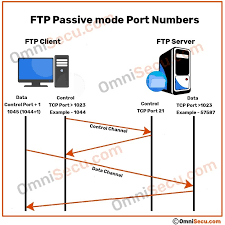
In passive FTP, the client initiates the communication with the server by sending a PASV command to the server, which tells the server to switch to passive mode. The server then responds with an IP address and a port number for the client to connect to. The client then establishes a connection to the server on the specified port and begins transferring data in binary or ASCII mode.

The benefits of PASV FTP

PASV FTP offers several benefits over active mode. These benefits include:

1. Compatibility: Unlike in active mode, where firewalls may block incoming connections to the client, PASV FTP is more compatible with most firewalls and router configurations. This is because the client initiates the connection, eliminating the need for the server to initiate a connection to the client, which can be blocked by some firewalls.

2. Security: With PASV FTP, the client is in control of the data transfer, which reduces the risk of hackers exploiting the server’s data port to gain access to the server.

3. Flexibility: PASV FTP offers more flexibility when it comes to routing and firewall configurations, making it easier to transfer data in complex network environments.

Limitations of PASV FTP

Despite its benefits, PASV FTP also has its limitations. These limitations include:

1. Slower transfer speeds: Since the client has to initiate a connection with the server, data transfer speeds can be slower than in active mode.

2. Connection errors: PASV FTP can still experience connection errors when firewalls and routers block the passive data port, which can lead to a failed transfer.

3. Complex setup: Setting up PASV FTP can be more complex than setting up active mode, which can be a challenge for users with limited technical knowledge.

Conclusion

In conclusion, PASV FTP or passive FTP is a standard mode of FTP operation that offers several benefits over active mode. These benefits include increased compatibility with firewalls and routers, better security, and greater flexibility. However, PASV FTP also has its limitations, including slower transfer speeds, connection errors, and complex setup. As a user, it is essential to understand these differences and choose a mode that best suits your needs.


Previous Article

How to Unlock a Phone From Any ...

Next Article

How to Fix Netflix Error Code NW-2-4

Matthew Lynch

Related articles More from author

  • Digital & Mobile Technology

    How to Fix the “There Was a Problem Starting logiLDA.dll” Error on Windows

    September 7, 2023
    By Matthew Lynch
  • Digital & Mobile Technology

    iWork for iPad: A Powerful Productivity Suite

    June 23, 2023
    By Matthew Lynch
  • Digital & Mobile Technology

    How to Make Your iPhone Keyboard Vibrate

    June 26, 2023
    By Matthew Lynch
  • Digital & Mobile Technology

    The 7 Best Android Anti-Theft Apps to Protect Your Phone

    July 31, 2023
    By Matthew Lynch
  • Digital & Mobile Technology

    How to Enable and Use the OS X Character Viewer on Your Mac

    May 28, 2023
    By Matthew Lynch
  • Digital & Mobile Technology

    A Complete Guide to Microsoft 365 (Formerly Microsoft Office)

    May 31, 2023
    By Matthew Lynch

Search

Login & Registration

  • Log in
  • Entries feed
  • Comments feed
  • WordPress.org

Newsletter

Signup for The Tech Edvocate Newsletter and have the latest in EdTech news and opinion delivered to your email address!

About Us

Since technology is not going anywhere and does more good than harm, adapting is the best course of action. That is where The Tech Edvocate comes in. We plan to cover the PreK-12 and Higher Education EdTech sectors and provide our readers with the latest news and opinion on the subject. From time to time, I will invite other voices to weigh in on important issues in EdTech. We hope to provide a well-rounded, multi-faceted look at the past, present, the future of EdTech in the US and internationally.

We started this journey back in June 2016, and we plan to continue it for many more years to come. I hope that you will join us in this discussion of the past, present and future of EdTech and lend your own insight to the issues that are discussed.

Newsletter

Signup for The Tech Edvocate Newsletter and have the latest in EdTech news and opinion delivered to your email address!

Contact Us

The Tech Edvocate
910 Goddin Street
Richmond, VA 23231
(601) 630-5238
[email protected]

Copyright © 2026 Matthew Lynch. All rights reserved.