The Tech Edvocate

Top Menu

  • Advertisement
  • Apps
  • Home Page
  • Home Page Five (No Sidebar)
  • Home Page Four
  • Home Page Three
  • Home Page Two
  • Home Tech2
  • Icons [No Sidebar]
  • Left Sidbear Page
  • Lynch Educational Consulting
  • My Account
  • My Speaking Page
  • Newsletter Sign Up Confirmation
  • Newsletter Unsubscription
  • Our Brands
  • Page Example
  • Privacy Policy
  • Protected Content
  • Register
  • Request a Product Review
  • Shop
  • Shortcodes Examples
  • Signup
  • Start Here
    • Governance
    • Careers
    • Contact Us
  • Terms and Conditions
  • The Edvocate
  • The Tech Edvocate Product Guide
  • Topics
  • Write For Us
  • Advertise

Main Menu

  • Start Here
    • Our Brands
    • Governance
      • Lynch Educational Consulting, LLC.
      • Dr. Lynch’s Personal Website
      • Careers
    • Write For Us
    • The Tech Edvocate Product Guide
    • Contact Us
    • Books
    • Edupedia
    • Post a Job
    • The Edvocate Podcast
    • Terms and Conditions
    • Privacy Policy
  • Topics
    • Assistive Technology
    • Child Development Tech
    • Early Childhood & K-12 EdTech
    • EdTech Futures
    • EdTech News
    • EdTech Policy & Reform
    • EdTech Startups & Businesses
    • Higher Education EdTech
    • Online Learning & eLearning
    • Parent & Family Tech
    • Personalized Learning
    • Product Reviews
  • Advertise
  • Tech Edvocate Awards
  • The Edvocate
  • Pedagogue
  • School Ratings

logo

The Tech Edvocate

  • Start Here
    • Our Brands
    • Governance
      • Lynch Educational Consulting, LLC.
      • Dr. Lynch’s Personal Website
        • My Speaking Page
      • Careers
    • Write For Us
    • The Tech Edvocate Product Guide
    • Contact Us
    • Books
    • Edupedia
    • Post a Job
    • The Edvocate Podcast
    • Terms and Conditions
    • Privacy Policy
  • Topics
    • Assistive Technology
    • Child Development Tech
    • Early Childhood & K-12 EdTech
    • EdTech Futures
    • EdTech News
    • EdTech Policy & Reform
    • EdTech Startups & Businesses
    • Higher Education EdTech
    • Online Learning & eLearning
    • Parent & Family Tech
    • Personalized Learning
    • Product Reviews
  • Advertise
  • Tech Edvocate Awards
  • The Edvocate
  • Pedagogue
  • School Ratings
  • How to use ClickUp goals feature

  • Trello for Business

  • Can Smartsheet do automation

  • How to use Microsoft Planner boards

  • How many transactions in Kashoo

  • Sage

  • Is Sage worth it for accountants

  • How to use Smartsheet templates

  • How many users in Zoho Books free plan

  • Can Wrike integrate with Adobe Creative Cloud

Digital & Mobile Technology
Home›Digital & Mobile Technology›How to Zoom In or Out on a Windows PC

How to Zoom In or Out on a Windows PC
By Matthew Lynch
June 23, 2023
0
Spread the love

As a Windows PC user, you’ll often find yourself needing to zoom in or out of certain applications or documents. Whether it’s to focus on a particular section, increase the size of images or text or simply to take better screenshots, zooming in and out is a crucial tool in your arsenal. Here’s a step-by-step guide on how to zoom in or out on your Windows PC:

Using the Keyboard

One of the easiest ways to scale your display up or down is through the keyboard. The process is simple:

1. Hold down the Ctrl key on your keyboard

2. Use the mouse scroll wheel to zoom in or out

3. Release the Ctrl key once you’re satisfied with the scaling.

Alternatively, you can use the plus (+) or minus (-) keys instead of the scroll wheel. Pressing the plus key will zoom in, while pressing the minus key will zoom out.

Using the Magnifier Tool

Windows comes with a built-in magnifier tool to help you enlarge your screen. Here’s how you can use it:

1. Press the Start button on your PC and type “magnifier” in the search bar.

2. Click “Magnifier” from the search results to open the magnifier tool.

3. Once the tool launches, click the plus (+) or minus (-) sign to zoom in or out respectively.

4. You can also use the slider at the bottom of the magnifier window to set the scaling.

Using the Settings App

Windows 10 has a feature called “scaling” that lets you adjust display sizes for different screen resolutions. Here’s how to enable it:

1. Right-click on the desktop and select “Display Settings.”

2. Scroll down to the “Scale and layout” section and select the percentage value you want.

3. You can also use the custom scaling option to set the scaling manually.

4. Once you’ve set your preferred scaling, click “Apply” to save the changes.

Using the Application’s Zoom Function

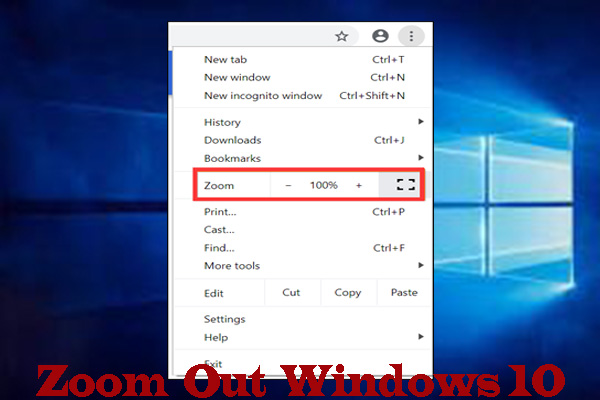
Many applications also have built-in zoom functions that let you adjust the display size within the app. For instance, web browsers like Google Chrome or Mozilla Firefox let you enlarge or shrink the page through the settings menu or using keyboard shortcuts. Similarly, word processors like Microsoft Word or Google Docs have zoom options in their user interface.


Previous Article

Surprising Ways You Can Import Data Into ...

Next Article

How to Block and Unblock a User ...

Matthew Lynch

Related articles More from author

  • Digital & Mobile Technology

    Keyboard Shortcuts: Google Chrome for Windows

    June 9, 2023
    By Matthew Lynch
  • Digital & Mobile Technology

    How to Delete Files on Mac

    September 7, 2023
    By Matthew Lynch
  • Digital & Mobile Technology

    How to Organize Your Photos With Albums and Folders on an iPhone or iPad

    August 5, 2023
    By Matthew Lynch
  • Digital & Mobile Technology

    Your iPhone Has a Hidden List of Everywhere You Hang Out

    June 15, 2023
    By Matthew Lynch
  • Digital & Mobile Technology

    What Is Vaguebooking? A Definition and Examples of This Attention Seeking Phenomenon

    September 7, 2023
    By Matthew Lynch
  • Digital & Mobile Technology

    What is System Design?

    May 12, 2023
    By Matthew Lynch

Search

Login & Registration

  • Log in
  • Entries feed
  • Comments feed
  • WordPress.org

Newsletter

Signup for The Tech Edvocate Newsletter and have the latest in EdTech news and opinion delivered to your email address!

About Us

Since technology is not going anywhere and does more good than harm, adapting is the best course of action. That is where The Tech Edvocate comes in. We plan to cover the PreK-12 and Higher Education EdTech sectors and provide our readers with the latest news and opinion on the subject. From time to time, I will invite other voices to weigh in on important issues in EdTech. We hope to provide a well-rounded, multi-faceted look at the past, present, the future of EdTech in the US and internationally.

We started this journey back in June 2016, and we plan to continue it for many more years to come. I hope that you will join us in this discussion of the past, present and future of EdTech and lend your own insight to the issues that are discussed.

Newsletter

Signup for The Tech Edvocate Newsletter and have the latest in EdTech news and opinion delivered to your email address!

Contact Us

The Tech Edvocate
910 Goddin Street
Richmond, VA 23231
(601) 630-5238
[email protected]

Copyright © 2026 Matthew Lynch. All rights reserved.