The Tech Edvocate

Top Menu

  • Advertisement
  • Apps
  • Home Page
  • Home Page Five (No Sidebar)
  • Home Page Four
  • Home Page Three
  • Home Page Two
  • Home Tech2
  • Icons [No Sidebar]
  • Left Sidbear Page
  • Lynch Educational Consulting
  • My Account
  • My Speaking Page
  • Newsletter Sign Up Confirmation
  • Newsletter Unsubscription
  • Our Brands
  • Page Example
  • Privacy Policy
  • Protected Content
  • Register
  • Request a Product Review
  • Shop
  • Shortcodes Examples
  • Signup
  • Start Here
    • Governance
    • Careers
    • Contact Us
  • Terms and Conditions
  • The Edvocate
  • The Tech Edvocate Product Guide
  • Topics
  • Write For Us
  • Advertise

Main Menu

  • Start Here
    • Our Brands
    • Governance
      • Lynch Educational Consulting, LLC.
      • Dr. Lynch’s Personal Website
      • Careers
    • Write For Us
    • The Tech Edvocate Product Guide
    • Contact Us
    • Books
    • Edupedia
    • Post a Job
    • The Edvocate Podcast
    • Terms and Conditions
    • Privacy Policy
  • Topics
    • Assistive Technology
    • Child Development Tech
    • Early Childhood & K-12 EdTech
    • EdTech Futures
    • EdTech News
    • EdTech Policy & Reform
    • EdTech Startups & Businesses
    • Higher Education EdTech
    • Online Learning & eLearning
    • Parent & Family Tech
    • Personalized Learning
    • Product Reviews
  • Advertise
  • Tech Edvocate Awards
  • The Edvocate
  • Pedagogue
  • School Ratings

logo

The Tech Edvocate

  • Start Here
    • Our Brands
    • Governance
      • Lynch Educational Consulting, LLC.
      • Dr. Lynch’s Personal Website
        • My Speaking Page
      • Careers
    • Write For Us
    • The Tech Edvocate Product Guide
    • Contact Us
    • Books
    • Edupedia
    • Post a Job
    • The Edvocate Podcast
    • Terms and Conditions
    • Privacy Policy
  • Topics
    • Assistive Technology
    • Child Development Tech
    • Early Childhood & K-12 EdTech
    • EdTech Futures
    • EdTech News
    • EdTech Policy & Reform
    • EdTech Startups & Businesses
    • Higher Education EdTech
    • Online Learning & eLearning
    • Parent & Family Tech
    • Personalized Learning
    • Product Reviews
  • Advertise
  • Tech Edvocate Awards
  • The Edvocate
  • Pedagogue
  • School Ratings
  • Autonomous Ransomware AI Agents Are Here — And They’re Targeting Your Power Grid

  • Unprecedented: This One Thing Is Crushing Major AI Investments

  • Rotirile gratuite fără depunere: activarea rundelor și creditarea câștigurilor

  • The Astonishing Reason Millions Are Ditching Old Finance Education for This New Method

  • Why Your Bank Account Needs These 7 Gamified Money Apps Right Now

  • Why Millions Are Finally Beating Debt Thanks to Gamification in Personal Finance Apps

  • 5.7 Million Students Exposed: Why This Breach Demands Immediate Legal Action

  • The Brutal Truth About EdTech Breaches: 8 Defenses Schools Need NOW

  • Millions of Student Records Exposed: The Scandalous ETS Data Breach

  • Amazon’s Secret Weapon: Why Its Workforce Strategy Crushes eBay’s Layoff Cycle

EdTech Futures
Home›EdTech Futures›7 Ways Holographic Technology Will Make Learning More Fun

7 Ways Holographic Technology Will Make Learning More Fun

By Matthew Lynch
November 1, 2019
0
Spread the love

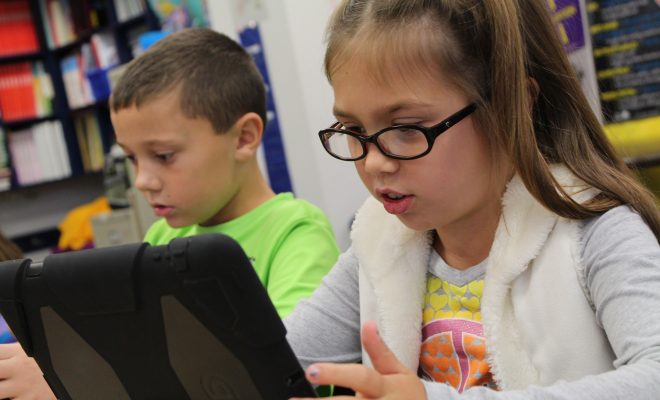
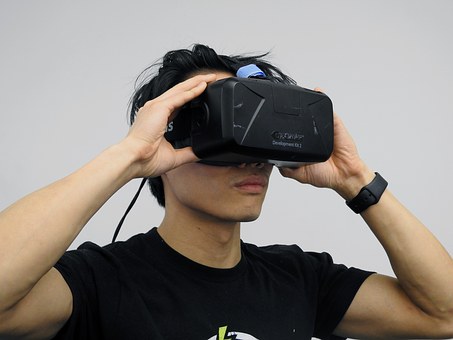
Advancements in technology brought teachers the interactive whiteboard, 3D printers, and interactive desks and walls. One of the next developments will be holographic telepresence. Holographic telepresence systems are defined as systems that can project realistic, full-motion, real-time 3D images of distant people and objects into a room, along with real-time audio communication, with a level of realism rivaling physical presence. These systems project the presence of a person far away into your immediate space in an amazingly realistic way. There are many ways that this advanced technology can add to instruction and learning.

Experts “beamed” into the classroom

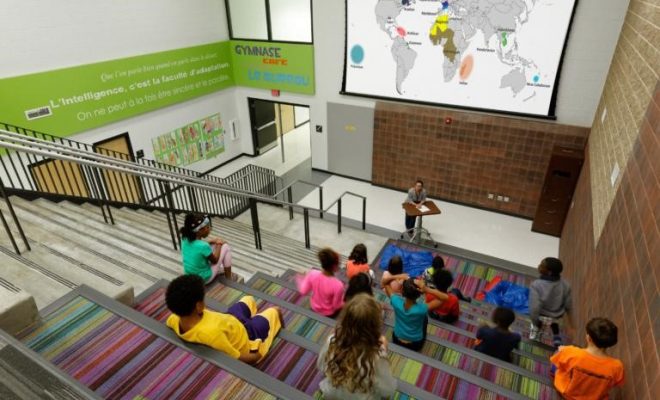
With this technology, it will be possible to have an expert virtually visit a class anywhere in the world to explain something in their field of expertise. For instance, a surgeon could demonstrate a rare surgical procedure to medical students in person, without having to be there. Some educators are gifted teachers. They could be present and teach in different locales, explaining complicated concepts in subjects like biology, chemistry, and physics to a broader audience.

This is already happening. Students of London’s Imperial College Business School recently experienced lectures from 3D representations of guest speakers in New York and Los Angeles.

Geographically remote classrooms can meet up

The internet is already allowing rooms full of people to talk to each other from different parts of the world. This technology will make it more real. A Taiwanese class studying English can visit a French class studying Mandarin Chinese, giving each other authentic language practice experience. The possibilities are endless.

One lecturer, different classrooms

With this technology, teachers can deliver their lectures to students in multiple classes at the same time. Famous experts could share their knowledge through their 3D presentation with a vast audience.

Attend class from home

With further advancement of holographic technology, it might become possible for individuals to afford a “personal” holographic projector so a remote lecturer could be projected at their home in 3D. This would enable the student to attend the lecture from home. Wouldn’t that be cool?

Holographic visits to remote locations

Instead of learning about the Romans and the grandeur of the Colosseum in a book, a class could visit the site through the use of holographic technology, through their 3D presentations. In the future, when the technology is more developed, it would be possible for entire classes to go on virtual trips to the places, people, and the phenomenon they are studying.

Completely new instructional content

The content that could be developed for holographic classes is genuinely limitless. Anything is possible. Holographic representations will bring any subject to life. These 3D holograms will make it possible for students to explore in-depth the structure, function, evolution, and taxonomy of living organisms or how the world was formed.

Recreate history?

Holographic technology could theoretically be used to recreate an event in the past. So, it might be possible for students to not just learn about historical events, but to attend them!

As far as the educational need to engage students goes, educators can look forward to holographic telepresence technology to truly engage their students in the not too distant future. Holographic technology is just one of many technologies that will transform education in the coming years.


Previous Article

The Significance of eLearning in The Modern ...

Next Article

What YouTube Channels Are High Schoolers Watching?

Matthew Lynch

Related articles More from author

  • EdTech FuturesEdTech News

    Beyond the shine : Finding the technology in the standard

    June 25, 2016
    By Matthew Lynch
  • EdTech Futures

    3 Tech Challenges That Stand to Undermine the Future of Education

    February 15, 2019
    By Matthew Lynch
  • EdTech FuturesEdTech Policy & Reform

    3 Reasons Why India Will Be A Leader in the EdTech Industry in the 21st Century

    December 23, 2018
    By Matthew Lynch
  • EdTech FuturesPersonalized Learning

    Edtech aims to save time, combine resources

    June 14, 2016
    By Matthew Lynch
  • EdTech Futures

    Why Virtual Reality has the Potential to Transform Education as We Know It

    December 26, 2016
    By Matthew Lynch
  • EdTech Futures

    5 Skills That Students Are Losing Because of Tech

    August 9, 2019
    By Matthew Lynch

Search

Login & Registration

  • Log in
  • Entries feed
  • Comments feed
  • WordPress.org

Newsletter

Signup for The Tech Edvocate Newsletter and have the latest in EdTech news and opinion delivered to your email address!

About Us

Since technology is not going anywhere and does more good than harm, adapting is the best course of action. That is where The Tech Edvocate comes in. We plan to cover the PreK-12 and Higher Education EdTech sectors and provide our readers with the latest news and opinion on the subject. From time to time, I will invite other voices to weigh in on important issues in EdTech. We hope to provide a well-rounded, multi-faceted look at the past, present, the future of EdTech in the US and internationally.

We started this journey back in June 2016, and we plan to continue it for many more years to come. I hope that you will join us in this discussion of the past, present and future of EdTech and lend your own insight to the issues that are discussed.

Newsletter

Signup for The Tech Edvocate Newsletter and have the latest in EdTech news and opinion delivered to your email address!

Contact Us

The Tech Edvocate
910 Goddin Street
Richmond, VA 23231
(601) 630-5238
[email protected]

Copyright © 2026 Matthew Lynch. All rights reserved.