7 Ways AI in the Workplace Will Transform Your Career by 2027
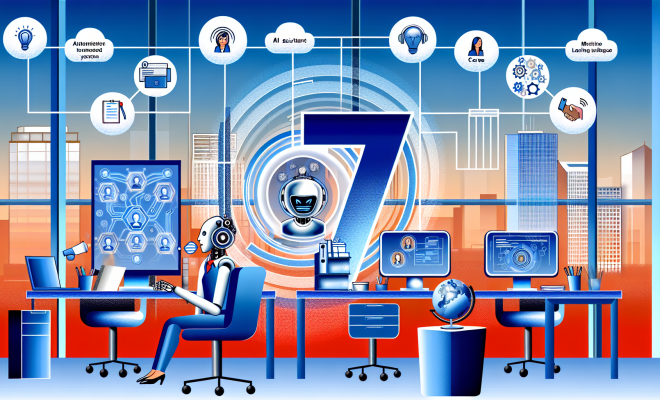
As technology continues to evolve at a breakneck pace, AI in the workplace has emerged as a critical area of focus for businesses across the globe. A recent report from McKinsey, released on May 9, 2026, reveals that artificial intelligence could automate up to 45% of work activities by 2027, fundamentally reshaping the way we engage with our jobs. This pivotal transformation is expected to lead to the rise of ‘superagencies’—environments where humans and AI collaborate to enhance productivity by an astonishing 30-50%. This article explores the key findings of the report, the implications for workers, and how individuals can prepare for this coming wave of change.
Understanding the Rise of Superagencies
The concept of superagencies signifies a profound shift in the workplace paradigm. In this new environment, human workers are not replaced by AI; rather, they are empowered by it. The McKinsey report highlights how advanced AI tools, such as ‘copilots,’ are transforming roles across various sectors, including technology, finance, and creative industries.
- Technology: AI is streamlining repetitive tasks, allowing tech professionals to dedicate more time to innovation and problem-solving.
- Finance: Financial analysts can utilize AI to enhance accuracy in forecasting, while also speeding up decision-making processes.
- Creative Industries: Designers and writers are finding that AI can assist in generating ideas, offering suggestions, and even producing preliminary drafts, thereby accelerating project timelines.
The Impact of AI on Decision-Making
One of the report’s most significant findings is that Fortune 500 companies utilizing AI technologies have experienced decision-making processes that are twice as fast as their competitors. This rapid shift not only enhances productivity but also allows organizations to adapt swiftly to market changes. The integration of AI into the decision-making process offers a competitive edge that is becoming increasingly essential in today’s fast-paced business environment.
Case Studies: Fortune 500 Companies Leading the Charge
Several Fortune 500 companies are already reaping the benefits of integrating AI at their core. For instance, a major tech firm has employed AI tools to analyze vast amounts of data, resulting in quicker and more informed decisions. Meanwhile, a leading financial institution has leveraged AI to improve risk assessment, enabling them to provide better services to their clients while maintaining compliance with regulatory requirements.
Upskilling for the Future: Preparing for Job Displacement
While the prospects brought forth by AI in the workplace are exciting, there are also legitimate concerns regarding job displacement. The McKinsey report notes that as many as 800 million workers worldwide could face job disruption due to AI advancements. Thus, the emphasis on upskilling is paramount. Workers must be proactive in acquiring new skills that complement AI technologies to remain relevant in their respective fields.
- Digital Literacy: Understanding AI tools and their capabilities is essential for future job security.
- Critical Thinking: As AI handles more routine tasks, the ability to think critically and creatively will become increasingly valuable.
- Emotional Intelligence: Skills that involve interpersonal communication and empathetic understanding will still be uniquely human traits that AI cannot replicate.
The Debate: AI Job Takeover vs. Augmentation
The rapid evolution of AI in the workplace has sparked heated debates across social media platforms like LinkedIn and X. Professionals are divided over whether AI will lead to job losses or if it will serve as a tool for augmentation. Many workers are experiencing a sense of FOMO (fear of missing out) as they scramble to learn about AI literacy and its applications in their careers.
The Arguments For Job Augmentation
Proponents of the augmentation perspective argue that AI can enhance job performance rather than replace it. By offloading mundane tasks to AI, employees can focus on higher-value activities that require human insight and creativity.
The Case for Concerns About Job Displacement
Conversely, those concerned about job losses cite that the rapid pace of AI development could outstrip the ability of workers to adapt. They highlight the urgent need for policy interventions and corporate initiatives aimed at reskilling workers to prevent a significant employment crisis.
Navigating the Future of Work: Strategies for Success
As the workplace landscape continues to change, workers must adopt proactive strategies to thrive in an AI-enhanced environment. Here are several strategies to consider:
- Embrace Continuous Learning: Engage in lifelong learning to stay current with new technologies and methodologies.
- Network and Collaborate: Building connections within your industry can provide insights into emerging trends and opportunities.
- Seek Mentorship: Learning from experienced professionals can offer valuable perspectives on how to navigate career transitions.
Conclusion: Embracing the Future of AI in the Workplace
The transformative potential of AI in the workplace is undeniable. As we approach 2027, organizations that harness the power of AI and foster collaboration between humans and machines will likely gain significant advantages. While concerns about job displacement are valid, focusing on upskilling and adapting to new roles can empower workers to thrive in this evolving landscape. By preparing for a future where AI and humans work hand in hand, individuals can unlock the full potential of AI to enhance their careers and reshape their industries.