
The Tech Edvocate

Top Menu

  • Advertisement
  • Apps
  • Home Page
  • Home Page Five (No Sidebar)
  • Home Page Four
  • Home Page Three
  • Home Page Two
  • Home Tech2
  • Icons [No Sidebar]
  • Left Sidbear Page
  • Lynch Educational Consulting
  • My Account
  • My Speaking Page
  • Newsletter Sign Up Confirmation
  • Newsletter Unsubscription
  • Our Brands
  • Page Example
  • Privacy Policy
  • Protected Content
  • Register
  • Request a Product Review
  • Shop
  • Shortcodes Examples
  • Signup
  • Start Here
    • Governance
    • Careers
    • Contact Us
  • Terms and Conditions
  • The Edvocate
  • The Tech Edvocate Product Guide
  • Topics
  • Write For Us
  • Advertise

Main Menu

  • Start Here
    • Our Brands
    • Governance
      • Lynch Educational Consulting, LLC.
      • Dr. Lynch’s Personal Website
      • Careers
    • Write For Us
    • The Tech Edvocate Product Guide
    • Contact Us
    • Books
    • Edupedia
    • Post a Job
    • The Edvocate Podcast
    • Terms and Conditions
    • Privacy Policy
  • Topics
    • Assistive Technology
    • Child Development Tech
    • Early Childhood & K-12 EdTech
    • EdTech Futures
    • EdTech News
    • EdTech Policy & Reform
    • EdTech Startups & Businesses
    • Higher Education EdTech
    • Online Learning & eLearning
    • Parent & Family Tech
    • Personalized Learning
    • Product Reviews
  • Advertise
  • Tech Edvocate Awards
  • The Edvocate
  • Pedagogue
  • School Ratings

logo

The Tech Edvocate

  • Start Here
    • Our Brands
    • Governance
      • Lynch Educational Consulting, LLC.
      • Dr. Lynch’s Personal Website
        • My Speaking Page
      • Careers
    • Write For Us
    • The Tech Edvocate Product Guide
    • Contact Us
    • Books
    • Edupedia
    • Post a Job
    • The Edvocate Podcast
    • Terms and Conditions
    • Privacy Policy
  • Topics
    • Assistive Technology
    • Child Development Tech
    • Early Childhood & K-12 EdTech
    • EdTech Futures
    • EdTech News
    • EdTech Policy & Reform
    • EdTech Startups & Businesses
    • Higher Education EdTech
    • Online Learning & eLearning
    • Parent & Family Tech
    • Personalized Learning
    • Product Reviews
  • Advertise
  • Tech Edvocate Awards
  • The Edvocate
  • Pedagogue
  • School Ratings
  • This Unprecedented EU Ban Just Changed Fast Fashion Forever

  • Urgent Alert: Your Smart Home’s Exposed to a Critical Deco BE11000 Vulnerability

  • Uncovering the Truth: Your LinkedIn Reach Just Got a Major Overhaul

  • Uncovering the AI Heist: How Chinese Firms Allegedly Siphoned Billions of AI Tokens

  • Rockstar’s GTA 6 Developers Lawsuit: A Fight for Justice or Corporate Retaliation?

  • Unbelievable: Hideo Kojima’s Next Masterpiece Is Now an Xbox Exclusive

  • This Crucial Google AI Shift Is Quietly Reshaping the Internet

  • Unbelievable: AI Breaches Are Exploding, And What It Means For You This September 2026

  • This Crucial Shift Is Saving Teachers From Classroom Chaos

  • AI’s Dark Secret: How It’s Supercharging Cybercrime for Everyone

How To
Home›How To›3 Ways to Turn when Skiing

3 Ways to Turn when Skiing
By Matthew Lynch
March 31, 2024
0
Spread the love

Introduction:

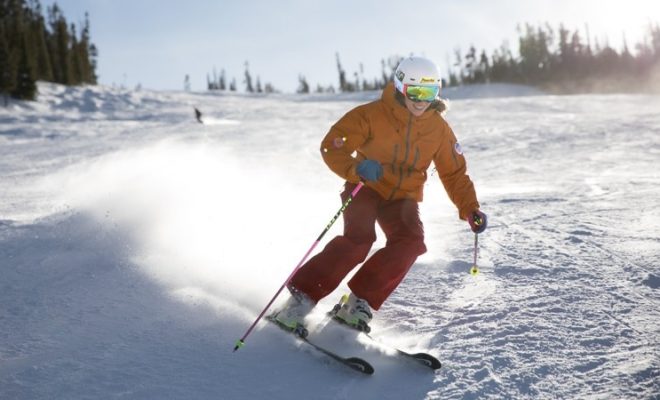
Skiing is an exhilarating winter sport enjoyed by people of all ages and skill levels. One crucial aspect of skiing is mastering the technique of turning, which enables skiers to navigate different terrains and maintain control on the slopes. In this article, we will discuss three ways to turn when skiing: the snowplow turn, parallel turn, and carving.

1. Snowplow Turn:

The snowplow turn, also known as the wedge turn or beginner’s turn, is the most basic turning technique taught to beginners. This turn allows getting a feel for controlling speed while transitioning from side-to-side motion.

To execute a snowplow turn:

a. Start by positioning your skis in a “V” shape with the tips pointing inward, resembling a snowplow.

b. Gently distribute your weight over the inside edge of both skis while maintaining a flexed knee position.

c. Slowly shift your weight to one leg and apply more pressure on the inside edge of the corresponding ski.

d. This will create resistance against the snow, causing your body and skis to change direction naturally.

e. Make sure to focus on controlling your speed to prevent from picking up too much momentum when turning.

2. Parallel Turn:

As you progress with skiing, you may move on to parallel turns which are more efficient and provide greater control at higher speeds. In this technique, both skis remain parallel throughout the turn.

To perform a parallel turn:

a. Start skiing in a straight line with your knees slightly bent.

b. Begin shifting your weight onto the inside ski as you initiate the turn.

c. Simultaneously, rotate your lower body (hips) in the direction of your desired turn while keeping your upper body stable and facing downhill.

d. At mid-turn, transfer weight onto your outside ski and continue applying pressure on its inside edge.

e. Gradually bring your skis together to complete the turn and glide smoothly into the next one.

3. Carving:

Carving is an advanced turning technique recommended for skiers comfortable with parallel turns and seeking to improve their turning proficiency. In carving, the ski’s sidecut and camber are utilized in generating smooth, high-speed turns.

To master a carving turn:

a. Initiate the turn by rolling your ankles and knees towards the turn direction while maintaining your skis parallel.

b. Your ski edges will engage with the snow, creating a platform to lean on during the turn.

c. Apply pressure on the inside edges of your skis, focusing on maintaining a stable stance.

d. Allow the skis’ natural sidecut and camber to guide their arc through the turn.

e. As you complete your carved turn, release the pressure on your edges and transition into the next one smoothly.

Conclusion:

Learning and perfecting these three turning techniques – snowplow, parallel, and carving – will enhance your skiing experience and ensure that you have a safe, enjoyable time on the slopes. Remember to practice at your own pace, employing proper safety measures, and always ski within your ability level. Happy skiing!


Previous Article

3 Ways to Grind (for Girls)

Next Article

12 Ways to Accept Your Relationship Is ...

Matthew Lynch

Related articles More from author

  • How To

    How to Be a Good Writer

    October 27, 2023
    By Matthew Lynch
  • How To

    How to Trim a Dog’s Nails: 11 Steps

    October 6, 2023
    By Matthew Lynch
  • How To

    How to Be Confident

    October 10, 2023
    By Matthew Lynch
  • How To

    How to Be Popular

    October 16, 2023
    By Matthew Lynch
  • How To

    3 Ways to Defrost a Turkey

    November 12, 2023
    By Matthew Lynch
  • How To

    3 Ways to Hide Depression

    January 23, 2024
    By Matthew Lynch

Search

Login & Registration

  • Log in
  • Entries feed
  • Comments feed
  • WordPress.org

Newsletter

Signup for The Tech Edvocate Newsletter and have the latest in EdTech news and opinion delivered to your email address!

About Us

Since technology is not going anywhere and does more good than harm, adapting is the best course of action. That is where The Tech Edvocate comes in. We plan to cover the PreK-12 and Higher Education EdTech sectors and provide our readers with the latest news and opinion on the subject. From time to time, I will invite other voices to weigh in on important issues in EdTech. We hope to provide a well-rounded, multi-faceted look at the past, present, the future of EdTech in the US and internationally.

We started this journey back in June 2016, and we plan to continue it for many more years to come. I hope that you will join us in this discussion of the past, present and future of EdTech and lend your own insight to the issues that are discussed.

Newsletter

Signup for The Tech Edvocate Newsletter and have the latest in EdTech news and opinion delivered to your email address!

Contact Us

The Tech Edvocate
910 Goddin Street
Richmond, VA 23231
(601) 630-5238
[email protected]

Copyright © 2026 Matthew Lynch. All rights reserved.