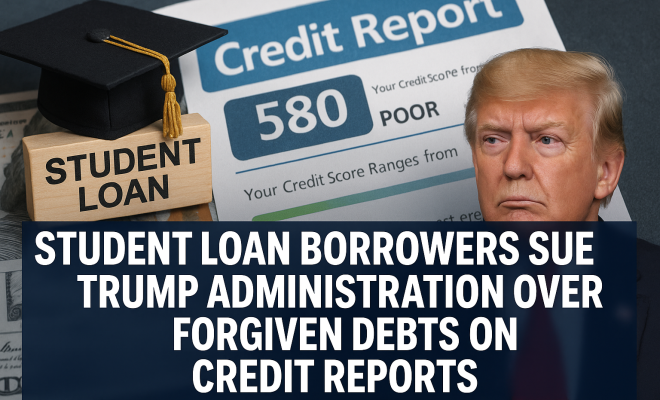
Student Loan Payments Skyrocket $500 in 2026: Fight Back!

Alright, let’s talk about something pretty unsettling for recent graduates and, frankly, anyone carrying student loan debt. You’ve probably heard whispers, maybe even seen a headline or two, about the future of student loan payments. But here’s the stark reality: a new report from the Student Debt Crisis Center (SDCC), released on July 23, 2026, paints a rather grim picture. It suggests that a significant chunk of borrowers, especially those who’ve been relying on the Saving on A Valuable Education (SAVE) plan, are about to get hit with a hefty increase in their monthly payments. We’re talking about an additional $500 or more for over half of those exiting the SAVE plan. For many, that means going from a $0 payment to an estimated median of $560. Ouch. This isn’t just a minor adjustment; it’s a potential financial tidal wave, especially when you consider that over 4.2 million people defaulted on student loans between April 2025 and March 2026, adding to the nation’s staggering $1.6 trillion student debt crisis. So, if you’re a recent grad trying to figure out how to navigate this choppy water, you’re in the right place. We’re going to dive deep into the best student loan repayment strategies for recent graduates facing these increased payments, giving you actionable steps to protect your finances.
1. Re-evaluate Your Budget Immediately: The First Line of Defense
Before you even think about complex repayment plans or refinancing, you absolutely have to get a handle on your current financial situation. This isn’t just about knowing what you spend; it’s about understanding where every single dollar goes and, more importantly, where you can make cuts. When you’re staring down a potential $500 monthly payment increase, every penny counts. Start by tracking all your income and expenses for at least a month, if you haven’t already. Categorize everything: rent, utilities, groceries, transportation, entertainment, subscriptions, dining out. Be honest with yourself about discretionary spending.
Once you have that clear picture, identify areas where you can trim. Can you cut back on expensive takeout meals and cook more at home? Are there subscription services you rarely use but still pay for? Could you carpool or use public transport more often? Even small changes add up. The goal here is to free up as much cash as possible to absorb that inevitable payment hike without completely derailing your financial life. Think of it as creating a financial buffer. This foundational step is crucial for any of the best student loan repayment strategies for recent graduates.
2. Explore Income-Driven Repayment (IDR) Plans: Not All Plans Are Equal
While the SAVE plan is ending for many, it’s vital to remember that other Income-Driven Repayment (IDR) plans still exist, and they might offer a lifeline. These plans adjust your monthly payment based on your income and family size, potentially making your payments more manageable than the standard 10-year plan. The key here is to understand the differences and see if you qualify for one that fits your current financial picture.
The main IDR plans include Pay As You Earn (PAYE), Income-Based Repayment (IBR), and Income-Contingent Repayment (ICR). Each has slightly different eligibility requirements, payment calculation formulas, and repayment periods before any remaining balance is forgiven. For instance, PAYE and IBR generally cap your payments at 10% or 15% of your discretionary income, respectively, after accounting for a certain percentage above the poverty line. Don’t assume that because SAVE is changing, all IDR options are off the table. Get on studentaid.gov, use their Loan Simulator, and see which plan could offer you the most relief. This proactive research is a cornerstone of the best student loan repayment strategies for recent graduates.
3. Consider Federal Loan Consolidation: Streamlining Your Debt
For some borrowers, federal loan consolidation might be a smart move. This isn’t about reducing your interest rate (though sometimes it can slightly round it up or down), but rather about simplifying your repayment and potentially gaining access to different IDR plans or extending your repayment term. When you consolidate federal loans, you combine multiple federal student loans into one new Direct Consolidation Loan.
Why would you do this? Firstly, it gives you a single monthly payment, which can make managing your debt much easier. Secondly, and critically, it can sometimes make older federal loans (like FFEL Program loans) eligible for certain IDR plans, including Public Service Loan Forgiveness (PSLF), that they weren’t previously. While consolidation might extend your repayment term, potentially increasing the total interest paid over the life of the loan, the benefit of a lower, more manageable monthly payment in the short term, especially with a $500 hike looming, can be invaluable. It’s a strategic move that should be weighed carefully as part of your overall best student loan repayment strategies for recent graduates.
4. Refinancing with a Private Lender: A Double-Edged Sword
Now, this is where things get a bit more complex and require careful consideration. Refinancing your student loans with a private lender can be incredibly appealing, especially if you have excellent credit, a stable income, and are looking for a lower interest rate or a different payment structure. Many private lenders offer competitive rates, and you might be able to secure a shorter repayment term, which saves you money on interest over time, or a longer one to reduce your monthly payment. Related reading: the shift millions are facing.
However, and this is a huge ‘however,’ refinancing federal student loans into a private loan means giving up all the crucial federal protections. This includes access to income-driven repayment plans, forbearance, deferment options, and potential loan forgiveness programs like PSLF. If you lose your job, face a medical emergency, or your income drops significantly, private lenders generally offer far less flexibility than federal programs. For recent graduates with uncertain career paths or those who might benefit from federal safeguards, this is a decision not to be taken lightly. It’s a powerful tool for those with financial stability, but it strips away a safety net that many might still need. Always explore all federal options first before considering private refinancing as one of your best student loan repayment strategies for recent graduates. (See: CDC Youth Risk Behavior Survey.)
5. Seek Out Employer Assistance Programs: Don’t Leave Money on the Table
You’d be surprised how many employers, especially larger corporations or those in competitive industries, are starting to offer student loan repayment assistance as a perk. This isn’t as common as health insurance, but it’s growing. Some companies might offer a matching contribution to your student loan payments, similar to a 401(k) match, or provide a lump sum payment. Others might offer financial literacy workshops or access to student loan counseling services. For more context, see the rise of micro-credentials in tech.
It’s absolutely worth checking with your HR department or benefits administrator to see if your employer offers any such programs. Even a small contribution from your employer can make a significant dent in that looming $500 increase. If they don’t currently offer anything, it might even be worth subtly suggesting it, as more companies recognize the financial burden student loan debt places on their employees. Never assume; always ask. This is a potentially overlooked but highly effective component of the best student loan repayment strategies for recent graduates.
6. Aggressive Debt Repayment (When Possible): The Snowball or Avalanche Method
If your budget re-evaluation (see point 1) reveals that you can actually afford to pay more than the minimum, or if you manage to free up some extra cash, consider an aggressive debt repayment strategy. The two most popular methods are the debt snowball and debt avalanche. The debt snowball method focuses on psychological wins: you pay off your smallest debt first while making minimum payments on others. Once that’s gone, you roll that payment into the next smallest debt, gaining momentum.
The debt avalanche method, on the other hand, is mathematically superior: you pay off the debt with the highest interest rate first, saving you the most money over time. Whichever method you choose, the principle is the same: direct any extra funds towards your student loans. Even an extra $50 or $100 each month can significantly reduce the total interest you pay and shorten your repayment term. This strategy isn’t for everyone, especially if you’re already struggling, but for those who can swing it, it’s one of the most powerful best student loan repayment strategies for recent graduates to minimize long-term costs.
7. Leverage Windfalls and Bonuses: Put Unexpected Cash to Work
Did you get a tax refund? A work bonus? A generous gift for your birthday? Instead of spending that unexpected cash on discretionary items, consider directing a significant portion, or even all of it, towards your student loans. These windfalls are perfect opportunities to make extra principal payments without impacting your regular monthly budget. Every extra payment directly reduces your principal balance, which in turn reduces the total interest you’ll pay over the life of the loan.
Think about it: if you make a lump sum payment of $1,000, that’s two months’ worth of that potential $500 increase effectively negated. It’s a powerful way to accelerate your repayment and regain some control over your debt. This isn’t about deprivation; it’s about smart financial planning and using opportunities to your advantage. Making these strategic moves is a crucial part of the best student loan repayment strategies for recent graduates.
8. Consider a Side Hustle or Gig Work: Boost Your Income
If cutting expenses isn’t enough to absorb the increased payment, or if you want to accelerate your repayment even further, generating additional income is a direct solution. In today’s economy, there are countless opportunities for side hustles or gig work that can fit around your primary job. This could be anything from freelancing in your field of study, driving for a ride-share service, delivering food, tutoring, or even selling crafts online.
The key here is to dedicate any income generated from your side hustle directly to your student loan payments. If you can consistently bring in an extra $300-$500 a month, you’ve not only covered that potential payment hike but also potentially chipped away at your principal. It requires discipline and effort, but the financial freedom it can provide is well worth it. Exploring income-boosting options is a pragmatic and increasingly common element of the best student loan repayment strategies for recent graduates.
9. Don’t Be Afraid to Call Your Loan Servicer: They’re There to Help (Sometimes)
It might sound intimidating, but contacting your loan servicer directly can be incredibly beneficial. They are the ones who manage your loans, and they can walk you through the various repayment options available to you, clarify the terms of your current plan, and help you understand how the end of the SAVE plan might specifically affect your payments. Don’t rely solely on what you read online; get personalized information.
Be prepared with your account information and specific questions. Ask about all available IDR plans, forbearance, and deferment options. While you want to avoid defaulting, knowing your options in a worst-case scenario can provide peace of mind. Sometimes, just having a conversation with a representative can uncover solutions or clarify confusing aspects of your loans that you weren’t aware of. This direct communication is a simple yet often overlooked step in the best student loan repayment strategies for recent graduates. (See: New York Times on student loan repayment.)
10. Prioritize Saving for Emergencies: A Crucial Safety Net
While aggressively tackling student loan debt is important, never do so at the expense of building an emergency fund. Life happens, and unexpected expenses — a car repair, a medical bill, or even job loss — can quickly derail your financial plans and force you into default. The SDCC report highlighted that over 4.2 million people defaulted on student loans between April 2025 and March 2026; you don’t want to become another statistic. For more context, see the staggering truth about micro-credentials.
Aim to have at least three to six months’ worth of essential living expenses saved in an easily accessible, separate savings account. This fund acts as a crucial buffer, preventing you from having to choose between making your loan payment and covering an essential expense. It allows you to navigate unexpected financial setbacks without resorting to high-interest credit cards or, worse, defaulting on your student loans. A robust emergency fund isn’t directly a repayment strategy, but it’s an indispensable foundational element that supports all the best student loan repayment strategies for recent graduates, ensuring you can stick to your plan even when life throws a curveball.
11. Understanding the Nuances of Student Loan Interest: Capitalization and Accrual
When you’re dealing with student loans, especially federal ones, it’s really important to grasp how interest works. It’s not just a flat percentage; things like capitalization and accrual can significantly impact your total debt. Interest accrues daily, meaning it’s constantly building up on your principal balance. If you’re on certain repayment plans, like some IDR plans where your payments don’t cover all the interest, that unpaid interest can capitalize. What does that mean? It means the unpaid interest gets added to your principal balance, and then new interest starts calculating on that new, larger principal. You’re effectively paying interest on interest, which can make your debt grow much faster than you’d expect.
For recent graduates, understanding this can inform your repayment strategy. If you’re able to make payments that at least cover the accruing interest, you can prevent capitalization and keep your principal from ballooning. It’s an often-overlooked detail that can save you thousands over the life of your loan. Knowing these mechanics helps you make more informed decisions about which repayment plan is truly best for your situation.
12. The Psychological Impact of Student Loan Debt: Managing Stress and Staying Motivated
Beyond the numbers and strategies, we can’t ignore the very real psychological toll student loan debt takes. That $1.6 trillion figure isn’t just a statistic; it represents immense stress, anxiety, and sometimes even feelings of hopelessness for millions of individuals. For recent graduates, this burden comes at a time when you’re supposed to be excited about starting your career and building your life. The constant pressure of large payments can affect your mental health, career choices, and even major life decisions like buying a home or starting a family.
It’s crucial to acknowledge this and build coping mechanisms into your overall strategy. Celebrate small wins, like making an extra payment or sticking to your budget for a month. Find support groups or talk to trusted friends and family. Don’t let the debt define you. Maintaining a positive mindset and staying motivated are just as important as the financial tactics themselves. Remember, you’re not alone in this, and taking proactive steps is a powerful way to regain a sense of control.
13. Long-Term Financial Planning: Beyond Just Loan Repayment
While student loan repayment is a huge priority, especially with payment increases, it’s vital to integrate it into a broader long-term financial plan. You’re not just trying to get rid of student loans; you’re building a foundation for your entire financial future. This means thinking about things like retirement savings, investing, and even future homeownership goals.
For example, while it might be tempting to put every spare penny towards your loans, you might miss out on employer 401(k) matches, which is essentially free money. Balance your aggressive loan repayment with other financial goals. A good rule of thumb could be to contribute enough to your 401(k) to get the full employer match, then focus on your loans, and then ramp up other savings and investments. This holistic approach ensures that while you’re tackling your debt, you’re also growing your wealth and setting yourself up for financial security down the road. It’s about optimizing your money, not just eliminating debt. For more context, see edtech platforms dominating skills training. (See: U.S. Department of Education Loan Forgiveness.)
Frequently Asked Questions (FAQs) about Student Loan Repayment Strategies
Q1: What exactly is happening with the SAVE plan, and how does it affect me?
The SAVE plan, or Saving on A Valuable Education plan, was designed to offer lower monthly payments based on your income and family size. The report from the SDCC indicates that for many borrowers, especially those who previously had $0 payments, the monthly payment amount is set to increase significantly, potentially by $500 or more. This is due to various factors, including the end of pandemic-era payment pauses and adjustments in how discretionary income is calculated. You need to check your specific loan servicer’s communication and use studentaid.gov’s Loan Simulator to see your projected new payment.
Q2: Should I consolidate my federal loans if I’m on an IDR plan?
It depends. Consolidating federal loans can simplify your payments and sometimes make older loan types eligible for certain IDR plans or PSLF. However, it can also restart your repayment clock for forgiveness programs, meaning the time you’ve already accrued towards forgiveness might be reset. It’s a complex decision that requires understanding your current loan types, your repayment history, and your long-term goals. Speak with your loan servicer or a trusted financial advisor who specializes in student loans before making this move.
Q3: Is refinancing with a private lender ever a good idea for recent graduates?
Refinancing can be a good idea if you have a stable job with a good income, excellent credit, and you’re confident you won’t need federal protections like IDR plans, forbearance, or deferment in the future. Private lenders often offer lower interest rates for qualified borrowers, which can save you money over the life of the loan. However, the trade-off is losing federal benefits. For recent graduates, who might have less stable income or career paths, it’s generally recommended to exhaust all federal options first before considering private refinancing.
Q4: How do I find out if my employer offers student loan assistance?
The best way is to directly contact your company’s Human Resources (HR) department or benefits administrator. Ask specifically about “student loan repayment assistance programs” or “education benefits.” Some companies might list these perks on their internal benefits portal. It’s a growing trend, so even if they didn’t offer it in the past, it’s worth checking periodically.
Q5: What’s the difference between the debt snowball and debt avalanche methods? Which one is better?
The debt snowball method involves paying off your smallest debt balance first, then rolling that payment into the next smallest. It’s great for motivation because you get quick wins. The debt avalanche method involves paying off the debt with the highest interest rate first, which saves you the most money on interest over time. Mathematically, the avalanche method is superior for saving money. However, the “best” method depends on your personal psychology. If you need the motivation of quick wins, the snowball might keep you on track better, even if it costs a little more in interest.
The potential for a $500 or more increase in student loan payments is a serious challenge, particularly for recent graduates who are often just starting to establish their careers and financial footing. It’s easy to feel overwhelmed by the sheer size of the nation’s $1.6 trillion student debt crisis and wonder how you’ll manage your piece of it. But remember, you’re not powerless. By being proactive, meticulously budgeting, exploring all federal options, strategically leveraging any extra income, understanding the intricacies of interest, and managing the psychological aspects, you can build a robust plan to navigate these changes. Don’t wait for the payment hike to hit; start implementing these best student loan repayment strategies for recent graduates today to secure your financial future.
Trending Now
Frequently Asked Questions
Why are student loan payments increasing?
Student loan payments are increasing due to a report from the Student Debt Crisis Center indicating that many borrowers exiting the Saving on A Valuable Education (SAVE) plan may face an average increase of $500 or more in their monthly payments, which could significantly impact their finances.
How can I prepare for rising student loan payments?
To prepare for rising student loan payments, start by re-evaluating your budget. Track your income and expenses meticulously to identify areas where you can cut costs, ensuring you’re ready for the potential increase in payments.
What is the SAVE plan for student loans?
The SAVE plan, or Saving on A Valuable Education plan, is a repayment option designed to help borrowers manage their student loan payments. However, recent reports suggest that many who rely on this plan may face significant payment increases once they exit it.
How can I manage my student loan debt effectively?
To manage student loan debt effectively, consider creating a detailed budget, exploring repayment options, and possibly refinancing. Additionally, stay informed about your loan terms and available repayment plans to make the best financial decisions. We covered the unseen costs of the plan in more detail.
What should I do if I can't afford my student loan payments?
If you can't afford your student loan payments, first contact your loan servicer to discuss options such as deferment, forbearance, or alternative repayment plans. Additionally, reassess your budget to identify potential savings that could help cover your payments.
What's your take on this? Share your thoughts in the comments below — we read every one.