Why Your Lawyer Can’t Blame AI: The Truth About AI Legal Entity Status
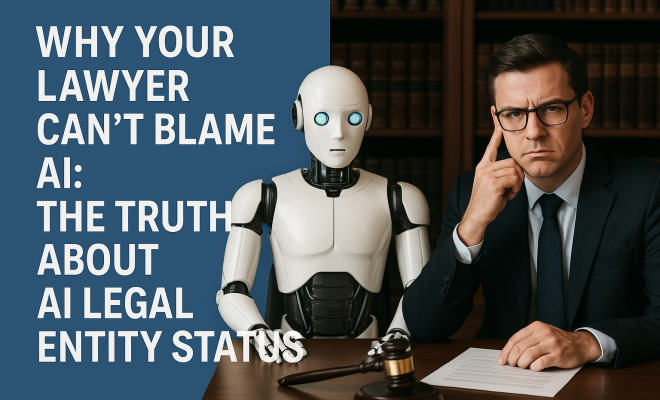
The legal world is buzzing, and not just with the usual courtroom drama. A recent declaration from the Law Society of England & Wales has sent ripples through the profession, confirming what many already suspected but few wanted to hear: AI is not a legal entity. This October 21, 2026, practice note isn’t just a technicality; it’s a foundational statement that reshapes how we view artificial intelligence in the hallowed halls of justice. It means your lawyer, despite all the advanced tools at their disposal, remains firmly accountable for their advice and actions. You can’t sue a chatbot, after all, and that clarity has profound implications for everyone, from clients to the legal tech industry itself.
This isn’t some dry academic debate. It’s a fiercely emotional one, especially when you consider the pervasive fear of job displacement. Seventy-six percent of legal teams are reportedly worried about AI taking over their roles, and with powerful tools like Microsoft Copilot for Legal now fully launched, those anxieties aren’t exactly unfounded. Yet, the Law Society’s stance draws a clear line in the sand: AI is a tool, not a colleague, and certainly not a replacement for human judgment or professional responsibility. Let’s unpack what this crucial distinction means for the future of law and the evolving relationship between humans and machines.
1. The Law Society’s Definitive Stance: AI is Not a Legal Entity
On October 21, 2026, the Law Society of England & Wales issued a practice note that cut through much of the speculative chatter surrounding artificial intelligence in the legal profession. Their message was unambiguous and stark: ‘AI is not a legal entity.’ This isn’t just semantics; it’s a fundamental assertion that underpins the entire framework of legal accountability. What does it truly mean? Simply put, AI cannot hold rights, incur obligations, or be held responsible in the way a human or a corporation can. It cannot enter into contracts, it cannot be sued for negligence, and it certainly cannot be disbarred.
This declaration serves as a vital anchor in a rapidly shifting technological landscape. It reaffirms the long-standing principles of legal practice, emphasizing that while AI can assist, it cannot substitute for human intellect, ethical judgment, or the ultimate burden of professional responsibility. For lawyers, this means the buck still stops with them. They can’t outsource their ethical duties or legal obligations to an algorithm, no matter how sophisticated. This clarity is crucial for maintaining public trust in the legal system and ensuring that clients always have a human point of contact who is ultimately accountable.
2. Professional Responsibility: Where the Buck Stops
Perhaps the most significant consequence of the ‘AI is not a legal entity’ ruling is its direct impact on professional responsibility. The Law Society explicitly stated that lawyers cannot transfer their professional responsibility to AI tools. This is a critical distinction. Imagine a scenario where a lawyer uses an AI-powered research tool that provides incorrect information, leading to a detrimental outcome for a client. Who is at fault? According to the Law Society, it’s unequivocally the human lawyer.
This guidance underlines that AI, even in its most advanced forms, remains a tool – an incredibly powerful one, yes, but a tool nonetheless. It’s akin to a lawyer using a particularly efficient filing system or an advanced word processor; while these tools facilitate their work, they don’t absorb the lawyer’s responsibility for the content they produce or the advice they give. This reinforces the idea that legal practice isn’t just about processing information; it’s about applying nuanced judgment, ethical considerations, and a deep understanding of human context, all of which remain firmly in the human domain. It forces lawyers to exercise due diligence not only in their legal work but also in their selection and oversight of AI tools.
3. AI’s Role: Assistant, Not Attorney
The Law Society’s note also made it clear that AI is not a substitute for junior lawyers. This point directly addresses the widespread anxieties about job displacement within the legal sector. While AI excels at mundane, repetitive tasks – think document review, contract analysis, or sifting through vast amounts of legal precedents – it lacks the capacity for critical thinking, strategic planning, client interaction, and the development of persuasive arguments that are core to a junior lawyer’s development.
So, where does AI fit in? It’s positioned as a powerful assistant, capable of augmenting human capabilities and streamlining workflows. It can free up junior lawyers from tedious tasks, allowing them to focus on more complex, value-added work that requires human intellect and creativity. This perspective encourages a symbiotic relationship where AI enhances efficiency and accuracy, but human professionals retain oversight, judgment, and client-facing roles. It shifts the narrative from AI replacing lawyers to AI empowering lawyers, enabling them to deliver services more effectively and perhaps even innovate new approaches to legal problem-solving.
4. The Job Displacement Debate: Facts vs. Fears
The discussion around AI in law is often charged with emotion, primarily fueled by fears of job displacement. A staggering 76% of legal teams reportedly worry about AI replacing them. It’s a natural concern, especially as AI tools become increasingly sophisticated and capable of performing tasks once thought exclusive to humans. When you see headlines about AI drafting contracts or conducting legal research in seconds, it’s easy to feel like your job is on the line.
However, the Law Society’s guidance, by distinguishing between AI as a tool and AI as a legal entity, offers a more nuanced perspective. While AI will undoubtedly automate certain aspects of legal work, it also creates new opportunities. Lawyers who can effectively leverage AI, understand its limitations, and focus on the uniquely human aspects of their profession – client counseling, ethical decision-making, creative problem-solving, and courtroom advocacy – are likely to thrive. The debate isn’t just about jobs lost, but about roles evolving and the skills required shifting. It’s a call for upskilling and adaptation, rather than outright panic. (See: overview of artificial intelligence.)
5. The Rise of Powerful AI Tools: Microsoft Copilot for Legal
The Law Society’s guidance comes at a critical juncture, coinciding with the full launch of powerful AI tools like Microsoft Copilot for Legal. This isn’t some niche software; it’s a major player entering the arena, promising to integrate AI capabilities directly into the everyday workflows of legal professionals. Imagine an AI assistant that can help draft legal documents, summarize lengthy case files, or even suggest relevant precedents based on your current task.
These tools are designed to significantly boost productivity and efficiency, automating many of the time-consuming tasks that previously consumed hours of a lawyer’s time. They represent a tangible shift in how legal work is performed, moving from manual processes to AI-augmented ones. However, the Law Society’s note serves as a crucial reminder that while these tools are incredibly sophisticated, they are still just that: tools. Their outputs still require human review, validation, and the ultimate stamp of approval from a legally responsible professional. The allure of speed and efficiency must be balanced with the imperative of accuracy and accountability. For more context, see AI Governance Careers.
6. Controversial AI Disclosure Laws: California’s “Overboard” Approach
Adding another layer of complexity to this evolving landscape are new, controversial AI disclosure laws emerging in places like California. These laws often mandate that attorneys disclose when they’ve used AI in their legal work, particularly in submissions to courts or in client communications. While the intent is to ensure transparency and accountability, some legal professionals are deeming these regulations ‘overboard.’
Why the pushback? AI is becoming so pervasively integrated into legal software and workflows that separating its use from human input can be incredibly difficult, if not impossible. From sophisticated legal research platforms that use AI algorithms to sort results, to document review tools that highlight relevant passages, AI is often working silently in the background. Mandating disclosure for every instance could become an administrative nightmare, potentially stifling innovation rather than fostering responsible adoption. It highlights the challenge regulators face in keeping pace with technology without inadvertently creating impractical burdens for professionals.
7. The Human-Versus-Machine Narrative in a High-Stakes Profession
The legal profession has always been seen as a bastion of human intellect, critical thinking, and nuanced judgment. It’s a high-stakes environment where errors can have profound consequences for individuals and businesses. This context makes the human-versus-machine narrative surrounding AI particularly potent. The idea that cold, calculating algorithms could replace the empathy, advocacy, and strategic brilliance of a human lawyer touches a nerve.
The Law Society’s declaration that AI is not an AI legal entity and cannot substitute for human lawyers effectively reinforces the irreplaceable value of human elements in legal practice. It underscores that while machines can process data, they cannot understand the emotional weight of a client’s situation, navigate complex ethical dilemmas with compassion, or adapt to the unpredictable dynamics of a courtroom. This narrative isn’t just about efficiency; it’s about the very essence of justice and what we believe constitutes a fair and equitable legal system.
8. Monetization Opportunities in Legal Tech and Services
Despite the concerns, the integration of AI into law also presents significant monetization opportunities, particularly in legal services and B2B SaaS. The demand for ‘best AI legal research tools,’ ‘AI contract review software comparison,’ and ‘cost of AI legal services’ is soaring. This indicates a clear market need for solutions that leverage AI to improve efficiency, reduce costs, and enhance the quality of legal work.
For legal tech companies, this is a golden age. There’s immense potential for developing specialized AI applications that cater to specific legal domains, offering everything from predictive analytics for litigation outcomes to automated compliance checks. Furthermore, law firms that effectively integrate AI can offer more competitive pricing, faster turnaround times, and higher-quality services, attracting new clients and solidifying their market position. The challenge, and the opportunity, lies in proving the value and reliability of these AI-powered offerings.
9. Upskilling for the AI Era: A New Imperative for Lawyers
The Law Society’s position, while clarifying AI’s limitations, also implicitly issues a call to action for legal professionals: upskill or be left behind. If AI is going to handle the mundane tasks, then lawyers need to focus on developing the skills that AI cannot replicate. This includes advanced critical thinking, ethical reasoning, emotional intelligence, client management, and strategic problem-solving. It also means understanding how to effectively use and oversee AI tools.
The market for online education and training programs specifically designed to upskill lawyers in AI literacy and legal tech is booming. Lawyers who embrace this shift, viewing AI as an augmentative force rather than a threat, will be the ones who thrive in this new era. It’s about becoming a ‘hybrid lawyer’ – one who combines deep legal expertise with a savvy understanding of technological capabilities. This proactive approach ensures that the human element remains central to the legal profession, even as technology continues to advance at a breakneck pace.
10. The Nuance of AI “Personhood” Debates: Beyond Legal Entity
While the Law Society’s stance firmly establishes AI is not a legal entity, the broader philosophical and legal debate around AI “personhood” continues to evolve globally. This isn’t just about accountability; it delves into questions of consciousness, rights, and societal roles. For example, in 2017, the European Parliament debated a resolution on civil law rules for robotics, suggesting the creation of a specific legal status for “electronic persons” in complex autonomous robots, to assign liability for damages they cause. While this idea faced significant pushback and hasn’t been widely adopted, it shows the differing views on how to legally classify advanced AI. (See: AI legal entity status news.)
The key distinction here is that “legal entity” primarily deals with the capacity to hold rights and obligations and be held accountable. “Personhood,” in a broader sense, often implies a recognition of a being’s inherent value, consciousness, or ability to experience. The Law Society’s focus is on the practical aspects of legal practice – who is responsible when things go wrong. However, the ongoing discussion about AI personhood, even if theoretical for now, highlights the deep ethical and societal questions that will continue to challenge legal systems worldwide as AI becomes more sophisticated and integrated into our lives. It’s a conversation that touches on everything from artistic creation by AI to moral responsibility in autonomous systems, all of which fall outside the current scope of the Law Society’s practical guidelines but are important for understanding the long-term trajectory of AI regulation.
11. Client Expectations and Trust in the AI Era
The Law Society’s clarity on AI’s non-legal entity status is also vital for managing client expectations and maintaining trust. When clients seek legal advice, they expect a human professional to be at the helm, someone they can communicate with, who understands their specific situation, and who ultimately bears responsibility. The idea that a machine could be solely responsible for their legal fate is unsettling for most. For more context, see AI Governance Courses.
This ruling reinforces the human-centric nature of legal services. It assures clients that while their lawyers might use cutting-edge tools to be more efficient, the core relationship remains one of human trust and professional duty. Imagine the ethical dilemma if a client believed an AI was providing legal advice, only to find out later there was no human accountability for errors. This clarification helps prevent such misunderstandings and ensures that the client-attorney privilege and the duty of care remain firmly anchored in human interaction. Law firms need to be transparent with clients about how AI is used, emphasizing that it’s always under human supervision and doesn’t diminish the lawyer’s responsibility.
12. The Evolving Landscape of Legal Education
The implications of AI for legal education are profound. Law schools and continuing professional development providers are grappling with how to prepare future lawyers for an AI-augmented legal world. Simply teaching traditional legal doctrines isn’t enough anymore. Students need to understand the capabilities and limitations of AI, how to ethically integrate these tools into their practice, and how to critically evaluate AI-generated outputs.
This means curricula are shifting to include topics like legal tech literacy, data ethics, algorithmic bias, and prompt engineering for legal AI tools. Universities are launching specialized programs and clinics focused on legal innovation and technology. The goal is to produce “T-shaped” lawyers: those with deep expertise in legal principles (the vertical bar of the ‘T’) and broad understanding of technology and interdisciplinary skills (the horizontal bar). This proactive approach in education is crucial to ensure the next generation of legal professionals can responsibly harness AI while upholding the core tenets of the profession.
13. Global Perspectives: How Other Jurisdictions Are Responding
While the Law Society of England & Wales has taken a definitive stance, it’s worth noting that responses to AI in the legal profession vary across different jurisdictions. Some countries are still in the early stages of formulating guidance, while others are experimenting with distinct approaches.
For example, some European Union initiatives, as mentioned earlier, have explored concepts like “electronic personhood” for advanced autonomous systems, even if they haven’t been widely implemented. In the United States, individual state bar associations are issuing their own advisory opinions on the ethical use of AI, often focusing on issues like confidentiality, competence, and supervision. For instance, New York and Florida have issued guidance requiring lawyers to verify AI-generated content. Meanwhile, countries like China are heavily investing in AI for judicial processes, with “smart courts” using AI to assist judges, though human oversight remains paramount. This global patchwork of responses underscores the complexity of regulating AI and highlights the need for international dialogue and potential harmonization in the long run, especially for cross-border legal work.
14. Mitigating AI Risks: Data Security and Algorithmic Bias
The Law Society’s focus on human accountability also indirectly highlights critical risks associated with AI use: data security and algorithmic bias. When lawyers use AI tools, they are often inputting sensitive client information. Ensuring the security and confidentiality of this data becomes paramount. Law firms must vet AI vendors thoroughly, understanding their data handling practices, encryption protocols, and compliance with data protection regulations like GDPR.
Equally important is the risk of algorithmic bias. AI systems are trained on vast datasets, and if these datasets contain historical biases (e.g., in legal precedents or demographic data), the AI’s outputs can perpetuate or even amplify those biases. This could lead to discriminatory outcomes in areas like sentencing recommendations, bail decisions, or even contract analysis. A human lawyer’s role is to critically review AI outputs, recognize potential biases, and apply ethical judgment to ensure fair and just outcomes. The Law Society’s stance emphasizes that the human lawyer remains the ultimate safeguard against these inherent AI risks.
Frequently Asked Questions (FAQ)
Q1: What does “AI is not a legal entity” actually mean?
It means that artificial intelligence, regardless of its sophistication, cannot be recognized by law as a person or corporation. It cannot hold rights, own property, enter into contracts, or be held legally responsible for its actions or errors. The accountability for any actions or advice generated by AI always falls back on the human who deployed or oversaw it. For more context, see AI Governance Role Explosion.
Q2: Can I sue an AI if it gives me bad legal advice?
No, you cannot sue an AI. Since AI is not a legal entity, it cannot be held liable. If you receive bad legal advice that originated from an AI tool, the human lawyer or legal professional who used and approved that AI-generated advice would be the party held responsible.
Q3: Does this mean AI won’t be used in legal practice at all?
Absolutely not. It means AI will be used as a powerful tool to assist human lawyers, not replace them. AI can significantly enhance efficiency in tasks like legal research, document review, contract analysis, and data organization. However, the final judgment, ethical considerations, and ultimate responsibility will always rest with the human lawyer.
Q4: Will AI take my lawyer’s job?
The consensus, especially reinforced by the Law Society’s guidance, is that AI will transform legal jobs, not eliminate them wholesale. AI will automate repetitive tasks, freeing lawyers to focus on higher-value work requiring uniquely human skills like strategic thinking, client counseling, and ethical decision-making. Lawyers who adapt and learn to leverage AI effectively are more likely to thrive.
Q5: What are the ethical implications of using AI in law, given it’s not a legal entity?
The ethical implications are significant. Lawyers must ensure competence in using AI, maintain client confidentiality (especially when inputting sensitive data into AI tools), avoid algorithmic bias, and always exercise independent professional judgment. The fact that AI isn’t accountable means the human lawyer bears the full ethical burden for its use and outputs.
Q6: How does this ruling affect legal tech companies developing AI products?
For legal tech companies, this ruling clarifies the market: their products are tools to augment human capabilities, not replace human professionals. They need to design AI with robust safeguards, transparency, and auditability in mind, recognizing that their users (lawyers) are ultimately responsible for the AI’s outputs. This also emphasizes the need for strong data security and bias mitigation in their AI models.
Q7: Are there any ongoing debates about AI becoming a legal entity in the future?
Yes, there are ongoing philosophical and theoretical debates, particularly around advanced AI and concepts like “electronic personhood,” especially in academic and some policy circles (like past discussions in the European Parliament). However, for practical legal purposes and current technological capabilities, most legal bodies, including the Law Society, maintain that AI is not a legal entity and is unlikely to become one in the near future due to the complexities of assigning rights, responsibilities, and consciousness to machines.
The Law Society’s definitive statement that ‘AI is not a legal entity’ provides much-needed clarity in a world grappling with the rapid evolution of artificial intelligence. It firmly places accountability where it has always belonged: with the human legal professional. While AI will undoubtedly transform how legal services are delivered, it won’t erase the fundamental need for human judgment, ethics, and responsibility. The future of law isn’t about AI replacing lawyers, but about lawyers intelligently integrating AI to deliver better, more efficient, and ultimately, more just outcomes for their clients.
Trending Now
- read the full story
- our breakdown of why you’re losing money: the surprising truth about financial literacy education in america
- our breakdown of why millions are finally using ai to master high-demand skills
- this guide on 7 cybersecurity bootcamps that will catapult your career in 2024
Frequently Asked Questions
Can AI be considered a legal entity?
No, according to the Law Society of England & Wales, AI is not a legal entity. This means AI cannot hold rights, incur obligations, or be held accountable like a human or corporation, fundamentally reshaping how AI is viewed in the legal profession.
What did the Law Society declare about AI?
On October 21, 2026, the Law Society of England & Wales declared that AI is not a legal entity. This statement clarifies that AI cannot be held responsible for legal advice or actions, reaffirming that lawyers remain accountable for their decisions.
How does AI impact the legal profession?
AI serves as a tool in the legal profession but does not replace human judgment. While there are concerns about job displacement among legal teams, the Law Society emphasizes that AI cannot take on the responsibilities that human lawyers hold.
Why can't you sue an AI chatbot?
You cannot sue an AI chatbot because it is not recognized as a legal entity. As per the Law Society's guidance, AI lacks the capacity to hold rights or obligations, meaning accountability lies solely with the human professionals who utilize these tools.
What are the implications of AI not being a legal entity?
The implications are significant: it clarifies that lawyers are fully accountable for their advice and actions, regardless of the AI tools they use. This distinction is crucial for clients and the legal tech industry, ensuring that human judgment remains central in legal practices.
What's your take on this? Share your thoughts in the comments below — we read every one.