The Tech Edvocate

Top Menu

  • Advertisement
  • Apps
  • Home Page
  • Home Page Five (No Sidebar)
  • Home Page Four
  • Home Page Three
  • Home Page Two
  • Home Tech2
  • Icons [No Sidebar]
  • Left Sidbear Page
  • Lynch Educational Consulting
  • My Account
  • My Speaking Page
  • Newsletter Sign Up Confirmation
  • Newsletter Unsubscription
  • Our Brands
  • Page Example
  • Privacy Policy
  • Protected Content
  • Register
  • Request a Product Review
  • Shop
  • Shortcodes Examples
  • Signup
  • Start Here
    • Governance
    • Careers
    • Contact Us
  • Terms and Conditions
  • The Edvocate
  • The Tech Edvocate Product Guide
  • Topics
  • Write For Us
  • Advertise

Main Menu

  • Start Here
    • Our Brands
    • Governance
      • Lynch Educational Consulting, LLC.
      • Dr. Lynch’s Personal Website
      • Careers
    • Write For Us
    • The Tech Edvocate Product Guide
    • Contact Us
    • Books
    • Edupedia
    • Post a Job
    • The Edvocate Podcast
    • Terms and Conditions
    • Privacy Policy
  • Topics
    • Assistive Technology
    • Child Development Tech
    • Early Childhood & K-12 EdTech
    • EdTech Futures
    • EdTech News
    • EdTech Policy & Reform
    • EdTech Startups & Businesses
    • Higher Education EdTech
    • Online Learning & eLearning
    • Parent & Family Tech
    • Personalized Learning
    • Product Reviews
  • Advertise
  • Tech Edvocate Awards
  • The Edvocate
  • Pedagogue
  • School Ratings

logo

The Tech Edvocate

  • Start Here
    • Our Brands
    • Governance
      • Lynch Educational Consulting, LLC.
      • Dr. Lynch’s Personal Website
        • My Speaking Page
      • Careers
    • Write For Us
    • The Tech Edvocate Product Guide
    • Contact Us
    • Books
    • Edupedia
    • Post a Job
    • The Edvocate Podcast
    • Terms and Conditions
    • Privacy Policy
  • Topics
    • Assistive Technology
    • Child Development Tech
    • Early Childhood & K-12 EdTech
    • EdTech Futures
    • EdTech News
    • EdTech Policy & Reform
    • EdTech Startups & Businesses
    • Higher Education EdTech
    • Online Learning & eLearning
    • Parent & Family Tech
    • Personalized Learning
    • Product Reviews
  • Advertise
  • Tech Edvocate Awards
  • The Edvocate
  • Pedagogue
  • School Ratings
  • A Visitor’s Guide to Fresno (CA), United States

  • A Visitors Guide to New Orleans (LA), United States

  • A Visitors Guide to Sacramento (CA), United States

  • A Visitors Guide to Lyon, France

  • JisuLife Ultra2 Portable Fan: A Powerful Multi-Function Cooling Solution

  • A Visitors Guide to Viña del Mar, Chile

  • A Visitors Guide to Århus, Denmark

  • A Visitors Guide to Bakersfield (CA), United States

  • A Visitors Guide to Aurora (CO), United States

  • A Visitor’s Guide to Toledo (OH), United States

Digital & Mobile Technology
Home›Digital & Mobile Technology›Why NTSC and PAL Still Matter With HDTV

Why NTSC and PAL Still Matter With HDTV
By Matthew Lynch
June 4, 2023
0
Spread the love

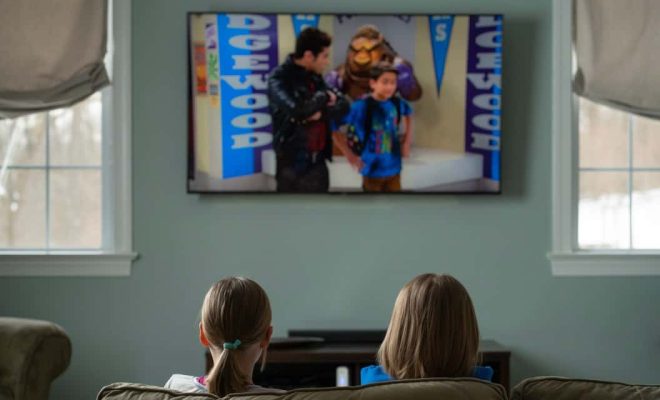
NTSC (National Television System Committee) and PAL (Phase Alternating Line) are two analog television broadcasting systems that have been in use for decades. Although they were developed in the 20th century and primarily used for standard definition television (SDTV), they continue to hold significant importance in today’s High Definition Television (HDTV) world. This article will delve into why and how they still matter with HDTV.

Firstly, it is essential to understand the basics of NTSC and PAL. NTSC was primarily used in America, Canada, and parts of South America, while PAL was widely used in Europe, Asia, Australia, Middle East, and parts of Africa. Although both of them use different techniques for encoding color, they both use 25 frames per second as their frame rate.

Now, let’s talk about HDTV. HDTV is a digital television broadcasting system that displays video content in high resolution (720p, 1080i, or 1080p). It uses a different technique for encoding color known as YUV or YCbCr. While HDTV is a digital system, it is still compatible with analog systems like NTSC and PAL. Almost all HDTVs come equipped with a built-in ATSC (Advanced Television Systems Committee) tuner for digital television broadcasts and NTSC/PAL tuners for analog broadcasts.

One of the main reasons why NTSC and PAL still matter in the HDTV world is because of backward compatibility. Many older TV shows, movies, and video games are recorded in the NTSC or PAL format. While some of them have been remastered and digitized into HDTV, many of them still remain in their original format. Therefore, HDTVs equipped with NTSC/PAL tuners can still play these older analog recordings without any issues.

Another reason why NTSC and PAL still matter is for international use. While HDTV has provided a unified digital standard for broadcasting, there is still a mixture of standards worldwide. PAL continues to be the prevalent standard in Europe, Asia, and Australia, while NTSC is still used in parts of America, Canada, and some countries in South America. Therefore, HDTVs equipped with both NTSC and PAL tuners can be used worldwide without any compatibility issues.

Lastly, there is a significant cost difference between HDTVs with and without analog tuners. HDTVs equipped with NTSC and PAL tuners are generally less expensive than HDTVs without them. Therefore, for people who don’t want to spend a lot of money on an HDTV, buying one with NTSC and PAL tuners is a practical option.

In conclusion, while NTSC and PAL were developed for analog systems, they still have their significance in the HDTV world. Backward compatibility, international use, and cost-effectiveness are some of the reasons why HDTVs equipped with NTSC and PAL tuners continue to sell well in the market. Therefore, if you’re looking to purchase an HDTV, it is worthwhile to consider one with both digital and analog tuners.

Previous Article

How Base64 Encoding Works

Next Article

The Difference Between Local and Microsoft Accounts ...

Matthew Lynch

Related articles More from author

  • Digital & Mobile Technology

    Escape Awkward Situations With These Fake Call Apps for Android

    June 23, 2023
    By Matthew Lynch
  • Digital & Mobile Technology

    How to Optimize Windows 10 for Gaming and Performance

    August 4, 2023
    By Matthew Lynch
  • Digital & Mobile Technology

    USB Power Delivery Explained

    April 14, 2023
    By Matthew Lynch
  • Digital & Mobile Technology

    What Is DDR4 Memory?

    June 8, 2023
    By Matthew Lynch
  • Digital & Mobile Technology

    How to Install macOS From USB

    August 3, 2023
    By Matthew Lynch
  • Digital & Mobile Technology

    How to Update AMD Graphics Drivers in Windows

    May 30, 2023
    By Matthew Lynch

Search

Login & Registration

  • Register
  • Log in
  • Entries feed
  • Comments feed
  • WordPress.org

Newsletter

Signup for The Tech Edvocate Newsletter and have the latest in EdTech news and opinion delivered to your email address!

About Us

Since technology is not going anywhere and does more good than harm, adapting is the best course of action. That is where The Tech Edvocate comes in. We plan to cover the PreK-12 and Higher Education EdTech sectors and provide our readers with the latest news and opinion on the subject. From time to time, I will invite other voices to weigh in on important issues in EdTech. We hope to provide a well-rounded, multi-faceted look at the past, present, the future of EdTech in the US and internationally.

We started this journey back in June 2016, and we plan to continue it for many more years to come. I hope that you will join us in this discussion of the past, present and future of EdTech and lend your own insight to the issues that are discussed.

Newsletter

Signup for The Tech Edvocate Newsletter and have the latest in EdTech news and opinion delivered to your email address!

Contact Us

The Tech Edvocate
910 Goddin Street
Richmond, VA 23231
(601) 630-5238
[email protected]

Copyright © 2025 Matthew Lynch. All rights reserved.