The Tech Edvocate

Top Menu

  • Advertisement
  • Apps
  • Home Page
  • Home Page Five (No Sidebar)
  • Home Page Four
  • Home Page Three
  • Home Page Two
  • Home Tech2
  • Icons [No Sidebar]
  • Left Sidbear Page
  • Lynch Educational Consulting
  • My Account
  • My Speaking Page
  • Newsletter Sign Up Confirmation
  • Newsletter Unsubscription
  • Our Brands
  • Page Example
  • Privacy Policy
  • Protected Content
  • Register
  • Request a Product Review
  • Shop
  • Shortcodes Examples
  • Signup
  • Start Here
    • Governance
    • Careers
    • Contact Us
  • Terms and Conditions
  • The Edvocate
  • The Tech Edvocate Product Guide
  • Topics
  • Write For Us
  • Advertise

Main Menu

  • Start Here
    • Our Brands
    • Governance
      • Lynch Educational Consulting, LLC.
      • Dr. Lynch’s Personal Website
      • Careers
    • Write For Us
    • The Tech Edvocate Product Guide
    • Contact Us
    • Books
    • Edupedia
    • Post a Job
    • The Edvocate Podcast
    • Terms and Conditions
    • Privacy Policy
  • Topics
    • Assistive Technology
    • Child Development Tech
    • Early Childhood & K-12 EdTech
    • EdTech Futures
    • EdTech News
    • EdTech Policy & Reform
    • EdTech Startups & Businesses
    • Higher Education EdTech
    • Online Learning & eLearning
    • Parent & Family Tech
    • Personalized Learning
    • Product Reviews
  • Advertise
  • Tech Edvocate Awards
  • The Edvocate
  • Pedagogue
  • School Ratings

logo

The Tech Edvocate

  • Start Here
    • Our Brands
    • Governance
      • Lynch Educational Consulting, LLC.
      • Dr. Lynch’s Personal Website
        • My Speaking Page
      • Careers
    • Write For Us
    • The Tech Edvocate Product Guide
    • Contact Us
    • Books
    • Edupedia
    • Post a Job
    • The Edvocate Podcast
    • Terms and Conditions
    • Privacy Policy
  • Topics
    • Assistive Technology
    • Child Development Tech
    • Early Childhood & K-12 EdTech
    • EdTech Futures
    • EdTech News
    • EdTech Policy & Reform
    • EdTech Startups & Businesses
    • Higher Education EdTech
    • Online Learning & eLearning
    • Parent & Family Tech
    • Personalized Learning
    • Product Reviews
  • Advertise
  • Tech Edvocate Awards
  • The Edvocate
  • Pedagogue
  • School Ratings
  • Why Millions Are Ditching Degrees for These Microcredential Programs

  • The Astonishing Truth: Why Microcredentials Could Be Your Career’s Secret Weapon

  • Why Employers Are Paying 15% More for This One Credential – Not Your Degree

  • 7 Critical Steps to Safeguard Students When Implementing AI in Your Classroom

  • The Astonishing Truth: Your School’s Data Security Might Be a Time Bomb – 7 LMS Platforms That Are Actually Safe for K-12

  • The Troubling Truth: AI in Education Could Be Compromising Your Child’s Privacy

  • Revealed: The Brutal Truth About IronCircle vs Other Cybersecurity Boot Camps

  • This One Thing About University Boot Camps Is Infuriating — Don’t Fall For It

  • Revealed: The Brutal Truth About University Boot Camp Debt

  • Revealed: The 7 Tools EdTech Pros Are Using to Dominate Remote Work in 2026

Assistive Technology
Home›Assistive Technology›Which Raspberry Pi Model Is Best for Your Next Project?

Which Raspberry Pi Model Is Best for Your Next Project?
By Matthew Lynch
June 5, 2023
0
Spread the love

Raspberry Pi has become a household name in the world of single-board computers. The versatile little computer can be used for a wide range of projects, ranging from basic desktop computing to robotics and IoT applications. With the introduction of several models of Raspberry Pi, choosing the best one for your next project can be challenging. In this article, we will discuss the different Raspberry Pi models and their respective strengths and weaknesses to help you decide which one to use for your next project.

Raspberry Pi Zero

The Raspberry Pi Zero is the smallest and cheapest Raspberry Pi model, which makes it an excellent option for projects that require a minimal footprint. It is powered by a Broadcom BCM2835 processor, which runs at a clock speed of 1GHz. The Zero comes with 512MB of RAM, a mini HDMI port, a micro USB port for power, and a micro-SD card slot. However, it does not have Ethernet or Wi-Fi connectivity, which can be a limitation for many projects. The Zero is best suited for embedded projects, IoT applications, and portable media players.

Raspberry Pi 1

The Raspberry Pi 1 was the first model of Raspberry Pi, which was introduced in 2012. It is powered by a Broadcom BCM2835 processor, which runs at a clock speed of 700MHz. The model comes with 512MB of RAM, two USB 2.0 ports, a 10/100 Ethernet port, and an RCA composite video output. However, the Model 1 does not have built-in Wi-Fi or Bluetooth connectivity, and its processing power is relatively modest. The Raspberry Pi 1 is best suited for basic computing, retro gaming, and media centers.

Raspberry Pi 2

The Raspberry Pi 2 was introduced in 2015 and represented a significant upgrade over the Model 1. It is powered by a quad-core Broadcom BCM2836 processor, which runs at a clock speed of 900MHz. The Model 2 comes with 1GB of RAM, four USB 2.0 ports, a 10/100 Ethernet port, and a full-sized HDMI port. The Raspberry Pi 2 also has built-in Wi-Fi and Bluetooth connectivity, which makes it an excellent option for IoT projects. The Raspberry Pi 2 is best suited for basic computing, retro gaming, and media centers.

Raspberry Pi 3

The Raspberry Pi 3 was released in 2016 and is similar to the Raspberry Pi 2 in terms of processing power and memory capacity. However, it comes with built-in Wi-Fi and Bluetooth connectivity, which makes it an excellent option for IoT projects. The Raspberry Pi 3 is powered by a quad-core Broadcom BCM2837 processor, which runs at a clock speed of 1.2 GHz. It comes with 1GB of RAM, four USB 2.0 ports, a 10/100 Ethernet port, and a full-sized HDMI port. The Raspberry Pi 3 is best suited for basic computing, gaming, media centers, and IoT projects.

Raspberry Pi 4

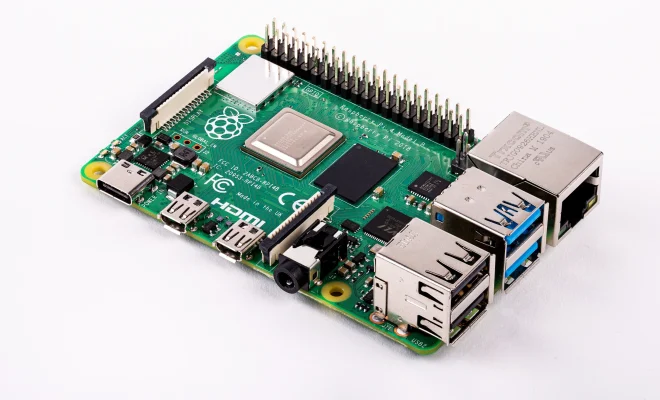
The Raspberry Pi 4 is the latest model of Raspberry Pi and is the most powerful in the lineup. It is powered by a quad-core Cortex-A72 CPU, which runs at a clock speed of 1.5GHz. The Raspberry Pi 4 comes with 1GB, 2GB, or 4GB of RAM, depending on the version. It also has two USB 3.0 ports, two USB 2.0 ports, Gigabit Ethernet, and dual-band 802.11ac wireless. The Raspberry Pi 4 has the processing power to handle more demanding tasks such as 4K video playback and advanced gaming. It is best suited for projects that require high processing power like desktop computing, gaming, and media centers.

Conclusion

Choosing the best Raspberry Pi model for your next project depends on your specific requirements. If you need a small and inexpensive computer for embedded projects or media players, the Raspberry Pi Zero may be the best choice. For basic computing, gaming, and media centers, the Raspberry Pi 2 or 3 could be a better fit. For more demanding applications such as video playback and gaming, the Raspberry Pi 4 would be the best option. Whatever your project requirements, there is a Raspberry Pi model that will suit your needs.

Previous Article

How to Add a Vertical Tab Sidebar ...

Next Article

How to Set Up and Configure an ...

Matthew Lynch

Related articles More from author

  • Assistive Technology

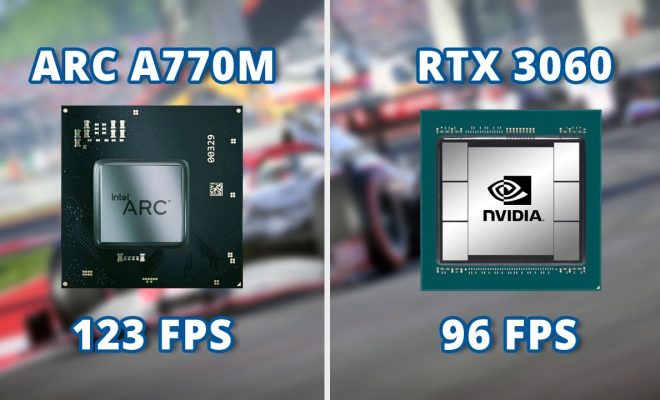
    Nvidia RTX 3060 vs. Intel Arc A770: Should You Upgrade to Intel?

    June 5, 2023
    By Matthew Lynch
  • Assistive Technology

    Ways to Get More TikTok Fans and Followers

    June 9, 2023
    By Matthew Lynch
  • Assistive Technology

    Yoke No More: Why Tesla Is Now Offering a Standard Steering Wheel on the Model S and Model X

    June 5, 2023
    By Matthew Lynch
  • Assistive Technology

    How to Freeze, Unfreeze, and Lock Rows, Columns, and Cells in Microsoft Excel

    June 14, 2023
    By Matthew Lynch
  • Assistive Technology

    iPhone Continuity Camera Not Working on Your Mac? Ways to Fix It

    June 23, 2023
    By Matthew Lynch
  • Assistive Technology

    How to Create a Custom Header in Microsoft Word

    June 15, 2023
    By Matthew Lynch

Search

Login & Registration

  • Log in
  • Entries feed
  • Comments feed
  • WordPress.org

Newsletter

Signup for The Tech Edvocate Newsletter and have the latest in EdTech news and opinion delivered to your email address!

About Us

Since technology is not going anywhere and does more good than harm, adapting is the best course of action. That is where The Tech Edvocate comes in. We plan to cover the PreK-12 and Higher Education EdTech sectors and provide our readers with the latest news and opinion on the subject. From time to time, I will invite other voices to weigh in on important issues in EdTech. We hope to provide a well-rounded, multi-faceted look at the past, present, the future of EdTech in the US and internationally.

We started this journey back in June 2016, and we plan to continue it for many more years to come. I hope that you will join us in this discussion of the past, present and future of EdTech and lend your own insight to the issues that are discussed.

Newsletter

Signup for The Tech Edvocate Newsletter and have the latest in EdTech news and opinion delivered to your email address!

Contact Us

The Tech Edvocate
910 Goddin Street
Richmond, VA 23231
(601) 630-5238
[email protected]

Copyright © 2026 Matthew Lynch. All rights reserved.