The Tech Edvocate

Top Menu

  • Advertisement
  • Apps
  • Home Page
  • Home Page Five (No Sidebar)
  • Home Page Four
  • Home Page Three
  • Home Page Two
  • Home Tech2
  • Icons [No Sidebar]
  • Left Sidbear Page
  • Lynch Educational Consulting
  • My Account
  • My Speaking Page
  • Newsletter Sign Up Confirmation
  • Newsletter Unsubscription
  • Our Brands
  • Page Example
  • Privacy Policy
  • Protected Content
  • Register
  • Request a Product Review
  • Shop
  • Shortcodes Examples
  • Signup
  • Start Here
    • Governance
    • Careers
    • Contact Us
  • Terms and Conditions
  • The Edvocate
  • The Tech Edvocate Product Guide
  • Topics
  • Write For Us
  • Advertise

Main Menu

  • Start Here
    • Our Brands
    • Governance
      • Lynch Educational Consulting, LLC.
      • Dr. Lynch’s Personal Website
      • Careers
    • Write For Us
    • The Tech Edvocate Product Guide
    • Contact Us
    • Books
    • Edupedia
    • Post a Job
    • The Edvocate Podcast
    • Terms and Conditions
    • Privacy Policy
  • Topics
    • Assistive Technology
    • Child Development Tech
    • Early Childhood & K-12 EdTech
    • EdTech Futures
    • EdTech News
    • EdTech Policy & Reform
    • EdTech Startups & Businesses
    • Higher Education EdTech
    • Online Learning & eLearning
    • Parent & Family Tech
    • Personalized Learning
    • Product Reviews
  • Advertise
  • Tech Edvocate Awards
  • The Edvocate
  • Pedagogue
  • School Ratings

logo

The Tech Edvocate

  • Start Here
    • Our Brands
    • Governance
      • Lynch Educational Consulting, LLC.
      • Dr. Lynch’s Personal Website
        • My Speaking Page
      • Careers
    • Write For Us
    • The Tech Edvocate Product Guide
    • Contact Us
    • Books
    • Edupedia
    • Post a Job
    • The Edvocate Podcast
    • Terms and Conditions
    • Privacy Policy
  • Topics
    • Assistive Technology
    • Child Development Tech
    • Early Childhood & K-12 EdTech
    • EdTech Futures
    • EdTech News
    • EdTech Policy & Reform
    • EdTech Startups & Businesses
    • Higher Education EdTech
    • Online Learning & eLearning
    • Parent & Family Tech
    • Personalized Learning
    • Product Reviews
  • Advertise
  • Tech Edvocate Awards
  • The Edvocate
  • Pedagogue
  • School Ratings
  • This Unprecedented EU Ban Just Changed Fast Fashion Forever

  • Urgent Alert: Your Smart Home’s Exposed to a Critical Deco BE11000 Vulnerability

  • Uncovering the Truth: Your LinkedIn Reach Just Got a Major Overhaul

  • Uncovering the AI Heist: How Chinese Firms Allegedly Siphoned Billions of AI Tokens

  • Rockstar’s GTA 6 Developers Lawsuit: A Fight for Justice or Corporate Retaliation?

  • Unbelievable: Hideo Kojima’s Next Masterpiece Is Now an Xbox Exclusive

  • This Crucial Google AI Shift Is Quietly Reshaping the Internet

  • Unbelievable: AI Breaches Are Exploding, And What It Means For You This September 2026

  • This Crucial Shift Is Saving Teachers From Classroom Chaos

  • AI’s Dark Secret: How It’s Supercharging Cybercrime for Everyone

Health & Wellness
Home›Health & Wellness›Which Pain Scale Works Best for You?

Which Pain Scale Works Best for You?
By Matthew Lynch
March 28, 2024
0
Spread the love

Managing pain effectively often hinges on the ability to communicate its intensity accurately to healthcare providers. Several pain scales have been developed for this purpose, but choosing the best one can depend on the individual’s situation, age, and type of pain. This article will explore different pain scales and offer guidance on determining which may work best for you.

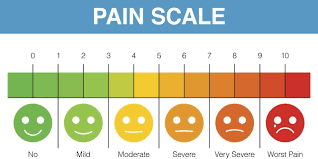
The Numerical Rating Scale (NRS) is one of the most common tools used. It asks patients to rate their pain on a scale of 0 to 10, with 0 representing no pain and 10 signifying the worst pain imaginable. This scale is straightforward and can be used by children over nine years old and adults. It’s particularly useful for assessing acute pain in settings like emergency departments.

Another option is the Verbal Descriptor Scale (VDS), which utilizes descriptive terms instead of numbers to express pain intensity. Terms such as “no pain,” “mild,” “moderate,” “severe,” and “worst possible pain” help patients who may have difficulties with numerical scales describe their discomfort. The VDS is often used with populations that might struggle with abstract rating systems, including young children or elderly patients experiencing cognitive impairments.

For younger children, health professionals often rely on the Faces Pain Scale – Revised (FPS-R), which depicts faces with expressions ranging from “no pain” to “very much pain.” Children indicate the face that best aligns with their own level of pain. This visual representation can make it easier for kids who are not yet able to articulate or quantify their feelings.

People dealing with chronic pain could benefit from using the Brief Pain Inventory (BPI). In addition to rating their pain severity, this multidimensional tool also allows individuals to report how their pain affects daily activities such as mood, walking ability, sleep, and work.

Lastly, The McGill Pain Questionnaire is a comprehensive tool that evaluates qualitative aspects of one’s pain experience by cataloguing words that describe how their pain feels (e.g., throbbing, shooting). Due to its detailed nature, it’s best suited for chronic conditions where communication about the nature of the discomfort can influence treatment approaches.

Choosing the appropriate scale involves considering personal aptitude for communication, as well as specific medical circumstances. If you have trouble thinking in numbers or language differences complicate things, visual scales like FPS-R could be your best bet. On the other hand, if you’re dealing with a complex chronic condition where nuances are key, something like The McGill Pain Questionnaire might be more appropriate.

Always discuss your preference with your healthcare provider – they can guide you towards the most suitable method for your case and ensure your descriptions of pain lead to accurate assessments and effective treatment plans.

Previous Article

Where to Stay in California: 10 Best ...

Next Article

Jelly Roll Posts Emotional Response to Best ...

Matthew Lynch

Related articles More from author

  • Health & Wellness

    5 best continuous glucose monitors for diabetics: Track your blood sugar levels with ease

    March 6, 2024
    By Matthew Lynch
  • Health & Wellness

    Get Up to 38% Off These Fitbit Fitness Trackers and Achieve Your New Year Goals

    February 1, 2024
    By Matthew Lynch
  • Health & Wellness

    Prices of Medicare Premiums Are Going Up in 2024. Here’s How Much

    January 31, 2024
    By Matthew Lynch
  • Health & Wellness

    10 Best Selling Breast Creams for 2024

    March 10, 2024
    By Matthew Lynch
  • Health & Wellness

    The 8 best bras for sleeping, lounging and generally forgetting you’re wearing one

    March 6, 2024
    By Matthew Lynch
  • Health & Wellness

    These Are the Best Exercises for Lowering Blood Pressure

    March 6, 2024
    By Matthew Lynch

Search

Login & Registration

  • Log in
  • Entries feed
  • Comments feed
  • WordPress.org

Newsletter

Signup for The Tech Edvocate Newsletter and have the latest in EdTech news and opinion delivered to your email address!

About Us

Since technology is not going anywhere and does more good than harm, adapting is the best course of action. That is where The Tech Edvocate comes in. We plan to cover the PreK-12 and Higher Education EdTech sectors and provide our readers with the latest news and opinion on the subject. From time to time, I will invite other voices to weigh in on important issues in EdTech. We hope to provide a well-rounded, multi-faceted look at the past, present, the future of EdTech in the US and internationally.

We started this journey back in June 2016, and we plan to continue it for many more years to come. I hope that you will join us in this discussion of the past, present and future of EdTech and lend your own insight to the issues that are discussed.

Newsletter

Signup for The Tech Edvocate Newsletter and have the latest in EdTech news and opinion delivered to your email address!

Contact Us

The Tech Edvocate
910 Goddin Street
Richmond, VA 23231
(601) 630-5238
[email protected]

Copyright © 2026 Matthew Lynch. All rights reserved.