The Tech Edvocate

Top Menu

  • Advertisement
  • Apps
  • Home Page
  • Home Page Five (No Sidebar)
  • Home Page Four
  • Home Page Three
  • Home Page Two
  • Home Tech2
  • Icons [No Sidebar]
  • Left Sidbear Page
  • Lynch Educational Consulting
  • My Account
  • My Speaking Page
  • Newsletter Sign Up Confirmation
  • Newsletter Unsubscription
  • Our Brands
  • Page Example
  • Privacy Policy
  • Protected Content
  • Register
  • Request a Product Review
  • Shop
  • Shortcodes Examples
  • Signup
  • Start Here
    • Governance
    • Careers
    • Contact Us
  • Terms and Conditions
  • The Edvocate
  • The Tech Edvocate Product Guide
  • Topics
  • Write For Us
  • Advertise

Main Menu

  • Start Here
    • Our Brands
    • Governance
      • Lynch Educational Consulting, LLC.
      • Dr. Lynch’s Personal Website
      • Careers
    • Write For Us
    • The Tech Edvocate Product Guide
    • Contact Us
    • Books
    • Edupedia
    • Post a Job
    • The Edvocate Podcast
    • Terms and Conditions
    • Privacy Policy
  • Topics
    • Assistive Technology
    • Child Development Tech
    • Early Childhood & K-12 EdTech
    • EdTech Futures
    • EdTech News
    • EdTech Policy & Reform
    • EdTech Startups & Businesses
    • Higher Education EdTech
    • Online Learning & eLearning
    • Parent & Family Tech
    • Personalized Learning
    • Product Reviews
  • Advertise
  • Tech Edvocate Awards
  • The Edvocate
  • Pedagogue
  • School Ratings

logo

The Tech Edvocate

  • Start Here
    • Our Brands
    • Governance
      • Lynch Educational Consulting, LLC.
      • Dr. Lynch’s Personal Website
        • My Speaking Page
      • Careers
    • Write For Us
    • The Tech Edvocate Product Guide
    • Contact Us
    • Books
    • Edupedia
    • Post a Job
    • The Edvocate Podcast
    • Terms and Conditions
    • Privacy Policy
  • Topics
    • Assistive Technology
    • Child Development Tech
    • Early Childhood & K-12 EdTech
    • EdTech Futures
    • EdTech News
    • EdTech Policy & Reform
    • EdTech Startups & Businesses
    • Higher Education EdTech
    • Online Learning & eLearning
    • Parent & Family Tech
    • Personalized Learning
    • Product Reviews
  • Advertise
  • Tech Edvocate Awards
  • The Edvocate
  • Pedagogue
  • School Ratings
  • The Reckless Ben Controversy: An Outrageous Fight for Justice

  • Outrageous: The Sydney Sweeney Ad Controversy You Didn’t See Coming — And Why It’s Working

  • The AI CRM War: Why Salesforce Just Made a $2 Billion Bid for a Startup

  • OpenAI’s Navier-Stokes ‘Solution’ Ignites Firestorm: Did They Steal It?

  • Blizzard’s Boldest Bet: Why a StarCraft Shooter in 2030 Could Redefine Gaming

  • Volatile: Why Top AI Bosses Just Triggered a Massive AI Stocks Decline

  • ‘Godfather of AI’ backs Anthropic chief’s call to slow down development

  • Why Millions Are Flocking to Trade Schools as AI Reshapes the Job Market

  • Unmasking the Bizarre ‘Cat in the Hat’ Trend: Why Schools Are Sounding the Alarm

  • Florida DMV Hacked: 200,000 Driver Records Exposed in Stunning Breach

Digital & Mobile Technology
Home›Digital & Mobile Technology›What Is the Screen Door Effect?

What Is the Screen Door Effect?
By Matthew Lynch
June 10, 2023
0
Spread the love

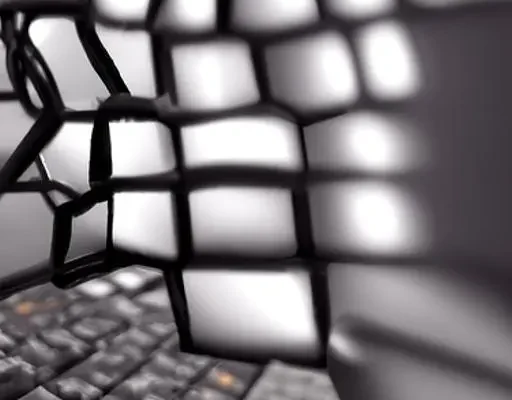
The screen door effect is a phenomenon that occurs when you can see the gaps between the pixels on a screen or display. Usually, this effect is seen on displays that use a low-resolution grid, such as Virtual Reality (VR) headsets, or older-generation flat-screen TVs.

So why is it called the screen door effect? Well, imagine looking through the mesh of a screen door on a stormy day. The same concept applies to the gaps between the pixels on a screen. The effect creates a grid or pattern that looks like a screen door.

In immersive experiences like VR, the screen door effect can be distracting and can take away from the immersive experience. It can also degrade the overall visual quality and hinder the user’s ability to see fine details or read small text on the screen.

The screen door effect is more common in older displays that use a lower resolution, but it can still be noticeable at higher resolutions. This is because even at higher resolutions, the displays still use smaller pixels, which can create a similar pattern.

There have been several attempts to reduce or eliminate the screen door effect, such as using higher resolution displays or using technologies like anti-aliasing. However, these solutions often come at the cost of increased power consumption or decreased refresh rate, which can lead to a decrease in performance.

As technology continues to advance, it is anticipated that the screen door effect will become less noticeable or completely eliminated. Until then, some users may choose to use newer displays or VR headsets with higher resolutions to reduce the effect or simply learn to adapt to the patterned view.

In summary, the screen door effect is a visual phenomenon caused by the gaps between pixels on a screen or display. While it may be distracting and can degrade the visual quality of the display, there are ways to reduce its impact, and as technology continues to advance, it may become less noticeable in the future.

Previous Article

Surface Pro 8: News, Price, Release Date, ...

Next Article

What Is an ASL File?

Matthew Lynch

Related articles More from author

  • Digital & Mobile Technology

    iNum – One Global Number To Access You WorldWide

    July 24, 2023
    By Matthew Lynch
  • Digital & Mobile Technology

    What is Cross-Platform Development?

    May 6, 2023
    By Matthew Lynch
  • Digital & Mobile Technology

    How to Hide Desktop Icons in Windows

    June 3, 2023
    By Matthew Lynch
  • Digital & Mobile Technology

    How to Change the Default Download Location in Windows 10

    June 6, 2023
    By Matthew Lynch
  • Digital & Mobile Technology

    How to Delete a Blank Page in Word

    May 31, 2023
    By Matthew Lynch
  • Digital & Mobile Technology

    How to Fix Microphone Not Working Issue in Windows

    May 28, 2023
    By Matthew Lynch

Search

Login & Registration

  • Log in
  • Entries feed
  • Comments feed
  • WordPress.org

Newsletter

Signup for The Tech Edvocate Newsletter and have the latest in EdTech news and opinion delivered to your email address!

About Us

Since technology is not going anywhere and does more good than harm, adapting is the best course of action. That is where The Tech Edvocate comes in. We plan to cover the PreK-12 and Higher Education EdTech sectors and provide our readers with the latest news and opinion on the subject. From time to time, I will invite other voices to weigh in on important issues in EdTech. We hope to provide a well-rounded, multi-faceted look at the past, present, the future of EdTech in the US and internationally.

We started this journey back in June 2016, and we plan to continue it for many more years to come. I hope that you will join us in this discussion of the past, present and future of EdTech and lend your own insight to the issues that are discussed.

Newsletter

Signup for The Tech Edvocate Newsletter and have the latest in EdTech news and opinion delivered to your email address!

Contact Us

The Tech Edvocate
910 Goddin Street
Richmond, VA 23231
(601) 630-5238
[email protected]

Copyright © 2026 Matthew Lynch. All rights reserved.