What Is Syntax in Language Development? Examples for Parents
“`html
Understanding Syntax: The Building Blocks of Language
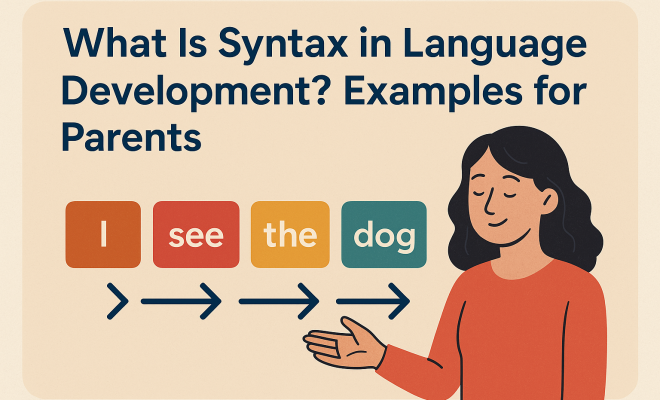
When we talk about language development, it’s easy to think about words and pronunciation. However, one of the most crucial aspects often overlooked is syntax. Syntax refers to the structure and arrangement of words in sentences. It’s the set of rules that governs how we combine words to convey meaning clearly and effectively. For parents eager to support their children’s language journey, understanding syntax in language development is essential.
The Importance of Syntax in Language Development
Understanding syntax is vital for several reasons. First, it forms the backbone of effective communication. When children grasp how to structure sentences, they can express their thoughts more clearly. Moreover, syntax helps in comprehending complex ideas, as well-structured sentences often convey nuances that simple phrases cannot.
Research has shown that children who develop strong syntactical skills tend to perform better academically. They are more likely to excel in reading and writing, as syntax impacts everything from vocabulary acquisition to narrative skills. When children can manipulate sentence structures, they enhance their ability to engage in conversations, debates, and discussions, setting the stage for future success.
The Stages of Syntax Development
Children progress through various stages of syntax development, each marked by distinct milestones. Understanding these stages can help parents identify their children’s language needs and provide appropriate support.
1. Pre-linguistic Stage (0-12 months)
During the first year, infants communicate through crying, cooing, and babbling. Though it may seem rudimentary, this stage lays the groundwork for later syntax development. Babies start to pick up on the rhythms of speech and may respond to familiar sounds and voices.
2. Single Words (12-18 months)
As children reach their first birthday, they typically begin to utter single words. These words often represent objects, actions, or people, such as “mama,” “ball,” or “go.” While they aren’t forming sentences yet, this stage marks the beginning of vocabulary acquisition, essential for developing syntax later.
3. Two-Word Combinations (18-24 months)
Children rapidly progress to forming two-word phrases like “more juice” or “big truck.” This is a pivotal time, as they start to grasp basic syntax rules. They learn to combine words to convey simple ideas, reflecting their growing understanding of how language functions.
4. Early Multi-word Sentences (2-3 years)
By age two, most children can form simple sentences, such as “I want cookie.” Their syntax starts to become more sophisticated as they learn to use plurals and basic verb forms. This stage is crucial for language development, as children begin to experiment with different sentence structures.
5. Complex Sentences (3-5 years)
As children approach preschool age, they begin to use more complex sentences, incorporating conjunctions like “and” and “but.” They may say things like, “I want to play outside, but it’s raining.” At this stage, their understanding of syntax deepens, allowing for richer communication.
Factors Influencing Syntax Development
Several factors play a crucial role in how children develop their syntactical skills. These include:
- Exposure to Language: Children who are exposed to a rich language environment tend to develop stronger syntax. Reading to them, engaging in conversations, and introducing new vocabulary can significantly impact their language skills.
- Interaction: Active engagement in conversations is vital. Children learn syntax through social interactions, where they can practice and refine their skills. The more they converse with adults and peers, the better they become at using language.
- Socioeconomic Status: Research has shown that children from higher socioeconomic backgrounds often have more access to books, educational resources, and language-rich environments, contributing to better syntax development.
- Individual Differences: Each child is unique. Some may develop syntactical skills rapidly, while others may take longer. Factors like personality, cognitive abilities, and even bilingualism can influence this process.
Practical Strategies for Parents to Support Syntax Development
As a parent, you play a pivotal role in your child’s language development journey. Here are some effective strategies to support your child in developing their syntax skills:
1. Read Regularly
Reading to your child daily is one of the most impactful ways to enhance their language development. Choose a variety of books, including picture books, stories, and rhymes. Discuss the story and encourage your child to predict what might happen next. This not only builds vocabulary but also introduces them to different sentence structures. (See: milestones of language development.)
2. Engage in Conversations
Encourage open-ended conversations with your child. Ask them about their day, their thoughts, or their feelings. Give them time to respond fully, and when they do, expand on their sentences. For example, if your child says, “I see a dog,” you might respond, “Yes, the big brown dog is running fast!” This modeling helps them learn more complex structures.
3. Play Language Games
Incorporate fun and interactive games that promote language skills. For example, you can play “I Spy,” asking your child to describe what they see. This can help them practice sentence formation in a playful context. Other games like rhyming or storytelling can also enrich their language experience.
4. Use Visual Aids
Visual aids, like storyboards or flashcards, can help children understand and construct sentences. They can see the relationships between words and ideas, making syntax feel more tangible. Encouraging them to create their own stories using visuals can also stimulate their creativity and language skills.
5. Encourage Bilingualism
If you speak more than one language, encourage your child to learn both. Bilingualism can enhance cognitive flexibility, providing a richer linguistic environment. Studies suggest that bilingual children often have better overall language skills, including syntax, due to their exposure to various sentence structures.
Common Challenges in Syntax Development
While many children progress smoothly through the stages of syntax development, some may face challenges. Understanding these potential hurdles can help parents address them effectively.
1. Delayed Speech Development
Some children may experience delays in speech development, which can affect syntax. If a child is not forming sentences by age two, it may be wise to consult a pediatrician or a speech-language therapist. Early intervention can be crucial for effective language development.
2. Limited Vocabulary
A limited vocabulary can hinder a child’s ability to form sentences. If they don’t know enough words, their syntactic constructions will be simplistic. Encourage vocabulary expansion through reading and conversations to help mitigate this issue.
3. Difficulties with Complex Sentences
Some children may struggle with complex sentences, preferring simpler structures. This can be a normal part of development, but if it persists, consider seeking guidance from a professional. They can provide targeted activities to help the child grasp more intricate syntactical forms.
The Role of Technology in Supporting Syntax Development
In today’s digital age, technology can offer unique resources for enhancing language skills. From educational apps to interactive storytelling platforms, these tools can support syntax development in engaging ways.
1. Educational Apps
Numerous apps are designed to promote language skills in children. Look for those that focus on sentence construction and storytelling. These apps often include fun games and activities that encourage children to practice syntax in an enjoyable manner.
2. Interactive Storytelling
Websites that allow children to create their own stories can be incredibly beneficial. By guiding them through the process of constructing a narrative, these platforms help children practice various sentence structures, enhancing their overall syntax skills.
3. Online Reading Resources
Many online libraries and platforms offer access to a wide range of reading materials. These resources can help children explore different genres and styles, contributing to their understanding of syntax. Encourage your child to explore various texts, from fiction to nonfiction, to see how syntax varies.
Current Research on Syntax in Language Development
Research in the field of linguistics and psychology continues to explore the intricacies of syntax in language development. Recent studies have focused on how children acquire syntax in different contexts, including bilingual environments and the impact of technology. For instance, researchers have found that children who are exposed to multiple languages often develop stronger cognitive skills, enhancing their overall syntax abilities.
Other studies highlight the role of play in language development. It appears that children who engage in imaginative play often exhibit advanced syntactical structures in their speech. This play allows them to experiment with language in a low-pressure environment, facilitating learning.
Final Thoughts on Syntax in Language Development
Understanding and supporting your child’s syntax development is crucial for their language skills and overall communication abilities. By engaging with them through reading, conversations, and creative play, you can foster a rich language environment. Remember, every child develops at their own pace. If you have concerns about your child’s language development, don’t hesitate to consult a professional. With the right support, your child can navigate the world of language with confidence and clarity.
Additional Insights into Syntax Development
Diving deeper into the intricacies of syntax in language development, it’s important to recognize how various environmental factors influence a child’s ability to grasp and apply syntactic rules. Family dynamics, cultural contexts, and educational settings can all contribute to the richness of a child’s linguistic exposure. (See: importance of syntax in reading.)
1. The Impact of Family Communication Styles
Families with diverse communication styles can significantly shape a child’s syntactical development. For example, parents who frequently engage in storytelling not only introduce their children to narrative structures but also expose them to varied sentence forms. Studies have shown that children in families where conversations are encouraged and elaborated upon tend to develop more sophisticated syntax. In contrast, children raised in less verbally interactive environments may take longer to master complex sentence structures.
2. Cultural Contexts and Syntax
The cultural context can also play a role in syntax development. In some cultures, indirect communication is more prevalent, leading to nuanced sentence structures that convey politeness or respect. Children raised in such environments may develop a unique understanding of syntax that differs from those in more direct communication cultures. Understanding these nuances can help parents tailor their approaches to support their children effectively.
3. Educational Settings and Syntax Learning
Schools play a major role in advancing children’s understanding of syntax. Quality early childhood education programs often incorporate language-rich curricula that emphasize syntax through various activities—like storytelling, writing prompts, and group discussions. These environments allow children to experiment with language, encouraging them to practice complex sentence constructions.
Additionally, teachers trained in language development can identify children who may require additional support in syntax and provide targeted interventions. This collaboration between home and school plays a pivotal role in reinforcing a child’s syntactical skills.
Statistics on Syntax Development
Understanding the statistics surrounding syntax development can provide insight into its importance. Studies show that children with rich language exposure in their early years can have vocabulary sizes that are up to 35% larger by the time they reach school age. Furthermore, children who actively engage in conversations at home are 50% more likely to demonstrate advanced syntax by age five than their peers who do not have similar interactions.
Moreover, research conducted by the National Institute for Literacy noted that children who develop strong syntactical skills by age six tend to score higher on standardized tests related to reading comprehension and expressive writing later on. This correlation underscores the lasting impact of syntax on overall academic performance.
Expert Perspectives on Syntax in Language Development
Experts in linguistics and child development stress the significance of nurturing a child’s syntax skills. Dr. Anne Fernald, a cognitive psychologist, emphasizes that “the ability to understand complex sentences is crucial for later academic success.” She suggests that parents can enhance their child’s syntactical development by introducing them to new words and sentence structures daily.
Similarly, Dr. Steven Pinker, a well-known linguist, points out that “children’s innate ability to learn language is complemented by their exposure to rich linguistic environments.” He advocates for interactive and engaging play that allows children to explore syntax in a natural context, thus reinforcing their language skills through enjoyment.
FAQ on Syntax in Language Development
1. What is the role of syntax in language development?
Syntax provides the framework for constructing sentences, allowing individuals to convey complex ideas and emotions. It is essential for effective communication and plays a critical role in reading and writing skills.
2. At what age should I be concerned about my child’s syntax development?
If your child is not using two-word combinations by age two or is not forming simple sentences by age three, it may be beneficial to consult a speech-language therapist for an assessment.
3. How can I tell if my child is developing syntax appropriately?
Look for age-appropriate milestones. By two years, children typically use simple sentences. By three, they should start combining sentences. If they struggle significantly with these stages, consider seeking professional advice.
4. Does bilingualism affect syntax development?
Yes, bilingualism can positively influence syntax development. Bilingual children often show greater cognitive flexibility and can learn to manipulate sentence structures across different languages, enhancing their overall language skills.
5. Can technology aid in syntax development?
Absolutely! Interactive apps and online resources can provide engaging ways for children to practice syntax. Look for platforms that emphasize storytelling and sentence construction to maximize benefits.
6. Are there specific activities that promote syntax development?
Yes! Activities like role-playing, storytelling, and reading aloud can significantly enrich a child’s syntactical skills. Using visual aids and engaging in discussions can also encourage the use of more complex sentence structures.
New Developments and Trends in Syntax Research
As research in linguistics and cognitive science evolves, new findings about syntax development continue to emerge. One recent trend is the focus on the impact of digital communication on syntax skills. With the rise of social media and texting, there are concerns about how informal communication might influence children’s language acquisition. For instance, studies show that children who spend more time engaged in digital communication often incorporate elements from online interactions into their speech and writing. This raises questions about whether such influences may simplify or complicate their understanding of formal syntax.
Emerging Studies on Digital Communication
Research indicates that while children do adopt informal syntactic structures from digital communications, they often learn to navigate between formal and informal registers. Surprisingly, studies suggest that exposure to varied syntax in both digital and traditional contexts can bolster a child’s overall linguistic adaptability. Engaging with diverse forms of language can enhance their ability to switch between formal and informal contexts effectively, a skill that is increasingly important in our interconnected world.
The Role of Peer Interaction
Peer interaction is another crucial area of research. Collaborative play and group learning situations can significantly enhance a child’s syntax development. Children often learn from each other, mimicking complex structures they hear from their peers. This kind of social learning environment encourages experimentation with syntax, as children feel more comfortable trying out new forms in a supportive setting.
The Future of Syntax Development Research
Looking ahead, the future of syntax development research is promising. With advancements in technology, researchers are now able to track language acquisition in real-time, analyzing how children use syntax in various contexts. For instance, language acquisition apps are being developed that can provide personalized feedback to children based on their sentence structures during play. Such tools not only make learning syntax fun but also provide tailored strategies to address individual challenges.
Furthermore, ongoing research into the neurological aspects of language acquisition may shed light on how children process complex syntactic structures. Understanding the brain’s role in language development can lead to more effective educational strategies and interventions, ensuring that every child has the opportunity to excel in their language journey.
Conclusion
Understanding and supporting your child’s syntax development is crucial for their language skills and overall communication abilities. By engaging with them through reading, conversations, and creative play, you can foster a rich language environment. Remember, every child develops at their own pace. If you have concerns about your child’s language development, don’t hesitate to consult a professional. With the right support, your child can navigate the world of language with confidence and clarity.
“`
Trending Now
Frequently Asked Questions
What is syntax in language development?
Syntax refers to the structure and arrangement of words in sentences. It governs how we combine words to convey meaning clearly and effectively, playing a crucial role in language development.
Why is syntax important for children?
Understanding syntax is vital for effective communication. It helps children express their thoughts clearly and comprehend complex ideas, enhancing their academic performance and conversational skills.
What are the stages of syntax development in children?
Children progress through several stages of syntax development, including the pre-linguistic stage (0-12 months), where they communicate through sounds, and the single words stage (12-18 months), where they begin to use individual words.
How can parents support their child's syntax development?
Parents can support syntax development by engaging in conversations, reading together, and encouraging children to express their thoughts in complete sentences, helping them navigate different sentence structures.
What are some examples of syntax in language?
Examples of syntax include the arrangement of words in sentences, such as 'The cat chased the mouse' versus 'The mouse chased the cat,' which convey different meanings based on word order.
What did we miss? Let us know in the comments and join the conversation.