The Tech Edvocate

Top Menu

  • Advertisement
  • Apps
  • Home Page
  • Home Page Five (No Sidebar)
  • Home Page Four
  • Home Page Three
  • Home Page Two
  • Home Tech2
  • Icons [No Sidebar]
  • Left Sidbear Page
  • Lynch Educational Consulting
  • My Account
  • My Speaking Page
  • Newsletter Sign Up Confirmation
  • Newsletter Unsubscription
  • Our Brands
  • Page Example
  • Privacy Policy
  • Protected Content
  • Register
  • Request a Product Review
  • Shop
  • Shortcodes Examples
  • Signup
  • Start Here
    • Governance
    • Careers
    • Contact Us
  • Terms and Conditions
  • The Edvocate
  • The Tech Edvocate Product Guide
  • Topics
  • Write For Us
  • Advertise

Main Menu

  • Start Here
    • Our Brands
    • Governance
      • Lynch Educational Consulting, LLC.
      • Dr. Lynch’s Personal Website
      • Careers
    • Write For Us
    • The Tech Edvocate Product Guide
    • Contact Us
    • Books
    • Edupedia
    • Post a Job
    • The Edvocate Podcast
    • Terms and Conditions
    • Privacy Policy
  • Topics
    • Assistive Technology
    • Child Development Tech
    • Early Childhood & K-12 EdTech
    • EdTech Futures
    • EdTech News
    • EdTech Policy & Reform
    • EdTech Startups & Businesses
    • Higher Education EdTech
    • Online Learning & eLearning
    • Parent & Family Tech
    • Personalized Learning
    • Product Reviews
  • Advertise
  • Tech Edvocate Awards
  • The Edvocate
  • Pedagogue
  • School Ratings

logo

The Tech Edvocate

  • Start Here
    • Our Brands
    • Governance
      • Lynch Educational Consulting, LLC.
      • Dr. Lynch’s Personal Website
        • My Speaking Page
      • Careers
    • Write For Us
    • The Tech Edvocate Product Guide
    • Contact Us
    • Books
    • Edupedia
    • Post a Job
    • The Edvocate Podcast
    • Terms and Conditions
    • Privacy Policy
  • Topics
    • Assistive Technology
    • Child Development Tech
    • Early Childhood & K-12 EdTech
    • EdTech Futures
    • EdTech News
    • EdTech Policy & Reform
    • EdTech Startups & Businesses
    • Higher Education EdTech
    • Online Learning & eLearning
    • Parent & Family Tech
    • Personalized Learning
    • Product Reviews
  • Advertise
  • Tech Edvocate Awards
  • The Edvocate
  • Pedagogue
  • School Ratings
  • Toxic Pills: This Supplement Scandal Puts Millions at Risk

  • Urgent Dog Supplement Recall: This Stealthy Threat Could Be Hiding in Your Pantry!

  • Staggering: Climate Tech Fundraising Collapses — Is AI to Blame?

  • Global AI stocks tumble as industry’s biggest names sound alarm – The Straits Times

  • Sony’s Controversial Move: Why the Last of Us Part II Multiplayer Mod Got Axed

  • Trump’s Wild AI Claims: Is There a ‘Sick Conspiracy’ Against Tech?

  • This One Thing Is Turning Classrooms Into Culture War Battlegrounds

  • Your AI Detector Is Useless: Why Universities Are Scrapping ‘Catch & Ban’ for This

  • Terrifying: AI Is About to Break Cybersecurity – And No One Is Ready

  • Volkswagen’s Staggering Miscalculation: 50,000 Jobs Vanish as EV Dream Sours

Digital & Mobile Technology
Home›Digital & Mobile Technology›What Is Intel Turbo Boost? Here’s How It Works

What Is Intel Turbo Boost? Here’s How It Works
By Matthew Lynch
June 14, 2023
0
Spread the love

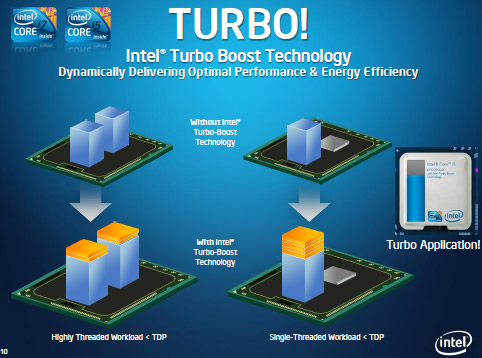
Intel Turbo Boost is a feature that increases the clock speed of a processor to enhance performance when required. The technology was first introduced by Intel in 2008, with the Nehalem microarchitecture. Since then, it has become a standard feature in Intel processors, which is available in both desktop and laptop CPUs. Intel Turbo Boost helps to improve single-threaded performance by increasing the clock speed of a processor when there is a demand for it. When a CPU has multiple cores, only one core can use Turbo Boost at a time.

The Turbo Boost feature is designed to boost the clock speed of a processor beyond its base frequency, without exceeding its thermal design power (TDP). The technology works by monitoring certain aspects of a processor’s operation, such as power consumption, temperature, and workload. When the system detects that the core is operating within its operating limits, it automatically increases its clock speed.

The amount of Turbo Boost applied depends on the processor model, TDP, and the workload. For instance, a processor with a base frequency of 2.5GHz can Turbo Boost to 3.2GHz, but only up to the set TDP of the processor. The amount of Turbo Boost applied also depends on the number of cores in use. Turboboost allows CPUs to operate at their maximum clock rate without exceeding the TDP and thermally overheating.

Some systems come equipped with a ‘Turbo Boost Max Technology 3.0’ feature, which prioritizes one of the processor’s cores to receive the highest Turbo Boost frequency. The feature works by identifying the core with the highest frequency capability and allocating those resources to a workload with heavy CPU reliance.

Some processors also come with hyper-threading technology, which doubles the number of virtual cores seen by the operating system. Turbo Boost automatically optimizes performance for threads that have high priority.

Intel Turbo Boost works perfectly well without user intervention, but users may choose to control and limit the technology’s settings using either the system BIOS or through the Intel Turbo Boost Technology Monitor app.

In summary, Intel Turbo Boost is an advanced technology that enhances the performance of a processor by temporarily increasing its clock speed beyond its base frequency. The technology works by monitoring power consumption, temperature, and workload to optimize performance for single-threaded applications. Intel Turbo Boost is a valuable feature for anyone who demands peak performance from their CPU.


Previous Article

How to Create an Income Statement in ...

Next Article

How to Run Windows Apps on Android ...

Matthew Lynch

Related articles More from author

  • Digital & Mobile Technology

    How to Stop Discord Crashing or Freezing in Windows 10 and 11

    September 8, 2023
    By Matthew Lynch
  • Digital & Mobile Technology

    How to Connect Beats to Your Mac

    September 8, 2023
    By Matthew Lynch
  • Digital & Mobile Technology

    Can You Play Minecraft on a Nintendo Switch?

    June 12, 2023
    By Matthew Lynch
  • Digital & Mobile Technology

    How to Fix It When Windows 10 Desktop Icons are Missing

    July 6, 2023
    By Matthew Lynch
  • Digital & Mobile Technology

    How to Reset Chromecast Ultra

    June 3, 2023
    By Matthew Lynch
  • Digital & Mobile Technology

    Can You Be Electrocuted by a 12 Volt Car Battery?

    June 12, 2023
    By Matthew Lynch

Search

Login & Registration

  • Log in
  • Entries feed
  • Comments feed
  • WordPress.org

Newsletter

Signup for The Tech Edvocate Newsletter and have the latest in EdTech news and opinion delivered to your email address!

About Us

Since technology is not going anywhere and does more good than harm, adapting is the best course of action. That is where The Tech Edvocate comes in. We plan to cover the PreK-12 and Higher Education EdTech sectors and provide our readers with the latest news and opinion on the subject. From time to time, I will invite other voices to weigh in on important issues in EdTech. We hope to provide a well-rounded, multi-faceted look at the past, present, the future of EdTech in the US and internationally.

We started this journey back in June 2016, and we plan to continue it for many more years to come. I hope that you will join us in this discussion of the past, present and future of EdTech and lend your own insight to the issues that are discussed.

Newsletter

Signup for The Tech Edvocate Newsletter and have the latest in EdTech news and opinion delivered to your email address!

Contact Us

The Tech Edvocate
910 Goddin Street
Richmond, VA 23231
(601) 630-5238
[email protected]

Copyright © 2026 Matthew Lynch. All rights reserved.