The Tech Edvocate

Top Menu

  • Advertisement
  • Apps
  • Home Page
  • Home Page Five (No Sidebar)
  • Home Page Four
  • Home Page Three
  • Home Page Two
  • Home Tech2
  • Icons [No Sidebar]
  • Left Sidbear Page
  • Lynch Educational Consulting
  • My Account
  • My Speaking Page
  • Newsletter Sign Up Confirmation
  • Newsletter Unsubscription
  • Our Brands
  • Page Example
  • Privacy Policy
  • Protected Content
  • Register
  • Request a Product Review
  • Shop
  • Shortcodes Examples
  • Signup
  • Start Here
    • Governance
    • Careers
    • Contact Us
  • Terms and Conditions
  • The Edvocate
  • The Tech Edvocate Product Guide
  • Topics
  • Write For Us
  • Advertise

Main Menu

  • Start Here
    • Our Brands
    • Governance
      • Lynch Educational Consulting, LLC.
      • Dr. Lynch’s Personal Website
      • Careers
    • Write For Us
    • The Tech Edvocate Product Guide
    • Contact Us
    • Books
    • Edupedia
    • Post a Job
    • The Edvocate Podcast
    • Terms and Conditions
    • Privacy Policy
  • Topics
    • Assistive Technology
    • Child Development Tech
    • Early Childhood & K-12 EdTech
    • EdTech Futures
    • EdTech News
    • EdTech Policy & Reform
    • EdTech Startups & Businesses
    • Higher Education EdTech
    • Online Learning & eLearning
    • Parent & Family Tech
    • Personalized Learning
    • Product Reviews
  • Advertise
  • Tech Edvocate Awards
  • The Edvocate
  • Pedagogue
  • School Ratings

logo

The Tech Edvocate

  • Start Here
    • Our Brands
    • Governance
      • Lynch Educational Consulting, LLC.
      • Dr. Lynch’s Personal Website
        • My Speaking Page
      • Careers
    • Write For Us
    • The Tech Edvocate Product Guide
    • Contact Us
    • Books
    • Edupedia
    • Post a Job
    • The Edvocate Podcast
    • Terms and Conditions
    • Privacy Policy
  • Topics
    • Assistive Technology
    • Child Development Tech
    • Early Childhood & K-12 EdTech
    • EdTech Futures
    • EdTech News
    • EdTech Policy & Reform
    • EdTech Startups & Businesses
    • Higher Education EdTech
    • Online Learning & eLearning
    • Parent & Family Tech
    • Personalized Learning
    • Product Reviews
  • Advertise
  • Tech Edvocate Awards
  • The Edvocate
  • Pedagogue
  • School Ratings
  • US Battery as a Service Market Shifts Toward Fleet-Based Energy

  • The Startling Truth: Why Americans Distrust AI with Their Health

  • This Crucial Deadline for Banks Is Closer Than You Think

  • Baffling: CrowdStrike’s $500 Million AI Bet Reshapes Cybersecurity

  • This Crucial Autonomous Driving Rule Could Cost You Everything

  • Baffling: Microsoft AI CEO Demands Halt to Conscious AI Development

  • O seară în ritmul tău: atmosfera divertismentului de cazinou pe internet

  • Outrageous: AppLovin Hit With Lawsuit Over AI Claims — What Investors Need to Know

  • 9 Critical Ways AI Investment Fraud Is Quietly Draining Your Bank Account

  • Is the AI Bubble Bursting? OpenAI’s Funding Woes Revealed

Digital & Mobile Technology
Home›Digital & Mobile Technology›What Is API Authentication and How Does It Work?

What Is API Authentication and How Does It Work?
By Matthew Lynch
July 31, 2023
0
Spread the love

API authentication is a vital aspect of securing web applications that use APIs (Application Programming Interfaces) for exchanging information and performing various tasks. It involves the use of digital tokens or keys that allow users and applications to access and use an API’s functionalities, while ensuring that only authorized entities can make such requests.

In simpler terms, API authentication enables an API provider to control who is allowed to access its API and what actions those users can perform. There are different authentication mechanisms available for protecting APIs, but most of them work on the principles of authentication and authorization.

Authentication is the process of verifying a user’s identity, while authorization involves granting or denying access to specific resources or functionalities based on the permissions associated with that user. In other words, authentication is about asking “who are you?” while authorization asks “what can you do?”

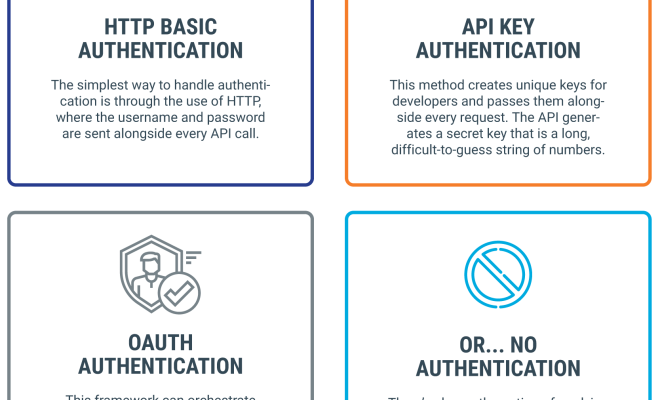
There are several methods for API authentication, including the use of API keys, OAuth, and JSON web tokens (JWTs). API keys are unique identifiers that are assigned to authorized users or applications and are used to authenticate API requests. OAuth, on the other hand, is an open standard protocol that allows users to grant limited access to their resources without sharing their credentials.

JWTs are an emerging standard that is gaining popularity in API authentication because they offer several benefits over other methods. JWTs are generated by the API provider and contain all the necessary information (such as the user’s identity, permissions, and issue and expiration times) to authenticate and authorize an API request. They are self-contained, meaning they carry all the necessary information without requiring further server access, making them more efficient and scalable.

The process of API authentication involves several steps, which differ depending on the chosen authentication method. Generally, a user or application sends an API request containing an API key or token to the API provider.

The provider then validates the key or token, verifies the user’s identity, and checks the permissions associated with that user to determine if they are authorized to perform the requested action. If the key or token is valid, the API provider responds with the requested data or performs the requested action.

In conclusion, API authentication is a critical component of securing web applications and protecting API resources. By using tokens or keys to authenticate and authorize API requests, providers can ensure that only authorized users and applications can access and use their APIs, providing a secure and reliable user experience.


Previous Article

How to Save Images That Are in ...

Next Article

How to Prevent Rainmeter From Affecting Your ...

Matthew Lynch

Related articles More from author

  • Digital & Mobile Technology

    How to Print Email from Outlook or Outlook.com

    May 31, 2023
    By Matthew Lynch
  • Digital & Mobile Technology

    How a Car Power Adapter can Run all your Electronics

    June 10, 2023
    By Matthew Lynch
  • Digital & Mobile Technology

    How to Anonymously View a LinkedIn Profile

    July 30, 2023
    By Matthew Lynch
  • Digital & Mobile Technology

    How to Clear Cache Data on Your Android Device

    May 31, 2023
    By Matthew Lynch
  • Digital & Mobile Technology

    How to Delete ‘Suggestions for You’ on Instagram

    June 9, 2023
    By Matthew Lynch
  • Digital & Mobile Technology

    How to Access the Windows 11 Startup Folder

    May 17, 2023
    By Matthew Lynch

Search

Login & Registration

  • Log in
  • Entries feed
  • Comments feed
  • WordPress.org

Newsletter

Signup for The Tech Edvocate Newsletter and have the latest in EdTech news and opinion delivered to your email address!

About Us

Since technology is not going anywhere and does more good than harm, adapting is the best course of action. That is where The Tech Edvocate comes in. We plan to cover the PreK-12 and Higher Education EdTech sectors and provide our readers with the latest news and opinion on the subject. From time to time, I will invite other voices to weigh in on important issues in EdTech. We hope to provide a well-rounded, multi-faceted look at the past, present, the future of EdTech in the US and internationally.

We started this journey back in June 2016, and we plan to continue it for many more years to come. I hope that you will join us in this discussion of the past, present and future of EdTech and lend your own insight to the issues that are discussed.

Newsletter

Signup for The Tech Edvocate Newsletter and have the latest in EdTech news and opinion delivered to your email address!

Contact Us

The Tech Edvocate
910 Goddin Street
Richmond, VA 23231
(601) 630-5238
[email protected]

Copyright © 2026 Matthew Lynch. All rights reserved.