The Tech Edvocate

Top Menu

  • Advertisement
  • Apps
  • Home Page
  • Home Page Five (No Sidebar)
  • Home Page Four
  • Home Page Three
  • Home Page Two
  • Home Tech2
  • Icons [No Sidebar]
  • Left Sidbear Page
  • Lynch Educational Consulting
  • My Account
  • My Speaking Page
  • Newsletter Sign Up Confirmation
  • Newsletter Unsubscription
  • Our Brands
  • Page Example
  • Privacy Policy
  • Protected Content
  • Register
  • Request a Product Review
  • Shop
  • Shortcodes Examples
  • Signup
  • Start Here
    • Governance
    • Careers
    • Contact Us
  • Terms and Conditions
  • The Edvocate
  • The Tech Edvocate Product Guide
  • Topics
  • Write For Us
  • Advertise

Main Menu

  • Start Here
    • Our Brands
    • Governance
      • Lynch Educational Consulting, LLC.
      • Dr. Lynch’s Personal Website
      • Careers
    • Write For Us
    • The Tech Edvocate Product Guide
    • Contact Us
    • Books
    • Edupedia
    • Post a Job
    • The Edvocate Podcast
    • Terms and Conditions
    • Privacy Policy
  • Topics
    • Assistive Technology
    • Child Development Tech
    • Early Childhood & K-12 EdTech
    • EdTech Futures
    • EdTech News
    • EdTech Policy & Reform
    • EdTech Startups & Businesses
    • Higher Education EdTech
    • Online Learning & eLearning
    • Parent & Family Tech
    • Personalized Learning
    • Product Reviews
  • Advertise
  • Tech Edvocate Awards
  • The Edvocate
  • Pedagogue
  • School Ratings

logo

The Tech Edvocate

  • Start Here
    • Our Brands
    • Governance
      • Lynch Educational Consulting, LLC.
      • Dr. Lynch’s Personal Website
        • My Speaking Page
      • Careers
    • Write For Us
    • The Tech Edvocate Product Guide
    • Contact Us
    • Books
    • Edupedia
    • Post a Job
    • The Edvocate Podcast
    • Terms and Conditions
    • Privacy Policy
  • Topics
    • Assistive Technology
    • Child Development Tech
    • Early Childhood & K-12 EdTech
    • EdTech Futures
    • EdTech News
    • EdTech Policy & Reform
    • EdTech Startups & Businesses
    • Higher Education EdTech
    • Online Learning & eLearning
    • Parent & Family Tech
    • Personalized Learning
    • Product Reviews
  • Advertise
  • Tech Edvocate Awards
  • The Edvocate
  • Pedagogue
  • School Ratings
  • A Visitors Guide to Long Beach (CA), United States

  • A Visitor’s Guide to Fresno (CA), United States

  • A Visitors Guide to New Orleans (LA), United States

  • A Visitors Guide to Sacramento (CA), United States

  • A Visitors Guide to Lyon, France

  • JisuLife Ultra2 Portable Fan: A Powerful Multi-Function Cooling Solution

  • A Visitors Guide to Viña del Mar, Chile

  • A Visitors Guide to Århus, Denmark

  • A Visitors Guide to Bakersfield (CA), United States

  • A Visitors Guide to Aurora (CO), United States

Digital & Mobile Technology
Home›Digital & Mobile Technology›What is an Encrypting File System (EFS)?

What is an Encrypting File System (EFS)?
By Matthew Lynch
May 5, 2023
0
Spread the love

An Encrypting File System (EFS) is a security feature built into Microsoft Windows operating systems that allows users to encrypt their files and folders. Encryption is the process of converting data into a format that is unreadable without the right encryption keys. This helps to protect sensitive data against unauthorized access, theft, and data breaches.

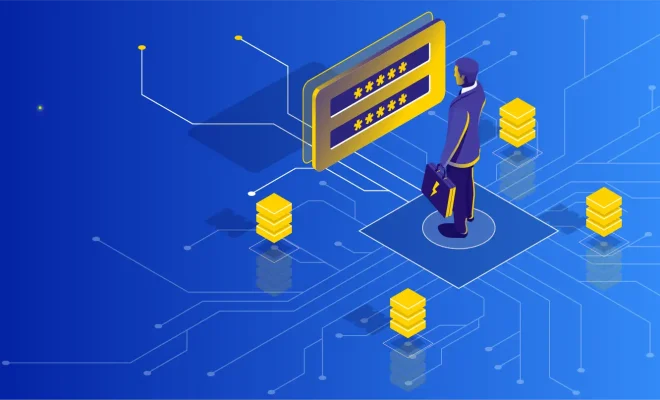
EFS uses a public key encryption system to store and protect files on the hard drive. Public key encryption works by using two keys: a public key and a private key. The public key is used to encrypt the data, while the private key is used to decrypt it. The public key is stored on the hard drive, while the private key is kept secure by the user’s account. Only the user who owns the account can access the private key and decrypt the data.

When a user selects a file to be encrypted, EFS generates a random symmetric key that is used to encrypt the file. The symmetric key is then encrypted with the user’s public key and stored in the file’s header. When the user needs to access the file, EFS uses the user’s private key to decrypt the symmetric key, which is then used to decrypt the file.

EFS also supports the use of smart cards and biometric devices for enhanced security. Smart cards are small electronic devices that can store encryption keys and are used as a form of authentication. Biometric devices use unique physical characteristics like fingerprints or facial features to identify the user and grant access. These additional security measures help to prevent unauthorized access and protect sensitive data.

EFS is a useful feature for businesses and individuals who need to store sensitive data on their computers. It provides strong encryption that is both easy to use and built into the operating system. However, users should be cautious about how they use and manage encryption keys. If a user loses their private key or forgets their password, they may lose access to their encrypted files forever.

In conclusion, an Encrypting File System (EFS) is a feature built into Microsoft Windows that allows users to encrypt their files and folders for enhanced security. EFS uses a public key encryption system that generates a random symmetric key to encrypt files. The symmetric key is then encrypted with the user’s public key and stored in the file’s header. EFS also supports the use of smart cards and biometric devices for added security. While EFS is a useful feature, users must be careful to manage their encryption keys and passwords to avoid losing access to their encrypted data.


Previous Article

What is an Embedded Processor?

Next Article

What is an Encryption Algorithm?

Matthew Lynch

Related articles More from author

  • Digital & Mobile Technology

    Best Coding Games to Build Your Programming Skills

    June 23, 2023
    By Matthew Lynch
  • Digital & Mobile Technology

    Kobo Clara HD Review

    June 10, 2023
    By Matthew Lynch
  • Digital & Mobile Technology

    How Much Power Does Starlink Use?

    June 6, 2023
    By Matthew Lynch
  • Digital & Mobile Technology

    Who Unfriended Me on Facebook?

    June 8, 2023
    By Matthew Lynch
  • Digital & Mobile Technology

    How to Overclock and Undervolt AMD Ryzen CPUs

    May 1, 2023
    By Matthew Lynch
  • Digital & Mobile Technology

    How to Back Up and Export Google Chrome Bookmarks

    June 7, 2023
    By Matthew Lynch

Search

Login & Registration

  • Register
  • Log in
  • Entries feed
  • Comments feed
  • WordPress.org

Newsletter

Signup for The Tech Edvocate Newsletter and have the latest in EdTech news and opinion delivered to your email address!

About Us

Since technology is not going anywhere and does more good than harm, adapting is the best course of action. That is where The Tech Edvocate comes in. We plan to cover the PreK-12 and Higher Education EdTech sectors and provide our readers with the latest news and opinion on the subject. From time to time, I will invite other voices to weigh in on important issues in EdTech. We hope to provide a well-rounded, multi-faceted look at the past, present, the future of EdTech in the US and internationally.

We started this journey back in June 2016, and we plan to continue it for many more years to come. I hope that you will join us in this discussion of the past, present and future of EdTech and lend your own insight to the issues that are discussed.

Newsletter

Signup for The Tech Edvocate Newsletter and have the latest in EdTech news and opinion delivered to your email address!

Contact Us

The Tech Edvocate
910 Goddin Street
Richmond, VA 23231
(601) 630-5238
[email protected]

Copyright © 2025 Matthew Lynch. All rights reserved.