The Tech Edvocate

Top Menu

  • Advertisement
  • Apps
  • Home Page
  • Home Page Five (No Sidebar)
  • Home Page Four
  • Home Page Three
  • Home Page Two
  • Home Tech2
  • Icons [No Sidebar]
  • Left Sidbear Page
  • Lynch Educational Consulting
  • My Account
  • My Speaking Page
  • Newsletter Sign Up Confirmation
  • Newsletter Unsubscription
  • Our Brands
  • Page Example
  • Privacy Policy
  • Protected Content
  • Register
  • Request a Product Review
  • Shop
  • Shortcodes Examples
  • Signup
  • Start Here
    • Governance
    • Careers
    • Contact Us
  • Terms and Conditions
  • The Edvocate
  • The Tech Edvocate Product Guide
  • Topics
  • Write For Us
  • Advertise

Main Menu

  • Start Here
    • Our Brands
    • Governance
      • Lynch Educational Consulting, LLC.
      • Dr. Lynch’s Personal Website
      • Careers
    • Write For Us
    • The Tech Edvocate Product Guide
    • Contact Us
    • Books
    • Edupedia
    • Post a Job
    • The Edvocate Podcast
    • Terms and Conditions
    • Privacy Policy
  • Topics
    • Assistive Technology
    • Child Development Tech
    • Early Childhood & K-12 EdTech
    • EdTech Futures
    • EdTech News
    • EdTech Policy & Reform
    • EdTech Startups & Businesses
    • Higher Education EdTech
    • Online Learning & eLearning
    • Parent & Family Tech
    • Personalized Learning
    • Product Reviews
  • Advertise
  • Tech Edvocate Awards
  • The Edvocate
  • Pedagogue
  • School Ratings

logo

The Tech Edvocate

  • Start Here
    • Our Brands
    • Governance
      • Lynch Educational Consulting, LLC.
      • Dr. Lynch’s Personal Website
        • My Speaking Page
      • Careers
    • Write For Us
    • The Tech Edvocate Product Guide
    • Contact Us
    • Books
    • Edupedia
    • Post a Job
    • The Edvocate Podcast
    • Terms and Conditions
    • Privacy Policy
  • Topics
    • Assistive Technology
    • Child Development Tech
    • Early Childhood & K-12 EdTech
    • EdTech Futures
    • EdTech News
    • EdTech Policy & Reform
    • EdTech Startups & Businesses
    • Higher Education EdTech
    • Online Learning & eLearning
    • Parent & Family Tech
    • Personalized Learning
    • Product Reviews
  • Advertise
  • Tech Edvocate Awards
  • The Edvocate
  • Pedagogue
  • School Ratings
  • Is AuraCam Pro’s Emotional AI a Privacy Nightmare or Security Breakthrough?

  • Unprecedented: N-able’s Global Shutdown After 30+ Zero-Days Revealed

  • The Urgent Truth: Your AI Tools for Financial Advisors Could Be a Compliance Nightmare

  • Unmasking the Troubling Truth About EU’s Digital Omnibus and Your Data

  • Outrageous: Your US Car Insurance 2026 Bill Is About to Explode – Here’s Why

  • Uncovering the Truth: Are AI Spending Concerns About to Tank Your Portfolio?

  • The Silent Revolution: How AI Property Valuation Is Quietly Reshaping Real Estate

  • The Astonishing Truth: Why Your Dream Car Is Now a $52,000 Illusion

  • Toxic Algorithms: Why Your Bank’s AI Could Cost You Everything

  • OpenAI’s GPT-6 Cyber: A Dangerous New AI Threat or Our Ultimate Digital Guardian?

Digital & Mobile Technology
Home›Digital & Mobile Technology›What is ADSL (Asymmetric Digital Subscriber Line)?

What is ADSL (Asymmetric Digital Subscriber Line)?
By Matthew Lynch
July 5, 2023
0
Spread the love

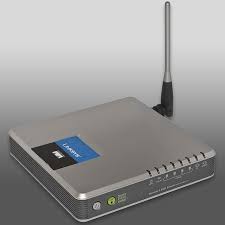
ADSL (Asymmetric Digital Subscriber Line) is a type of digital communication technology that enables high-speed data transfer over existing telephone lines. Unlike traditional analog dial-up connections, ADSL allows for faster and more reliable internet access, making it one of the most popular broadband solutions globally.

ADSL offers asymmetric speeds, which means that data is transmitted faster in one direction than the other. The upload speed is relatively slow, whereas the download speed is high. The technology achieves this by splitting the available bandwidth into separate channels for upstream and downstream signals.

In an ADSL connection, the sending and receiving signals are separated by filters on both ends of the telephone line. This process ensures that the voice and data signals share the same line without interfering with each other. The connection speed is determined by the distance between the customer’s premises and the telephone exchange or the nearest DSLAM (Digital Subscriber Line Access Multiplexer).

ADSL technology is widely used, especially by small-scale businesses and households, as it provides advantages such as fast download speeds, inexpensive infrastructure, and simplicity in installation. It requires only a standard telephone line, and users do not need to install any additional wiring or equipment.

ADSL technology offers different rates of data transfer, such as ADSL, ADSL2, and ADSL2+, each with different specifications, such as rates of throughput, range, and latency. ADSL modems commonly have a maximum download speed of up to 24 Mbps and an upload rate of 1.4 Mbps.

In conclusion, ADSL is an excellent broadband solution for people who want to access high-speed internet through their existing telephone lines. It provides users with faster download speeds and an easy-to-install solution with no additional wiring requirements. ADSL technology continues to be the preferred option for many users, and it’s expected to continue to be a significant player in the broadband market.


Previous Article

What to Do When Your Car’s USB ...

Next Article

How to Change Your Cameo on Snapchat

Matthew Lynch

Related articles More from author

  • Digital & Mobile Technology

    Where Were the Windows 10 Lock Screen Photos Taken?

    August 5, 2023
    By Matthew Lynch
  • Digital & Mobile Technology

    The 6 Best Free FTP Clients for Windows, Mac, and Linux

    June 4, 2023
    By Matthew Lynch
  • Digital & Mobile TechnologyDigital Age Teachers

    Bringing Access to Digital Learning to All Students

    August 13, 2021
    By Matthew Lynch
  • Digital & Mobile Technology

    How to Use Hulu Subtitles

    June 10, 2023
    By Matthew Lynch
  • Digital & Mobile Technology

    How to Fix It When Roku TV Sound Is Not Working

    June 2, 2023
    By Matthew Lynch
  • Digital & Mobile Technology

    ChatGPT vs. Bing Chat: What’s the Best Generative AI Chatbot?

    June 23, 2023
    By Matthew Lynch

Search

Login & Registration

  • Log in
  • Entries feed
  • Comments feed
  • WordPress.org

Newsletter

Signup for The Tech Edvocate Newsletter and have the latest in EdTech news and opinion delivered to your email address!

About Us

Since technology is not going anywhere and does more good than harm, adapting is the best course of action. That is where The Tech Edvocate comes in. We plan to cover the PreK-12 and Higher Education EdTech sectors and provide our readers with the latest news and opinion on the subject. From time to time, I will invite other voices to weigh in on important issues in EdTech. We hope to provide a well-rounded, multi-faceted look at the past, present, the future of EdTech in the US and internationally.

We started this journey back in June 2016, and we plan to continue it for many more years to come. I hope that you will join us in this discussion of the past, present and future of EdTech and lend your own insight to the issues that are discussed.

Newsletter

Signup for The Tech Edvocate Newsletter and have the latest in EdTech news and opinion delivered to your email address!

Contact Us

The Tech Edvocate
910 Goddin Street
Richmond, VA 23231
(601) 630-5238
[email protected]

Copyright © 2026 Matthew Lynch. All rights reserved.