The Tech Edvocate

Top Menu

  • Advertisement
  • Apps
  • Home Page
  • Home Page Five (No Sidebar)
  • Home Page Four
  • Home Page Three
  • Home Page Two
  • Home Tech2
  • Icons [No Sidebar]
  • Left Sidbear Page
  • Lynch Educational Consulting
  • My Account
  • My Speaking Page
  • Newsletter Sign Up Confirmation
  • Newsletter Unsubscription
  • Our Brands
  • Page Example
  • Privacy Policy
  • Protected Content
  • Register
  • Request a Product Review
  • Shop
  • Shortcodes Examples
  • Signup
  • Start Here
    • Governance
    • Careers
    • Contact Us
  • Terms and Conditions
  • The Edvocate
  • The Tech Edvocate Product Guide
  • Topics
  • Write For Us
  • Advertise

Main Menu

  • Start Here
    • Our Brands
    • Governance
      • Lynch Educational Consulting, LLC.
      • Dr. Lynch’s Personal Website
      • Careers
    • Write For Us
    • The Tech Edvocate Product Guide
    • Contact Us
    • Books
    • Edupedia
    • Post a Job
    • The Edvocate Podcast
    • Terms and Conditions
    • Privacy Policy
  • Topics
    • Assistive Technology
    • Child Development Tech
    • Early Childhood & K-12 EdTech
    • EdTech Futures
    • EdTech News
    • EdTech Policy & Reform
    • EdTech Startups & Businesses
    • Higher Education EdTech
    • Online Learning & eLearning
    • Parent & Family Tech
    • Personalized Learning
    • Product Reviews
  • Advertise
  • Tech Edvocate Awards
  • The Edvocate
  • Pedagogue
  • School Ratings

logo

The Tech Edvocate

  • Start Here
    • Our Brands
    • Governance
      • Lynch Educational Consulting, LLC.
      • Dr. Lynch’s Personal Website
        • My Speaking Page
      • Careers
    • Write For Us
    • The Tech Edvocate Product Guide
    • Contact Us
    • Books
    • Edupedia
    • Post a Job
    • The Edvocate Podcast
    • Terms and Conditions
    • Privacy Policy
  • Topics
    • Assistive Technology
    • Child Development Tech
    • Early Childhood & K-12 EdTech
    • EdTech Futures
    • EdTech News
    • EdTech Policy & Reform
    • EdTech Startups & Businesses
    • Higher Education EdTech
    • Online Learning & eLearning
    • Parent & Family Tech
    • Personalized Learning
    • Product Reviews
  • Advertise
  • Tech Edvocate Awards
  • The Edvocate
  • Pedagogue
  • School Ratings
  • RayNeo iO Smart Glasses: A Comprehensive Review

  • Glo Skin Beauty: The Aesthetician-Backed Brand Taking 25% Off for October Prime Day

  • The Shocking Truth: ESG Training Programs Are Quietly Reshaping Your Career Path

  • Why Millions of People Are Switching to These Green Energy Certifications Right Now

  • The green skills gap in 2026: How to address this growing problem

  • The Shocking Truth: Your Degree Won’t Land You the Best IT Jobs in 2026

  • The Brutal Truth About Degrees: Why Micro-Credentials Are Quietly Dominating Careers by 2026

  • Why 96% of Employers Now Prefer Skills Over Degrees: The Micro-Credential Revolution

  • This Crucial Mistake With AI Is Stunting Student Minds: Here’s How to Fix It

  • The AI ‘Cognitive Surrender’ Crisis: 7 Tools Every Educator Needs NOW

Digital & Mobile Technology
Home›Digital & Mobile Technology›What Is a TPU (Tensor Processing Unit) and What Is It Used For?

What Is a TPU (Tensor Processing Unit) and What Is It Used For?
By Matthew Lynch
June 12, 2023
0
Spread the love

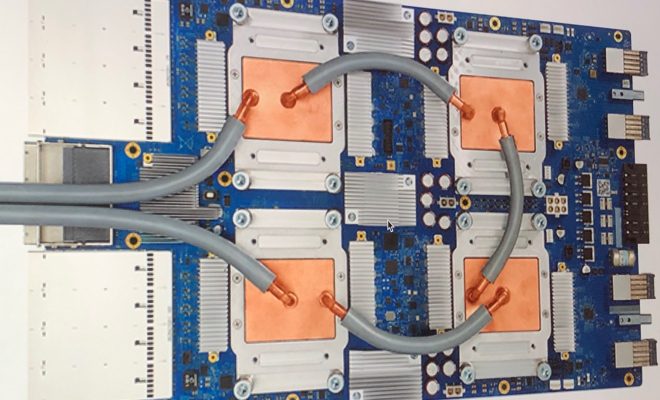
A Tensor Processing Unit, commonly known as TPU, is a custom-built application-specific integrated circuit (ASIC) designed by Google to handle machine learning tasks efficiently. Google introduced this specialized chip for accelerating machine learning workloads in 2016. TPU is specifically designed to perform matrix operations and can perform this task with a much higher speed than traditional CPUs and GPUs.

Machine learning is a subfield of artificial intelligence that uses algorithms and statistical models to enable machines to improve their performance on a specific task. Machine learning models contain a large number of matrix multiplications which are computationally intensive. TPUs are designed to accelerate these matrix operations by providing high-performance, low-power hardware.

The TPU employs a massively parallel architecture that can perform several computations simultaneously. TPUs are optimized to handle the performance-critical integer, bit-wise, and matrix multiplications that are essential to machine learning workloads. Their architecture enables them to manage complex matrix operations with precision and speed, which can result in far faster training and inference for machine learning models.

The Google TPU architecture provides three significant advantages over traditional CPUs and GPUs: speed, efficiency, and scalability. The TPUs can deliver up to 180 teraflops of performance, which is much greater than the performance from traditional CPUs and GPUs.

Along with the high speed and accuracy in matrix operations, TPUs are also energy-efficient due to their unique architecture. TPUs require far less power for a given set of computations compared to CPUs and GPUs. This means that machine learning models can train much faster and much more efficiently using TPUs. For example, TPUs allow Google to deliver more intelligent products and features like Google Photos and Google Assistant more quickly.

The TPU is not only used by Google internally but is also available for use in the cloud to Google Cloud Platform customers. This means that startups and developers can use TPUs to scale their machine learning workloads without having to invest in custom-built hardware. They can access the latest technologies and scale up their machine learning models as needed by using the cloud-based TPU service.

In conclusion, TPUs are significant technological advancements in the field of machine learning. TPUs are designed to handle the most complex matrix operations that power machine learning algorithms, and they do so with incredible speed and efficiency. TPUs enable faster and more cost-effective training of machine learning models and offer numerous opportunities for businesses, research institutions, and developers. As the demand for machine learning continues to grow across all industries, TPU technology will continue to play a crucial role in the quest to achieve faster, more efficient, and more precise machine learning performance.

Previous Article

How to Disable Telemetry on Windows 10 ...

Next Article

How to Search Through a User’s Tweets ...

Matthew Lynch

Related articles More from author

  • Digital & Mobile Technology

    What is a Graphics Processing Unit (GPU)?

    April 18, 2023
    By Matthew Lynch
  • Digital & Mobile Technology

    How Does Standard DVD Upscaling Compare to Blu-ray?

    July 14, 2023
    By Matthew Lynch
  • Digital & Mobile Technology

    YouTube Channels to Watch Free Shows and Movies (Legally)

    June 12, 2023
    By Matthew Lynch
  • Digital & Mobile Technology

    Daily Tech Tip: Step by Step Instructions on How to Send Photos by E-mail

    April 12, 2023
    By Matthew Lynch
  • Digital & Mobile Technology

    How to Change the Default Download Location in Windows 11

    July 24, 2023
    By Matthew Lynch
  • Digital & Mobile Technology

    Is the Apple Watch Series 6 Waterproof?

    June 4, 2023
    By Matthew Lynch

Search

Login & Registration

  • Log in
  • Entries feed
  • Comments feed
  • WordPress.org

Newsletter

Signup for The Tech Edvocate Newsletter and have the latest in EdTech news and opinion delivered to your email address!

About Us

Since technology is not going anywhere and does more good than harm, adapting is the best course of action. That is where The Tech Edvocate comes in. We plan to cover the PreK-12 and Higher Education EdTech sectors and provide our readers with the latest news and opinion on the subject. From time to time, I will invite other voices to weigh in on important issues in EdTech. We hope to provide a well-rounded, multi-faceted look at the past, present, the future of EdTech in the US and internationally.

We started this journey back in June 2016, and we plan to continue it for many more years to come. I hope that you will join us in this discussion of the past, present and future of EdTech and lend your own insight to the issues that are discussed.

Newsletter

Signup for The Tech Edvocate Newsletter and have the latest in EdTech news and opinion delivered to your email address!

Contact Us

The Tech Edvocate
910 Goddin Street
Richmond, VA 23231
(601) 630-5238
[email protected]

Copyright © 2026 Matthew Lynch. All rights reserved.