
The Tech Edvocate

Top Menu

  • Advertisement
  • Apps
  • Home Page
  • Home Page Five (No Sidebar)
  • Home Page Four
  • Home Page Three
  • Home Page Two
  • Home Tech2
  • Icons [No Sidebar]
  • Left Sidbear Page
  • Lynch Educational Consulting
  • My Account
  • My Speaking Page
  • Newsletter Sign Up Confirmation
  • Newsletter Unsubscription
  • Our Brands
  • Page Example
  • Privacy Policy
  • Protected Content
  • Register
  • Request a Product Review
  • Shop
  • Shortcodes Examples
  • Signup
  • Start Here
    • Governance
    • Careers
    • Contact Us
  • Terms and Conditions
  • The Edvocate
  • The Tech Edvocate Product Guide
  • Topics
  • Write For Us
  • Advertise

Main Menu

  • Start Here
    • Our Brands
    • Governance
      • Lynch Educational Consulting, LLC.
      • Dr. Lynch’s Personal Website
      • Careers
    • Write For Us
    • The Tech Edvocate Product Guide
    • Contact Us
    • Books
    • Edupedia
    • Post a Job
    • The Edvocate Podcast
    • Terms and Conditions
    • Privacy Policy
  • Topics
    • Assistive Technology
    • Child Development Tech
    • Early Childhood & K-12 EdTech
    • EdTech Futures
    • EdTech News
    • EdTech Policy & Reform
    • EdTech Startups & Businesses
    • Higher Education EdTech
    • Online Learning & eLearning
    • Parent & Family Tech
    • Personalized Learning
    • Product Reviews
  • Advertise
  • Tech Edvocate Awards
  • The Edvocate
  • Pedagogue
  • School Ratings

logo

The Tech Edvocate

  • Start Here
    • Our Brands
    • Governance
      • Lynch Educational Consulting, LLC.
      • Dr. Lynch’s Personal Website
        • My Speaking Page
      • Careers
    • Write For Us
    • The Tech Edvocate Product Guide
    • Contact Us
    • Books
    • Edupedia
    • Post a Job
    • The Edvocate Podcast
    • Terms and Conditions
    • Privacy Policy
  • Topics
    • Assistive Technology
    • Child Development Tech
    • Early Childhood & K-12 EdTech
    • EdTech Futures
    • EdTech News
    • EdTech Policy & Reform
    • EdTech Startups & Businesses
    • Higher Education EdTech
    • Online Learning & eLearning
    • Parent & Family Tech
    • Personalized Learning
    • Product Reviews
  • Advertise
  • Tech Edvocate Awards
  • The Edvocate
  • Pedagogue
  • School Ratings
  • Cum compari bonusurile de bun venit ale cazinourilor online din România: valoare, rulaj și termene

  • Unbelievable: South Korea’s AI Cheating Scandal Forces Glasses Inspections

  • 7 Disturbing Truths About the Latest AI Data Breach

  • This Ancient Builder’s $150M AI Bet Could Redefine Construction

  • The Astonishing Reason Canada Might Embrace Chinese Automakers

  • This One Week of Cyber Incidents in October 2026 Proves AI Is Our Biggest Threat

  • Amex Reverses Controversial Clawback: What It Means for Your Rewards

  • Mind-Blowing: NHTSA Just Launched a Waymo Recall Query — Here’s Why It Matters

  • Your Data Stolen? 9 Critical Steps After the Academy Mortgage Data Breach

  • Devastating: Why Your Car Insurance Rates Are Skyrocketing in 2026 – And What You Can Do

Tech Advice
Home›Tech Advice›What Happens to My Money if My Bank Closes?

What Happens to My Money if My Bank Closes?
By Matthew Lynch
July 10, 2023
0
Spread the love

Introduction:

The prospect of your bank shutting down may be frightening, especially when it comes to ensuring the safety of your hard-earned money. In this article, we will address what happens to your funds if your bank closes and the mechanisms in place to protect your assets.

Federal Deposit Insurance Corporation (FDIC) Protection:

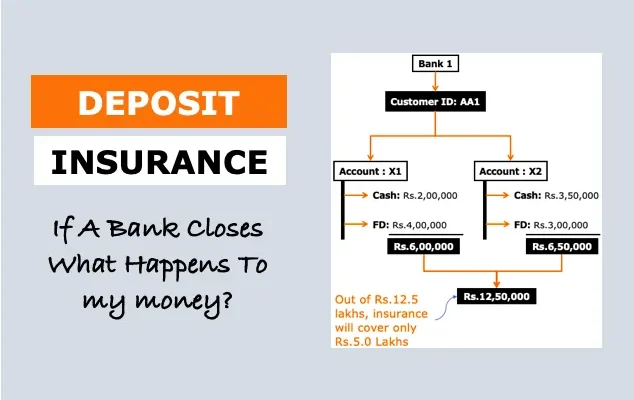
In the United States, the Federal Deposit Insurance Corporation (FDIC) is a federal agency that insures deposits in banks. In the event a bank closes, FDIC insurance protects your funds up to $250,000 per depositor, per insured bank, for each account ownership category. This means that even if your bank fails, you will not lose the money you have in insured accounts up to this limit.

National Credit Union Administration (NCUA) Protection:

For credit unions, the National Credit Union Administration (NCUA) provides an equivalent protection for members. The NCUA’s Share Insurance Fund (SIF) insures deposits at federally insured credit unions up to $250,000 per member. Like FDIC insurance, this coverage applies per account ownership category.

Bank Resolution Process:

When a bank closes, regulators work quickly to initiate a resolution process. This typically involves one of three outcomes:

1. Acquisition by another bank: A healthy bank may purchase the failing institution. In this case, customers’ accounts are transferred to the new bank seamlessly without any disruptions or inconvenience.

2. Bridge Bank: Regulators may establish a temporary “bridge bank” that assumes all assets and liabilities of the closed institution. Customers will have access to their funds during this transition period until a new buyer is found or assets are liquidated.

3. Payoff Method: If no buyer is found and a bridge bank is not established, the FDIC or NCUA will pay depositors directly up to the insured limit.

Possible Delays in Accessing Assets:

While the federal insurance coverage from the FDIC or NCUA ensures that customers are protected up to the insured limit, there might still be some temporary inconveniences as the resolution process unfolds. For example, access to online banking services and transaction processing may be disrupted for a short period.

Conclusion:

It’s crucial to understand that though bank closures can be worrisome, your money is protected by federal safeguards like the FDIC and NCUA. In most cases, your funds will remain accessible throughout the resolution process, and your new financial institution will work to ensure a seamless transition. Nonetheless, it’s always a good idea to stay informed about the health of your bank or credit union and ensure your deposits remain within the insured limits.


Previous Article

What Are NSF Fees and Why Do ...

Next Article

What Happens When You Bounce A Check?

Matthew Lynch

Related articles More from author

  • Tech Advice

    Best Sports Cars of 2023

    August 17, 2023
    By Matthew Lynch
  • Tech Advice

    iRobot Roomba 960 Review

    July 20, 2023
    By Matthew Lynch
  • Tech Advice

    How to Disconnect Your Vehicle’s Battery

    August 19, 2023
    By Matthew Lynch
  • Tech Advice

    Apple Vision Pro Hands-On: Far Better Than I Was Ready For

    July 13, 2023
    By Matthew Lynch
  • Tech Advice

    What Is a Car Salvage Title and Is It Bad?

    August 22, 2023
    By Matthew Lynch
  • Tech Advice

    How Much is SR22 Insurance in Washington State?

    August 19, 2023
    By Matthew Lynch

Search

Login & Registration

  • Log in
  • Entries feed
  • Comments feed
  • WordPress.org

Newsletter

Signup for The Tech Edvocate Newsletter and have the latest in EdTech news and opinion delivered to your email address!

About Us

Since technology is not going anywhere and does more good than harm, adapting is the best course of action. That is where The Tech Edvocate comes in. We plan to cover the PreK-12 and Higher Education EdTech sectors and provide our readers with the latest news and opinion on the subject. From time to time, I will invite other voices to weigh in on important issues in EdTech. We hope to provide a well-rounded, multi-faceted look at the past, present, the future of EdTech in the US and internationally.

We started this journey back in June 2016, and we plan to continue it for many more years to come. I hope that you will join us in this discussion of the past, present and future of EdTech and lend your own insight to the issues that are discussed.

Newsletter

Signup for The Tech Edvocate Newsletter and have the latest in EdTech news and opinion delivered to your email address!

Contact Us

The Tech Edvocate
910 Goddin Street
Richmond, VA 23231
(601) 630-5238
[email protected]

Copyright © 2026 Matthew Lynch. All rights reserved.