The Tech Edvocate

Top Menu

  • Advertisement
  • Apps
  • Home Page
  • Home Page Five (No Sidebar)
  • Home Page Four
  • Home Page Three
  • Home Page Two
  • Home Tech2
  • Icons [No Sidebar]
  • Left Sidbear Page
  • Lynch Educational Consulting
  • My Account
  • My Speaking Page
  • Newsletter Sign Up Confirmation
  • Newsletter Unsubscription
  • Our Brands
  • Page Example
  • Privacy Policy
  • Protected Content
  • Register
  • Request a Product Review
  • Shop
  • Shortcodes Examples
  • Signup
  • Start Here
    • Governance
    • Careers
    • Contact Us
  • Terms and Conditions
  • The Edvocate
  • The Tech Edvocate Product Guide
  • Topics
  • Write For Us
  • Advertise

Main Menu

  • Start Here
    • Our Brands
    • Governance
      • Lynch Educational Consulting, LLC.
      • Dr. Lynch’s Personal Website
      • Careers
    • Write For Us
    • The Tech Edvocate Product Guide
    • Contact Us
    • Books
    • Edupedia
    • Post a Job
    • The Edvocate Podcast
    • Terms and Conditions
    • Privacy Policy
  • Topics
    • Assistive Technology
    • Child Development Tech
    • Early Childhood & K-12 EdTech
    • EdTech Futures
    • EdTech News
    • EdTech Policy & Reform
    • EdTech Startups & Businesses
    • Higher Education EdTech
    • Online Learning & eLearning
    • Parent & Family Tech
    • Personalized Learning
    • Product Reviews
  • Advertise
  • Tech Edvocate Awards
  • The Edvocate
  • Pedagogue
  • School Ratings

logo

The Tech Edvocate

  • Start Here
    • Our Brands
    • Governance
      • Lynch Educational Consulting, LLC.
      • Dr. Lynch’s Personal Website
        • My Speaking Page
      • Careers
    • Write For Us
    • The Tech Edvocate Product Guide
    • Contact Us
    • Books
    • Edupedia
    • Post a Job
    • The Edvocate Podcast
    • Terms and Conditions
    • Privacy Policy
  • Topics
    • Assistive Technology
    • Child Development Tech
    • Early Childhood & K-12 EdTech
    • EdTech Futures
    • EdTech News
    • EdTech Policy & Reform
    • EdTech Startups & Businesses
    • Higher Education EdTech
    • Online Learning & eLearning
    • Parent & Family Tech
    • Personalized Learning
    • Product Reviews
  • Advertise
  • Tech Edvocate Awards
  • The Edvocate
  • Pedagogue
  • School Ratings
  • A Visitor’s Guide to Fresno (CA), United States

  • A Visitors Guide to New Orleans (LA), United States

  • A Visitors Guide to Sacramento (CA), United States

  • A Visitors Guide to Lyon, France

  • JisuLife Ultra2 Portable Fan: A Powerful Multi-Function Cooling Solution

  • A Visitors Guide to Viña del Mar, Chile

  • A Visitors Guide to Århus, Denmark

  • A Visitors Guide to Bakersfield (CA), United States

  • A Visitors Guide to Aurora (CO), United States

  • A Visitor’s Guide to Toledo (OH), United States

Digital & Mobile Technology
Home›Digital & Mobile Technology›What Are Stereo Amplifiers and How Do They Work?

What Are Stereo Amplifiers and How Do They Work?
By Matthew Lynch
July 15, 2023
0
Spread the love

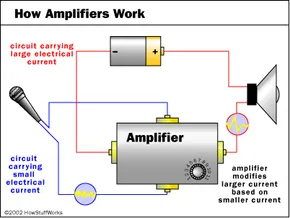
Stereo amplifiers are electronic devices that are used to increase the power of an audio signal. They are an essential part of any stereo system, and can make a significant difference in the quality of your music experience.

In its most basic form, a stereo amplifier works by taking a weak audio signal and amplifying it to a level that is suitable for driving a set of speakers. The amplifier essentially boosts the amplitude of the electrical signal that represents the sound waves, making it louder and more powerful.

There are many different types of amplifiers, but the most common type is the class AB amplifier. This type of amplifier uses two transistors, one which conducts the positive half of the waveform, and the other which conducts the negative half. This allows for a more efficient use of power, which results in lower distortion and better sound quality.

Another type of amplifier is the class D amplifier, which uses pulse width modulation (PWM) to convert the audio signal into a digital signal that can be amplified using a switching transistor. This type of amplifier is highly efficient, which means it can run cooler and use less energy than other types of amplifiers.

Regardless of the type of amplifier used, there are a few key components that are common to all amplifiers. The first is the input stage, which is responsible for receiving the audio signal from the source and converting it into an electrical signal. This can involve a pre-amplifier or simply a volume control for adjusting the level of the signal.

The second key component of an amplifier is the power stage, which is responsible for actually amplifying the signal. This typically involves a pair of transistors, which are controlled by the input signal and allow the amplified signal to flow through the speakers.
A third component, which is often overlooked, is the power supply. Depending on the type and size of the amplifier, this can range from a simple transformer and rectifier to a complex switching power supply that provides a stable voltage and current for the amplifier to operate properly.

In conclusion, stereo amplifiers are an essential part of any high-quality stereo system. They work by amplifying a weak audio signal to a level that is suitable for driving speakers, and are available in a variety of types and configurations. Understanding the basics of amplifier design is important when selecting an amplifier, and can help you achieve the best possible sound quality for your music playback needs.


Previous Article

How to Transfer Google Photos to iCloud

Next Article

The Best Laptops With the Best Battery ...

Matthew Lynch

Related articles More from author

  • Digital & Mobile Technology

    Ways to Fix Low Volume in Windows 10

    September 8, 2023
    By Matthew Lynch
  • Digital & Mobile Technology

    5 Things to Do With That Old Computer Mouse

    July 24, 2023
    By Matthew Lynch
  • Digital & Mobile Technology

    How to Transfer Data From PS4 to PS5

    May 31, 2023
    By Matthew Lynch
  • Digital & Mobile Technology

    What does “SMS Threaded view” mean on an Android phone?

    July 31, 2023
    By Matthew Lynch
  • Digital & Mobile Technology

    How to Stop Chrome Saving Images in WebP Format on Windows

    August 3, 2023
    By Matthew Lynch
  • Digital & Mobile Technology

    CPU Socket Types Explained: Socket 5 to BGA

    August 1, 2023
    By Matthew Lynch

Search

Login & Registration

  • Register
  • Log in
  • Entries feed
  • Comments feed
  • WordPress.org

Newsletter

Signup for The Tech Edvocate Newsletter and have the latest in EdTech news and opinion delivered to your email address!

About Us

Since technology is not going anywhere and does more good than harm, adapting is the best course of action. That is where The Tech Edvocate comes in. We plan to cover the PreK-12 and Higher Education EdTech sectors and provide our readers with the latest news and opinion on the subject. From time to time, I will invite other voices to weigh in on important issues in EdTech. We hope to provide a well-rounded, multi-faceted look at the past, present, the future of EdTech in the US and internationally.

We started this journey back in June 2016, and we plan to continue it for many more years to come. I hope that you will join us in this discussion of the past, present and future of EdTech and lend your own insight to the issues that are discussed.

Newsletter

Signup for The Tech Edvocate Newsletter and have the latest in EdTech news and opinion delivered to your email address!

Contact Us

The Tech Edvocate
910 Goddin Street
Richmond, VA 23231
(601) 630-5238
[email protected]

Copyright © 2025 Matthew Lynch. All rights reserved.