Unseen Dangers: Why Teamsters California Is Fighting Driverless Trucks in Court
The future of transportation in California, and indeed across the nation, is at a critical crossroads. On one side, we have the relentless march of technological innovation, promising efficiency and progress through autonomous vehicles. On the other, a powerful union, Teamsters California, is drawing a line in the sand, alleging that the pursuit of this future is dangerously outpacing necessary safety precautions and economic foresight. Their recent lawsuit against the California Department of Motor Vehicles (DMV), filed on August 5, 2026, isn’t just a legal skirmish; it’s a profound statement about public safety, job security, and the fundamental responsibilities of regulatory bodies in an era of rapid technological change.
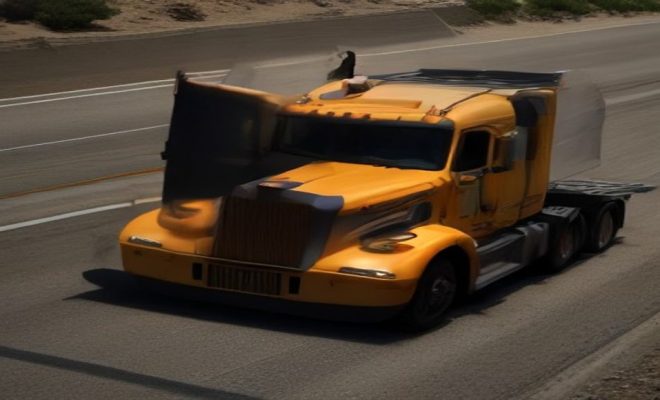
This isn’t some abstract debate about distant possibilities. We’re talking about massive, multi-ton driverless trucks sharing our public roads, potentially without adequate oversight. The Teamsters California driverless trucks lawsuit claims the DMV acted prematurely and, frankly, irresponsibly by enacting regulations in April 2026 that permit fully autonomous heavy-duty trucks over 10,000 pounds on California’s roads. The core of their argument? The DMV, they allege, circumvented established laws by failing to conduct the necessary due diligence – specifically, neglecting to thoroughly study and disclose the economic and safety impacts before unleashing these robotic behemoths. It’s a high-stakes confrontation that pits the promise of automation against the very real concerns of everyday citizens and the livelihoods of thousands of professional drivers.
The Accelerating Pace of Autonomous Trucking and Regulatory Loopholes
For years, the idea of autonomous trucks felt like science fiction, something always a decade or two away. But in California, it’s very much a present reality, and one that has accelerated with astonishing speed. The DMV’s decision in April 2026 to greenlight fully autonomous trucks weighing over 10,000 pounds wasn’t just a minor administrative update; it was a monumental policy shift with far-reaching implications. Suddenly, vehicles that once required a human behind the wheel for every mile can operate completely independently on public roads, albeit under specific conditions. This move has been championed by tech companies eager to revolutionize logistics and reduce operational costs, but it has sent shivers down the spines of those who prioritize safety above all else.
The Teamsters’ lawsuit hinges on the contention that this regulatory change didn’t just happen in a vacuum; it allegedly bypassed critical legal requirements. California has robust environmental and safety review processes designed to protect its citizens from unforeseen consequences. The Teamsters argue that the DMV essentially sidestepped these processes, pushing through regulations without adequately assessing what these new robotic trucks might mean for the safety of other motorists, the wear and tear on infrastructure, or the economic stability of the state’s vast trucking workforce. It raises a fundamental question: when does the desire for innovation override the imperative for caution and thorough public discourse? This isn’t just about a few minor details; it’s about the very framework of how new, potentially disruptive technologies are integrated into society.
Public Safety vs. Technological Progress: A Balancing Act Gone Wrong?
The tension between technological progress and public safety is perhaps nowhere more evident than in the autonomous vehicle sector. While proponents of driverless trucks point to the potential for reduced accidents caused by human error, fatigue, or distraction, the reality of current autonomous technology is far from perfect. We’ve seen numerous incidents involving self-driving cars, from minor fender-benders to more serious collisions, highlighting the complex challenges of programming vehicles to navigate unpredictable real-world scenarios.
When you scale that technology up to a 40-ton semi-truck, the stakes become astronomically higher. An autonomous passenger car malfunction might cause a significant accident; an autonomous heavy-duty truck malfunction could easily lead to a multi-vehicle pile-up with catastrophic consequences. This is precisely why the Teamsters California driverless trucks lawsuit emphasizes “inherent dangers of untested autonomous vehicles.” The public’s trust in these technologies is fragile, and any perception that regulators are cutting corners on safety could severely undermine the entire industry. It’s a delicate balance, and many, including the Teamsters, believe the DMV has leaned too heavily towards enabling technology without sufficiently safeguarding the public.
Whistleblower Allegations: A Glimpse into the ‘Wildly Dangerous’ Reality
Adding a dramatic, even chilling, layer to this already complex narrative are the allegations from a former Tesla manager. This individual, a whistleblower, recently came forward with claims of “wildly dangerous safety lapses” within Tesla’s Full Self-Driving (FSD) test fleet in Houston. Now, while Tesla’s FSD system is primarily designed for passenger vehicles and not heavy-duty trucks, the implications for the broader autonomous vehicle industry are profound. If a leading autonomous tech company is allegedly experiencing such significant safety issues in a controlled test environment, what does that say about the readiness of similar technologies for large trucks on open highways?
The whistleblower’s account suggests that operations were aggressively scaled up beyond safe oversight. This kind of rapid, unchecked expansion, if true, is exactly the sort of scenario that ignites fears about regulatory gaps. It paints a picture where the drive for market dominance and technological advancement might be overshadowing prudent safety protocols. For the Teamsters California driverless trucks legal challenge, these allegations serve as a powerful real-world example of why robust, independent oversight and comprehensive safety studies are not just bureaucratic hurdles, but absolute necessities before fully autonomous heavy-duty vehicles become commonplace.
The Looming Specter of Job Displacement for Truck Drivers
Beyond the immediate safety concerns, the Teamsters’ legal action is deeply rooted in the potential for massive job displacement. Truck driving isn’t just a job; for millions, it’s a career, a livelihood, and often a family tradition. The idea of fully autonomous trucks operating without human drivers represents an existential threat to this profession. While some proponents argue that automation will create new jobs in maintenance, oversight, and remote operation, the sheer scale of the existing trucking workforce suggests that any such transition would be incredibly disruptive, leaving a significant number of experienced drivers out of work.
California, with its vast port operations and extensive interstate highway system, is a major hub for the trucking industry. The economic impact of replacing human drivers with machines would be staggering, affecting not just individual drivers and their families, but also entire communities that rely on the trucking sector. The Teamsters California driverless trucks lawsuit therefore isn’t just about safety regulations; it’s about advocating for the economic well-being of its members and ensuring that any technological revolution is managed in a way that provides for a just transition, rather than simply leaving workers behind. This dimension of the argument underscores the broader societal challenge of automation: how do we harness its benefits without creating widespread economic hardship? (See: driverless trucks safety regulations.)
The Role of Insurance: Discounts for Autonomy, Risks Unassessed?
In a fascinating, almost contradictory, development amidst these safety concerns, Lemonade Insurance expanded its “Autonomous Car insurance” program on August 3, 2026. This isn’t just a standard policy; it offers Tesla owners in Tennessee a substantial 50% discount on FSD-engaged miles, directly linking insurance costs to autonomous driving data. On the surface, this might seem like a vote of confidence in autonomous technology, suggesting that insurers see it as safer. However, the timing and the context raise some serious questions.
How can an insurer offer such a significant discount for autonomous driving when the safety impacts of this technology, especially concerning heavy-duty trucks, are still being hotly debated and legally challenged by groups like the Teamsters California? It highlights a potential disconnect between the actuarial models being developed by insurance companies and the on-the-ground realities and regulatory concerns. While Lemonade’s program focuses on passenger vehicles, it sets a precedent. If autonomous driving is deemed safe enough for such discounts in one segment, it creates pressure for similar assumptions to be made across the board, including for heavy trucks, even as their safety is under scrutiny. This situation could lead to a two-tiered system where incentives are offered for automation before its full societal impact has been properly assessed.
The Legal Battlefield: Teamsters vs. California DMV
The lawsuit filed by Teamsters California against the DMV is a critical legal maneuver. It’s not just a symbolic protest; it’s a direct challenge to the authority and process by which the DMV enacted these regulations. The Teamsters are alleging that the agency failed to comply with specific legal requirements that mandate thorough studies and public disclosure of environmental, economic, and safety impacts before such significant policy changes are made. This isn’t a minor procedural technicality; it’s about the very foundation of good governance and transparent regulation.
If the Teamsters are successful, it could force the DMV to halt the implementation of these regulations, compelling them to conduct the comprehensive studies that the union argues were initially skipped. This could significantly slow down the deployment of driverless trucks in California, at least until a more robust framework is established. The outcome of this lawsuit will undoubtedly set a precedent, influencing how other states approach autonomous vehicle regulation and potentially empowering other unions and public interest groups to demand similar levels of scrutiny. It underscores that even in the face of rapid technological advancement, the rule of law and the principles of public accountability must prevail.
Beyond California: A National Conversation on Driverless Trucks
While this legal battle is unfolding in California, its implications resonate far beyond the state’s borders. What happens with Teamsters California driverless trucks regulations could very well become a blueprint, or a cautionary tale, for other states and even federal agencies contemplating similar moves. The trucking industry is inherently national; goods move across state lines constantly. A patchwork of regulations, or a lack of robust oversight in one key state, could create a chaotic and potentially dangerous environment nationwide.
The conversation around driverless trucks isn’t confined to technical specifications; it’s a socio-economic and ethical debate. How do we ensure that the benefits of automation are shared broadly, rather than concentrating wealth and power in the hands of a few tech giants? How do we retrain and support workers whose livelihoods are displaced? These are questions that demand national attention and coordinated policy responses, not just isolated state-level decisions. The Teamsters’ stand in California is effectively forcing this broader discussion, making it clear that the future of transportation cannot be left solely to the whims of innovation without serious consideration for human impact.
The Broader Implications: Investment, Innovation, and Public Trust
This entire saga has significant implications for various sectors. For legal services, it’s a burgeoning field, as the intersection of autonomous technology, labor law, and regulatory compliance creates complex new challenges. Auto insurance companies are grappling with how to assess risk and price policies for vehicles that drive themselves – a paradigm shift from traditional human-driver models. And for investors, the volatility is undeniable: the promise of efficiency and profit from autonomous fleets is immense, but the regulatory hurdles, public resistance, and potential for catastrophic incidents present substantial risks.
Ultimately, the success of driverless truck technology hinges on public trust. If the public perceives that safety is being compromised or that regulatory bodies are failing in their duties, adoption rates will suffer, and political backlash will intensify. The Teamsters California driverless trucks lawsuit is a stark reminder that innovation, however promising, cannot flourish without a foundation of trust, transparency, and a genuine commitment to public safety and economic justice. The outcome of this legal challenge will not only shape the future of autonomous trucking in California but will also send a powerful message about the kind of future we collectively choose to build: one where technology serves humanity, or one where humanity is expected to adapt to the demands of unchecked technology.
Examining the Technical Challenges of Heavy-Duty Autonomous Operation
When we talk about driverless trucks, it’s easy to oversimplify the technology involved. These aren’t just bigger versions of self-driving cars. Heavy-duty trucks present a unique set of engineering and operational challenges that make their autonomous deployment significantly more complex. For one, the sheer mass and inertia of a fully loaded semi-truck mean braking distances are drastically longer, and evasive maneuvers are far more difficult to execute safely. A sudden system error at highway speeds could have devastating consequences that are orders of magnitude worse than a similar error in a passenger car.
Then there’s the perception challenge. While LiDAR, radar, and cameras are becoming more sophisticated, accurately perceiving the environment around a large truck, especially in adverse weather conditions like heavy rain, fog, or snow, remains a formidable hurdle. Consider the “black ice” scenario, which is difficult for human drivers to detect and almost impossible for current autonomous systems to reliably identify. How do these systems handle tire blowouts at 70 mph, or sudden shifts in cargo weight? What about interacting with human drivers who might not understand or trust autonomous behavior? These aren’t just minor kinks to work out; they’re fundamental safety questions that demand robust, real-world testing and transparent data, something the Teamsters argue is missing.
The Economic Ripple Effect: More Than Just Drivers’ Jobs
The discussion around job displacement often focuses narrowly on the truck drivers themselves. However, the economic ripple effect of widespread autonomous trucking extends much further. Think about the entire ecosystem built around human-driven trucks: roadside diners, truck stops, motels, repair shops, and even small businesses in rural towns that cater to the trucking community. These enterprises, often family-owned, could see a dramatic decline in business if trucks become entirely automated and bypass traditional stops. Autonomous trucks might be programmed for optimal efficiency, stopping only when absolutely necessary for fuel or maintenance at specialized, automated depots. (See: motor vehicle safety information.)
Furthermore, there’s the impact on ancillary industries. Trucking schools would see enrollment plummet. Insurance models would fundamentally change, potentially reducing the need for adjusters focused on human error. Even local tax bases in communities heavily reliant on trucking employment could suffer. The Teamsters aren’t just fighting for their members; they’re shining a light on a much broader societal transformation that, if not managed carefully, could leave entire economic sectors struggling to adapt. This demands a proactive approach to economic planning, retraining initiatives, and community support programs, which the union believes the current regulatory framework utterly fails to address.
International Perspectives on Autonomous Trucking Regulation
It’s helpful to look at how other nations are approaching autonomous trucking to put California’s situation in context. In some European countries, like Germany and the Netherlands, there’s a strong emphasis on platooning technology, where a human-driven lead truck is followed closely by several autonomous trucks, creating efficiency while still maintaining human oversight. This incremental approach allows for gradual testing and integration, addressing safety concerns step-by-step.
Conversely, China has been aggressively pushing autonomous vehicle development, including heavy trucks, often with government-backed initiatives and dedicated test zones. Their regulatory environment can be different, sometimes prioritizing rapid technological advancement over the kind of extensive public and economic impact reviews seen in Western democracies. These varied approaches highlight that there’s no single path to autonomous trucking. California’s decision to allow fully driverless heavy trucks, potentially without the exhaustive impact studies, places it at one end of this global spectrum, making the Teamsters’ challenge even more significant as a potential bellwether for what level of caution is deemed appropriate.
Expert Perspectives: Engineers, Ethicists, and Economists Weigh In
The debate isn’t just between unions and tech companies; it involves a diverse range of experts. Robotics engineers often express optimism about the potential for autonomous systems to exceed human capabilities in certain driving tasks, particularly repetitive highway driving. They point to the ability of AI to react faster, consistently monitor all angles, and never get fatigued or distracted. However, they also acknowledge the “long tail” of unforeseen circumstances – the rare, unpredictable events that human drivers can often intuitively navigate but that stump even advanced AI.
Ethicists raise profound questions about accountability in the event of an autonomous truck accident. Who is responsible when a software bug causes a collision? The developer? The vehicle manufacturer? The fleet operator? Current legal frameworks aren’t always equipped to handle these complex scenarios, creating potential quagmires for victims and the justice system. Economists, meanwhile, are divided. Some predict massive productivity gains and cost reductions, leading to cheaper goods. Others warn of the social costs of widespread unemployment, increased inequality, and the potential for technological disruption to exacerbate existing societal divides if not managed with careful policy.
The Future of Regulatory Oversight: Proactive vs. Reactive
The core of the Teamsters’ argument against the DMV boils down to a fundamental question of regulatory philosophy: should agencies be proactive in setting comprehensive safety and economic frameworks before a technology is widely deployed, or should they be reactive, addressing problems as they arise? The Teamsters clearly advocate for a proactive approach, demanding upfront studies and transparent public discourse. They believe that waiting for accidents or widespread job losses to occur before implementing robust regulations is irresponsible and dangerous, especially with heavy-duty vehicles.
The DMV’s actions, as alleged, suggest a more reactive or perhaps an enabling approach, allowing the technology to proceed and potentially addressing issues later. This tension is central to modern governance in an age of rapid innovation. How quickly should regulators move to facilitate new technologies that promise economic benefits, and what level of risk is acceptable to the public? The Teamsters California driverless trucks lawsuit is essentially arguing that in this instance, the balance has tipped too far towards enabling without sufficient foresight and caution, potentially jeopardizing public safety and economic stability for the sake of technological speed.
Frequently Asked Questions about Teamsters California Driverless Trucks Lawsuit
What exactly is the Teamsters California driverless trucks lawsuit about?
The lawsuit, filed by Teamsters California against the California Department of Motor Vehicles (DMV), challenges the DMV’s April 2026 regulations that permit fully autonomous heavy-duty trucks over 10,000 pounds on public roads. The Teamsters allege the DMV failed to conduct legally required environmental, safety, and economic impact studies before enacting these regulations, thereby circumventing established laws.
What are the main concerns raised by the Teamsters?
The Teamsters have two primary concerns: public safety and job displacement. They argue that allowing untested autonomous heavy-duty trucks on roads poses significant dangers, given the potential for catastrophic accidents. They also fear massive job losses for thousands of professional truck drivers, impacting individuals, families, and entire communities reliant on the trucking industry.
Did the DMV respond to these allegations?
The article states the lawsuit was filed on August 5, 2026. At that stage, the legal process would just be beginning. Typically, the DMV would be required to file a formal response to the lawsuit in court, addressing the Teamsters’ claims. Any public statements or detailed defenses would likely come as part of that legal process. (See: impact of automation on jobs.)
Are there precedents for a union challenging autonomous vehicle regulations?
While specific lawsuits against autonomous truck regulations are relatively new given the technology’s recent advancement, unions have a long history of advocating for worker safety and job security in the face of technological change. This lawsuit builds on that tradition, applying it to the unique challenges of autonomous vehicles. It’s a significant legal test case for this specific domain.
What could be the outcome if the Teamsters win this lawsuit?
If the Teamsters prevail, the DMV could be forced to halt or suspend the current regulations permitting driverless heavy-duty trucks. They would then likely be compelled to conduct the comprehensive environmental, safety, and economic impact studies that the Teamsters argue were initially omitted. This would significantly delay the widespread deployment of autonomous trucks in California and set a precedent for other states.
How might this impact the autonomous trucking industry?
A Teamsters victory could force autonomous trucking companies to slow down their deployment plans in California, potentially requiring them to invest more in robust testing, data collection, and public engagement to meet stricter regulatory requirements. It could also encourage a more cautious, incremental approach to autonomous technology integration across the country, prioritizing safety and social impact alongside innovation.
What about the whistleblower allegations mentioned? Are they directly related to this lawsuit?
The whistleblower allegations concern “wildly dangerous safety lapses” within Tesla’s Full Self-Driving (FSD) test fleet, which is primarily for passenger vehicles. While not directly involving heavy-duty trucks or the DMV’s regulations, the Teamsters would likely use such allegations as evidence to support their argument that autonomous technology, in general, requires rigorous oversight and that regulatory bodies need to be more cautious before approving widespread deployment, especially for heavy vehicles.
Is California the only state considering driverless trucks?
No, many states are exploring or already have regulations for autonomous vehicles, including trucks. However, California, with its large economy, tech industry, and significant trucking infrastructure, often sets trends. The outcome of this lawsuit could influence how other states and even federal agencies approach similar regulations.
What’s the difference between platooning and fully autonomous trucks?
Platooning involves a convoy of trucks where a human driver in the lead truck controls the entire platoon, and subsequent trucks follow autonomously, maintaining close distances for fuel efficiency. Fully autonomous trucks, as challenged by the Teamsters, operate without any human driver in the cab at all, relying entirely on AI for navigation and operation.
How does this lawsuit tie into the broader debate about automation and jobs?
This lawsuit is a microcosm of the larger societal debate about how to manage the transition to an automated economy. It highlights the tension between technological progress and the need to protect workers’ livelihoods and ensure a just transition. The Teamsters are advocating for policies that consider the human cost of automation and mandate support for displaced workers.
Trending Now
Frequently Asked Questions
Why are Teamsters California suing over driverless trucks?
Teamsters California is suing the California Department of Motor Vehicles (DMV) to challenge regulations that allow fully autonomous trucks over 10,000 pounds on public roads. They argue that the DMV acted irresponsibly by not adequately assessing the safety and economic impacts before implementing these regulations.
What concerns does Teamsters California have about autonomous trucks?
The Teamsters California express concerns about public safety and job security. They believe that allowing massive driverless trucks on the roads without thorough oversight poses significant risks to citizens and threatens the livelihoods of professional drivers.
What did the DMV do in April 2026 regarding autonomous trucks?
In April 2026, the California DMV enacted regulations permitting fully autonomous heavy-duty trucks over 10,000 pounds to operate on public roads. This decision has sparked controversy and legal action from Teamsters California, who claim it was made without proper safety evaluations.
How does the lawsuit affect the future of transportation in California?
The lawsuit by Teamsters California has significant implications for the future of transportation in California. It challenges the rapid integration of autonomous vehicles and raises critical questions about safety regulations and the balance between technological innovation and public welfare.
What are the potential risks of driverless trucks on roads?
Potential risks of driverless trucks include inadequate safety measures, increased road hazards, and economic impacts on professional drivers. The Teamsters California argue that the current regulations do not sufficiently address these risks, endangering public safety and employment.
What did we miss? Let us know in the comments and join the conversation.