Hubble’s 2025 Survey Unlocks Milky Way Core Secrets
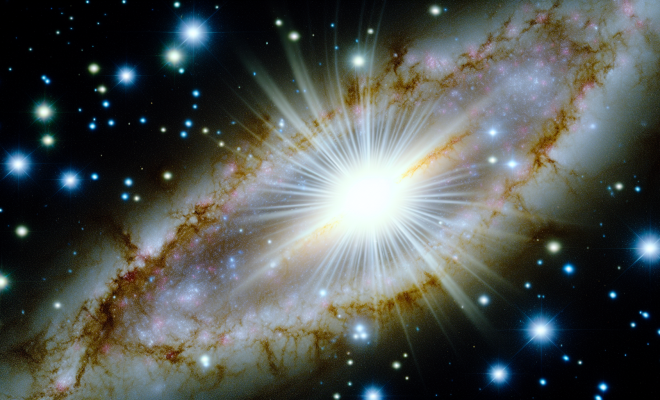
The vast expanse of our universe has always captivated humanity’s imagination, and the Milky Way is no exception. With its glittering stars and captivating celestial phenomena, we are continuously drawn to its mysteries. Recently, NASA’s Hubble Space Telescope has made significant strides in unveiling the secrets lurking near the Milky Way center through a comprehensive survey that began in spring 2025. This ambitious endeavor sets the stage for the upcoming observations by the new Nancy Grace Roman Space Telescope, promising to deepen our understanding of our galaxy.
The Milky Way’s Galactic Bulge
The central region of the Milky Way, known as the galactic bulge, is a dense area brimming with stars, planets, and a variety of celestial objects. It is here that researchers hope to uncover hidden populations of these bodies, many of which remain obscured by the pervasive dust that blankets this region. The Hubble survey Milky Way center aims to explore these complexities, providing critical data that will pave the way for future telescopic observations.
Why the Hubble Survey is Groundbreaking
One of the most remarkable aspects of this survey is its scope. The Hubble Space Telescope, renowned for its ability to capture high-resolution images of astronomical phenomena, plays a pivotal role in this initiative. The survey’s goal is to compile a comprehensive dataset that offers insights into the dynamics and composition of the galactic bulge. By focusing on this specific region, scientists can identify and catalog various celestial entities while painting a clearer picture of the galactic core’s structure.
Building on Decades of Research
The Hubble survey is not an isolated project; it builds upon decades of astronomical research facilitated by both the Hubble and the James Webb Space Telescope. These instruments have provided invaluable data over the years, allowing astronomers to refine their understanding of the Milky Way and its myriad components. The collaboration among these telescopes enhances our capacity to probe deeper into the mysteries of the galaxy.
What We Hope to Discover
As we peer into the Milky Way’s core, the potential findings are nothing short of thrilling. The galactic bulge is home to a wide array of celestial phenomena, including:
- Star Clusters: Densely packed groups of stars that can provide insights into stellar evolution.
- Dark Matter: The elusive substance that makes up a significant portion of the universe’s mass, influencing the motion of stars and galaxies.
- Black Holes: Areas of intense gravity that can trap light and matter, offering clues about the universe’s formation.
- Planetary Systems: Numerous planets that orbit stars, some of which may be analogous to our solar system.
The data collected through the Hubble survey serves as a crucial springboard for the Roman Space Telescope, which is equipped with advanced technologies that will enable more detailed observations of these phenomena.
Anticipation for the Roman Space Telescope
The Nancy Grace Roman Space Telescope promises to enhance our research capabilities significantly. Following in the footsteps of Hubble and Webb, Roman will offer an unprecedented view of the Milky Way, particularly its center. With a wider field of view and improved imaging capabilities, Roman is expected to delve deeper into the galactic bulge and unlock additional secrets that Hubble alone could not reveal.
Implications for Galactic Studies
The findings from the Hubble survey Milky Way center will not only expand our knowledge of the galactic bulge but also have broader implications for our understanding of galaxy formation and evolution. By analyzing the data collected, scientists can draw conclusions about the Milky Way’s history and its relationship with other galaxies.
Enhanced Understanding of Dark Matter
One of the most pressing questions in modern astrophysics revolves around dark matter. This mysterious substance does not emit, absorb, or reflect light, making it incredibly challenging to study. However, the gravitational effects of dark matter are evident in the motion of stars and galaxies. By utilizing the data from the Hubble survey, researchers aim to better understand the distribution of dark matter within the Milky Way and how it influences the galaxy’s structure.
Insights into Stellar Populations
The survey also provides an opportunity to explore the diversity of stellar populations within the galactic bulge. Understanding the formation of these stars, their life cycles, and the conditions that lead to their creation is crucial for piecing together the puzzle of our galaxy’s history. By examining the different types of stars, from massive blue giants to faint red dwarfs, astronomers can glean insights into the mechanisms of star formation and evolution.
The Buzz Around the Survey
The excitement surrounding the Hubble survey Milky Way center is palpable, with social media platforms buzzing with discussions and theories about what lies at the heart of our galaxy. The allure of discovering what is ‘lurking’ in the Milky Way’s core has captivated the public’s imagination, creating a surge of interest in astronomy and space exploration.
Social Media Engagement
As the survey progresses, social media has become a vibrant forum for sharing discoveries and theories. Users are posting awe-inspiring images and memes that explore the mysteries of the Milky Way, fostering a sense of community among space enthusiasts. This collective engagement not only raises awareness of the survey but also inspires a new generation of astronomers and space explorers.
Future Directions in Galactic Research
The findings from this Hubble survey will undoubtedly set the stage for future research initiatives. As Roman prepares to take its place among the stars, the groundwork laid by Hubble’s observations will inform subsequent investigations into the galactic bulge and beyond.
Collaboration Among Space Telescopes
As the landscape of astronomical observation evolves, collaboration among different space telescopes will become increasingly important. By combining data from Hubble, Webb, and Roman, researchers can develop a more comprehensive understanding of the universe. This interdisciplinary approach enhances the overall research capabilities and accelerates discoveries that were previously thought to be beyond our reach.
Long-Term Goals of Galactic Exploration
Ultimately, the long-term goal of these surveys is to piece together the intricate history of the Milky Way and its place within the cosmos. As we gather more data and refine our methods of analysis, we inch closer to answering fundamental questions about our galaxy’s formation, evolution, and fate.
Conclusion
The Hubble survey of the Milky Way center is more than just a scientific endeavor; it is a journey into the heart of our galaxy, illuminating the hidden wonders that lie within. As we prepare for the revelations that the Nancy Grace Roman Space Telescope will bring, we stand on the brink of new discoveries that could reshape our understanding of the universe. With every observation, we move closer to unlocking the secrets of the Milky Way, fostering a deeper connection to the cosmos and our place within it.
In a world increasingly captivated by the mysteries of the universe, the Hubble survey serves as a beacon of hope and curiosity, inspiring us to look up and wonder about what lies beyond the stars.