The Tech Edvocate

Top Menu

  • Advertisement
  • Apps
  • Home Page
  • Home Page Five (No Sidebar)
  • Home Page Four
  • Home Page Three
  • Home Page Two
  • Home Tech2
  • Icons [No Sidebar]
  • Left Sidbear Page
  • Lynch Educational Consulting
  • My Account
  • My Speaking Page
  • Newsletter Sign Up Confirmation
  • Newsletter Unsubscription
  • Our Brands
  • Page Example
  • Privacy Policy
  • Protected Content
  • Register
  • Request a Product Review
  • Shop
  • Shortcodes Examples
  • Signup
  • Start Here
    • Governance
    • Careers
    • Contact Us
  • Terms and Conditions
  • The Edvocate
  • The Tech Edvocate Product Guide
  • Topics
  • Write For Us
  • Advertise

Main Menu

  • Start Here
    • Our Brands
    • Governance
      • Lynch Educational Consulting, LLC.
      • Dr. Lynch’s Personal Website
      • Careers
    • Write For Us
    • The Tech Edvocate Product Guide
    • Contact Us
    • Books
    • Edupedia
    • Post a Job
    • The Edvocate Podcast
    • Terms and Conditions
    • Privacy Policy
  • Topics
    • Assistive Technology
    • Child Development Tech
    • Early Childhood & K-12 EdTech
    • EdTech Futures
    • EdTech News
    • EdTech Policy & Reform
    • EdTech Startups & Businesses
    • Higher Education EdTech
    • Online Learning & eLearning
    • Parent & Family Tech
    • Personalized Learning
    • Product Reviews
  • Advertise
  • Tech Edvocate Awards
  • The Edvocate
  • Pedagogue
  • School Ratings

logo

The Tech Edvocate

  • Start Here
    • Our Brands
    • Governance
      • Lynch Educational Consulting, LLC.
      • Dr. Lynch’s Personal Website
        • My Speaking Page
      • Careers
    • Write For Us
    • The Tech Edvocate Product Guide
    • Contact Us
    • Books
    • Edupedia
    • Post a Job
    • The Edvocate Podcast
    • Terms and Conditions
    • Privacy Policy
  • Topics
    • Assistive Technology
    • Child Development Tech
    • Early Childhood & K-12 EdTech
    • EdTech Futures
    • EdTech News
    • EdTech Policy & Reform
    • EdTech Startups & Businesses
    • Higher Education EdTech
    • Online Learning & eLearning
    • Parent & Family Tech
    • Personalized Learning
    • Product Reviews
  • Advertise
  • Tech Edvocate Awards
  • The Edvocate
  • Pedagogue
  • School Ratings
  • A Visitor’s Guide to Fresno (CA), United States

  • A Visitors Guide to New Orleans (LA), United States

  • A Visitors Guide to Sacramento (CA), United States

  • A Visitors Guide to Lyon, France

  • JisuLife Ultra2 Portable Fan: A Powerful Multi-Function Cooling Solution

  • A Visitors Guide to Viña del Mar, Chile

  • A Visitors Guide to Århus, Denmark

  • A Visitors Guide to Bakersfield (CA), United States

  • A Visitors Guide to Aurora (CO), United States

  • A Visitor’s Guide to Toledo (OH), United States

Digital & Mobile Technology
Home›Digital & Mobile Technology›Understanding Infrastructure Mode in Wireless Networking

Understanding Infrastructure Mode in Wireless Networking
By Matthew Lynch
June 9, 2023
0
Spread the love

Wireless networking has become increasingly popular in recent years for its ease of use and convenience. It allows users to connect to the internet without the hassle of cables and wires. One important concept in wireless networking is infrastructure mode. In this article, we will explore what infrastructure mode is, how it works, and its importance in wireless networking.

What is Infrastructure Mode?

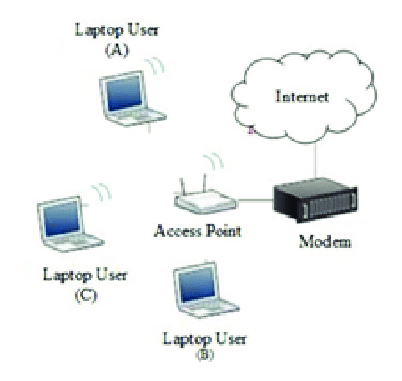
Infrastructure mode is the most commonly used mode in wireless networking. It is used when multiple wireless devices need to connect to the internet through a central access point or wireless router. In this mode, the wireless devices, such as laptops, smartphones, and tablets, connect to the access point, which in turn connects to the wired network or the internet.

In infrastructure mode, the wireless devices communicate with each other through the access point. This means that if two wireless devices want to communicate with each other, they need to do so through the access point. The access point acts as a bridge between the wireless devices and the wired network.

How Does Infrastructure Mode Work?

Infrastructure mode works by using an access point or wireless router to create a wireless network. The access point is connected to a wired network, such as a modem or router. The access point creates a wireless signal, which is picked up by the wireless devices. The wireless devices then connect to the access point to access the internet.

In infrastructure mode, the wireless devices communicate with each other through the access point. The access point acts as a central hub for all the wireless devices on the network. When a wireless device wants to communicate with another device on the same network, it sends its data to the access point, which in turn forwards it to the destination device.

Why is Infrastructure Mode Important?

Infrastructure mode is important in wireless networking because it allows multiple devices to connect to the internet through a central hub. This means that wireless devices can communicate with each other through the access point, which makes it easier to share resources and collaborate on projects.

One advantage of infrastructure mode is that it allows for greater security. The access point can be configured to use security protocols such as WPA2 or WPA3, which encrypt the data transmitted over the network. This helps to prevent unauthorized access and protects the network from hackers and other threats.

Another advantage of infrastructure mode is that it allows for greater flexibility in network design. Multiple access points can be used to create larger wireless networks that cover a wider area. This allows for greater scalability and makes it easier to expand the network to meet the needs of a growing business or organization.

In conclusion, infrastructure mode is an important concept in wireless networking. It allows multiple wireless devices to connect to the internet through a central access point or wireless router. This mode enables greater collaboration and resource sharing among wireless devices, while also providing greater security and scalability. Understanding the advantages and disadvantages of infrastructure mode is crucial to designing and maintaining a successful wireless network.


Previous Article

How to Lock Notes on iPhone

Next Article

What Is an AVE File?

Matthew Lynch

Related articles More from author

  • Digital & Mobile Technology

    6 Ways to Securely Store Your Photos

    July 31, 2023
    By Matthew Lynch
  • Digital & Mobile Technology

    How to Map a WebDAV Drive in Windows

    April 30, 2023
    By Matthew Lynch
  • Digital & Mobile Technology

    Certificate Error Navigation Blocked: What That Means and How to Fix It

    July 31, 2023
    By Matthew Lynch
  • Digital & Mobile Technology

    How to Compare Documents in Google Docs

    May 27, 2023
    By Matthew Lynch
  • Digital & Mobile Technology

    Best 3D Scanning Apps for iPhone

    June 22, 2023
    By Matthew Lynch
  • Digital & Mobile Technology

    What Are Freemium Games?

    June 4, 2023
    By Matthew Lynch

Search

Login & Registration

  • Register
  • Log in
  • Entries feed
  • Comments feed
  • WordPress.org

Newsletter

Signup for The Tech Edvocate Newsletter and have the latest in EdTech news and opinion delivered to your email address!

About Us

Since technology is not going anywhere and does more good than harm, adapting is the best course of action. That is where The Tech Edvocate comes in. We plan to cover the PreK-12 and Higher Education EdTech sectors and provide our readers with the latest news and opinion on the subject. From time to time, I will invite other voices to weigh in on important issues in EdTech. We hope to provide a well-rounded, multi-faceted look at the past, present, the future of EdTech in the US and internationally.

We started this journey back in June 2016, and we plan to continue it for many more years to come. I hope that you will join us in this discussion of the past, present and future of EdTech and lend your own insight to the issues that are discussed.

Newsletter

Signup for The Tech Edvocate Newsletter and have the latest in EdTech news and opinion delivered to your email address!

Contact Us

The Tech Edvocate
910 Goddin Street
Richmond, VA 23231
(601) 630-5238
[email protected]

Copyright © 2025 Matthew Lynch. All rights reserved.